Flat & Low-Slope Roofing Guide: Materials, Installation, Maintenance, Repair and Replacement
Roofing is one of the most important components of any building because it protects the structure, interior spaces, insulation, and belongings from weather and environmental exposure. While steeply pitched roofs are common on many properties, flat and gently angled roof systems offer a practical alternative for residential, commercial, and industrial buildings. These systems have unique design requirements, installation methods, maintenance needs, and drainage considerations that should be understood before beginning a roofing project. Choosing the right materials and ensuring professional installation can make a significant difference in the roof’s durability and long-term performance.
Flat and low-slope roofs are often selected because they provide a clean architectural appearance, efficient use of building space, and opportunities for equipment placement or rooftop applications. However, their relatively shallow pitch means water does not move away from the surface as quickly as it does on a steep roof. As a result, proper drainage, waterproofing, flashing, insulation, and installation quality are particularly important. Understanding how these systems work can help property owners make better decisions when planning a new roof, replacement, repair, or maintenance program.
Understanding Flat and Low-Slope Roof Systems
The terms flat roof and low-slope roof are often used together, although they do not necessarily describe exactly the same design. A truly flat roof is generally designed with minimal visible pitch, while a low-slope roof has a slight angle that encourages water to move toward drains, gutters, scuppers, or other drainage points. In practice, most roofs described as flat are constructed with some degree of slope because completely level surfaces can create drainage challenges.
The structure of a low-slope roofing system usually includes several layers working together. Depending on the design, these can include a structural deck, vapor control components, insulation, cover boards, waterproofing membranes, flashing, edge systems, and protective finishes. Each layer has a specific purpose, and problems with one component can affect the performance of the entire assembly.
Because water drainage is such an important consideration, the design should account for normal rainfall as well as heavier weather events. Drainage systems need to remain clear and properly positioned so water does not accumulate on the roof for extended periods.
Common Materials Used for Low-Slope Roofs
Several roofing materials are available for low-slope applications, and each has different characteristics. Single-ply membranes are widely used because they can provide continuous waterproofing across large roof areas. Common membrane types include thermoplastic and synthetic rubber products, each offering different performance characteristics and installation methods.
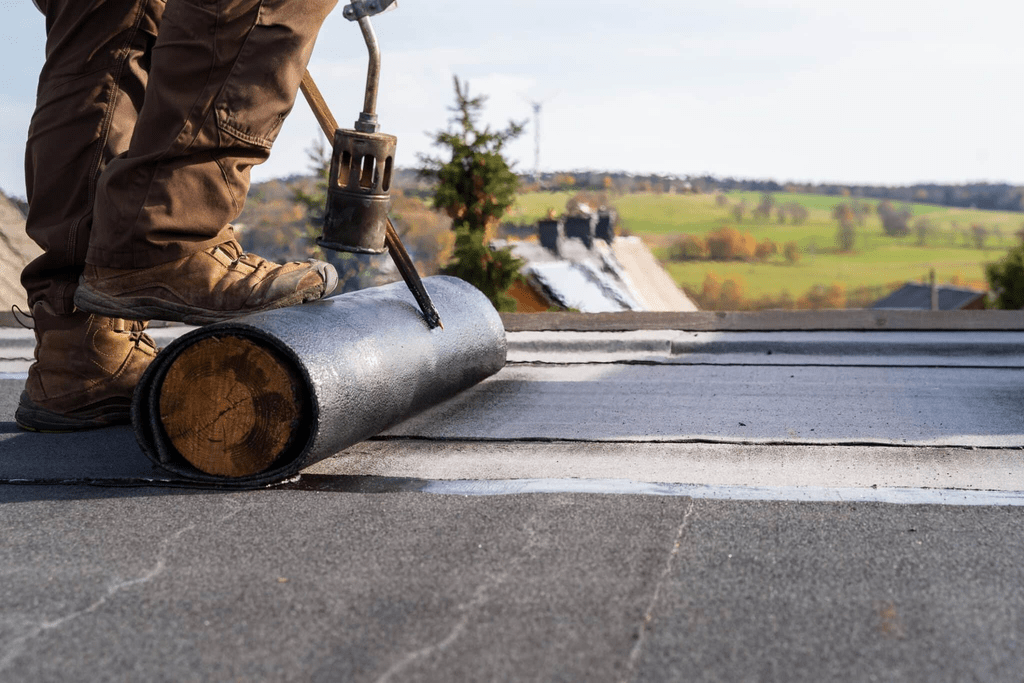
Modified bitumen roofing is another option. It is based on asphalt technology and can provide multiple layers of protection against moisture and weather exposure. Depending on the product and installation method, modified bitumen systems may be applied using adhesives, mechanical fastening, or other approved techniques.
Built-up roofing systems use multiple layers to create a durable membrane assembly. These systems have a long history in commercial roofing and can provide strong waterproofing when properly designed and installed.
Liquid-applied roofing systems can also be useful in certain situations. These materials are applied directly to the existing roof surface and cure to form a continuous protective layer. They can be especially useful when minimizing seams is desirable, although proper surface preparation is essential for successful performance.
The appropriate material depends on the building design, climate, existing roof condition, expected traffic, drainage requirements, budget, and desired service life. A professional roofing assessment can help determine which system is best suited to the property.
Why Proper Drainage Is Essential
Drainage is one of the most important factors in flat and low-slope roofing. On a steeply pitched roof, gravity quickly moves water toward the edges. A shallow roof requires carefully designed drainage pathways to prevent water from remaining on the surface.
Common drainage methods include internal drains, scuppers, gutters, and strategically designed slopes. The drainage system should be appropriately sized and positioned so water can leave the roof efficiently.
Standing water is a major concern because prolonged moisture exposure can place additional stress on roofing materials and seams. It can also contribute to deterioration around penetrations and flashing. In severe cases, persistent water accumulation may affect the roof deck or supporting structure.
Regular inspection of drains and drainage pathways is therefore essential. Leaves, dirt, branches, and other debris can restrict water flow. Keeping drainage components clear is a simple maintenance task that can help prevent much larger problems.
Signs That a Low-Slope Roof Needs Attention
Roof problems are not always immediately obvious from inside the building. Exterior inspections can reveal issues before they become major concerns. Cracked or damaged membrane surfaces, open seams, deteriorated flashing, damaged edge materials, and unusual surface changes should all be investigated.
Interior signs can include water stains on ceilings or walls, damp insulation, peeling paint, musty odors, or unexplained moisture. These symptoms do not always indicate that the roof itself is the source, but they should be investigated promptly.
Another warning sign is persistent pondering after rainfall. Some temporary moisture may be expected, but water that remains for extended periods can indicate drainage or structural issues.
Roofing materials can also show age-related deterioration. Repeated patching, widespread surface damage, or increasingly frequent leaks may indicate that a complete replacement is more practical than continued repairs.
The Importance of Professional Installation
Installation quality has a major influence on the lifespan of any roofing system. This is particularly true for low-slope roofs because waterproofing details are critical. Seams, penetrations, edges, drains, vents, skylights, and transitions must be carefully installed and sealed.
Professional installers understand how the selected roofing material should be handled and fastened. They also know how to prepare the substrate, integrate insulation, install flashing, and address transitions between different materials.
A poor installation can cause problems even when high-quality materials are used. Loose seams, inadequate flashing, incorrect fastening, insufficient drainage, and poor substrate preparation can all reduce performance.
For this reason, property owners should consider the contractor’s experience with the specific roofing system rather than choosing a provider based only on price.
Preparing for a Roofing Project
Before a new roof is installed, the existing assembly should be evaluated. The contractor may inspect the roof membrane, flashing, insulation, deck, drainage system, penetrations, and edge details. The purpose is to determine whether the existing structure can support the new system and whether damaged areas require repair.
In some cases, a roof replacement may involve removing the existing materials down to the deck. In other situations, an approved new system may be installed over portions of the existing assembly. The appropriate approach depends on the roof’s condition, applicable requirements, manufacturer specifications, and project objectives.
Preparation should also include planning for equipment, material deliveries, worker access, debris removal, and protection of the building’s interior. Proper organization can reduce disruptions and improve site safety.
Insulation and Energy Performance
Insulation is an important part of many low-slope roofing systems. It can help regulate indoor temperatures by reducing heat transfer through the roof assembly. Proper insulation may also contribute to improved energy efficiency and indoor comfort.
The location and type of insulation depend on the building design and roofing system. Some systems place insulation above the structural deck, while others use different configurations. The contractor should ensure that the insulation is compatible with the roofing membrane and properly installed.
Gaps, compression, moisture, and improper installation can reduce insulation performance. Because insulation is often hidden once the roof is completed, careful installation and inspection during construction are important.
Improving insulation during a roofing project may be particularly practical because access is already available to the roof assembly. Property owners should discuss energy-performance goals with the contractor before work begins.
Repair or Full Replacement?
One of the most important decisions for an aging roof is determining whether repairs are sufficient or whether replacement is more appropriate. Minor damage can often be repaired effectively, particularly when the surrounding roofing system remains in good condition.
However, repeated leaks, widespread deterioration, extensive membrane damage, wet insulation, structural problems, or an aging roof assembly may indicate that continued patching is no longer economical.
Repairs can be useful for extending the service life of a roof, but they should not be used to conceal larger systemic problems. A professional inspection can help identify whether the roof has isolated defects or whether its overall condition has declined.
A well-planned flat & low-slope roofing project should therefore begin with an assessment of the existing system rather than an automatic assumption that every problem requires complete replacement.
Common Causes of Roofing Problems
Several factors can contribute to premature roof deterioration. Poor installation is one of the most significant because errors during construction can create vulnerabilities that may not become visible until months or years later.
Inadequate drainage can also cause long-term problems. If water repeatedly accumulates in the same area, the roofing material may experience prolonged moisture exposure. Blocked drains can make this issue worse.
Mechanical damage is another common concern. Equipment servicing, foot traffic, construction activities, and maintenance work can accidentally damage membranes or protective surfaces. Limiting unnecessary roof traffic and using appropriate walk pads where needed can help protect the system.
Weather exposure naturally affects roofing materials as well. Ultraviolet radiation, temperature fluctuations, wind, moisture, and severe storms can gradually cause aging. Regular inspections allow minor weather-related damage to be addressed before it expands.
Maintaining a Low-Slope Roof
Routine maintenance is one of the most effective ways to protect a roofing investment. Inspections should be scheduled regularly and after significant weather events when appropriate. The goal is to identify damage before water enters the building.
Drainage components should remain free of leaves and debris. Flashing and seams should be examined for signs of deterioration. Penetrations around vents, pipes, and mechanical equipment should also be checked because these areas can create potential entry points for moisture.
Vegetation should not be allowed to grow unchecked on the roof. Plants and roots can damage roofing materials and interfere with drainage. Any unusual growth should be evaluated and removed using appropriate methods.
Maintenance should also include checking rooftop equipment and activities that could affect the roofing membrane. Mechanical contractors and other service professionals should take precautions when working around the roof surface.
Understanding Roof Warranties
Roof warranties can provide useful protection, but property owners should understand what they actually cover. Different warranties may address materials, workmanship, or specific installation requirements. The terms, exclusions, maintenance obligations, and claim procedures can vary considerably.
Some manufacturers require installation by approved contractors for certain warranty protections to remain valid. Maintenance requirements may also apply. Failing to follow specified inspection or maintenance procedures could affect warranty coverage.
Before selecting a roofing system, property owners should review warranty information carefully and ask questions about the difference between manufacturer coverage and contractor workmanship guarantees.
A warranty should not replace proper maintenance. Even a well-covered roofing system benefits from routine inspections and timely attention to minor problems.
Safety Considerations During Roofing Work
Roofing construction presents safety risks because workers may be exposed to elevated surfaces, tools, equipment, weather conditions, and construction debris. Professional roofing crews should follow appropriate safety procedures and use suitable protective equipment.
Property owners should also understand that roofing work can affect normal building operations. Materials may need to be stored in designated areas, and temporary access restrictions may be necessary. Noise, vibration, odors, and construction traffic can occur during installation.
Good site management helps protect both workers and building occupants. The contractor should establish procedures for material handling, waste removal, access, and protection of surrounding property.
Choosing a Qualified Roofing Contractor
Selecting the right contractor is one of the most important decisions in any roofing project. Property owners should look for professionals with experience installing the specific type of low-slope system being considered. Different membranes and assemblies require different techniques, so general roofing experience alone may not be enough.
A contractor should provide a detailed proposal explaining the scope of work, materials, preparation, insulation, flashing, drainage improvements, cleanup, and warranty information. The proposal should also clarify whether repairs to the roof deck or other hidden conditions are included or handled separately.
References and examples of previous work can provide additional insight into workmanship. Property owners should also ask how the contractor handles unexpected discoveries during the project.Clear communication is particularly valuable. A reliable contractor should explain recommendations in understandable terms and provide updates throughout the project.
Benefits of Professional Roof Maintenance
Professional maintenance can extend the useful life of a low-slope roof by identifying minor defects before they become serious failures. Routine inspections may reveal deteriorating sealants, damaged flashing, blocked drains, loose components, or small membrane defects that can be addressed before extensive water intrusion occurs.
Maintenance can also help property owners plan financially. Instead of facing an unexpected emergency replacement, owners may be able to identify aging components in advance and budget for future improvements.
Documentation from regular inspections can provide a useful record of the roof’s condition. This information can help determine whether repairs, restoration, or eventual replacement are appropriate.
Making a Long-Term Roofing Investment
A well-designed and properly installed flat & low-slope roofing system can provide dependable protection for many years when it is matched to the building and maintained correctly. The key is to treat the roof as an integrated system rather than simply a surface covering. Drainage, insulation, membranes, flashing, penetrations, edge details, and structural support all contribute to overall performance.
Property owners should consider long-term needs when choosing materials. The cheapest initial option may not always provide the best value if it requires frequent repairs or has a shorter expected service life. Conversely, a premium system may not be necessary for every property. The best choice depends on the building, environment, usage, maintenance expectations, and budget.
Professional assessment is especially valuable when an existing roof is showing signs of repeated failure. An experienced roofing specialist can determine whether targeted repairs are sufficient, whether restoration is practical, or whether replacement would provide better long-term value.
Final Thoughts on Low-Slope Roofing
Flat and low-slope roofing systems offer practical and attractive solutions for many types of buildings, but they require thoughtful design, quality installation, and consistent maintenance. Their shallow pitch makes effective drainage particularly important, while seams, flashing, penetrations, and edge details require careful attention to prevent moisture intrusion.
Property owners can protect their investment by conducting regular inspections, keeping drainage pathways clear, addressing minor damage promptly, and choosing qualified professionals for repairs and replacement work. When major roofing work is necessary, comparing materials, warranties, installation methods, and long-term maintenance requirements can help ensure a more informed decision.
Ultimately, successful flat & low-slope roofing depends on combining the right materials with sound design and skilled workmanship. A roof that is properly planned and maintained can provide reliable protection, improve energy performance, reduce unexpected repair expenses, and support the overall value of the building. By taking a proactive approach to roofing care and addressing problems before they become severe, property owners can achieve a durable system that performs effectively through changing conditions and everyday use.