Metal Roof Replacement: A Practical Guide to Planning, Materials, Installation, and Long-Term Protection
A roof is one of the most important structural components of any building because it protects the interior from rain, wind, moisture, sunlight, temperature changes, and other environmental conditions. When a roof begins to deteriorate, the effects can extend far beyond the roof itself. Leaks may damage insulation, ceilings, walls, electrical components, flooring, furniture, and other parts of the property. For this reason, recognizing when a roof has reached the end of its useful life is essential for protecting the building and avoiding more extensive repairs.
Metal roofing has become a popular choice for property owners who want a durable, attractive, and long-lasting roofing system. However, even high-quality metal roofs eventually require significant maintenance or replacement. Corrosion, damaged panels, loose fasteners, repeated leaks, storm damage, improper installation, and general aging can all indicate that replacement should be considered. Understanding the replacement process can help property owners make informed decisions about materials, installation, costs, maintenance, and long-term performance.
Understanding When a Metal Roof Needs Replacement
One of the first questions property owners face is whether their existing roof needs complete replacement or whether repairs can resolve the problem. Not every leak or damaged panel automatically means the entire roofing system must be removed. Small areas of damage may sometimes be repaired, particularly when the rest of the roof remains in good condition.
However, widespread deterioration can make replacement more practical. Extensive rust, repeated leaks, severely damaged panels, loose seams, failing fasteners, structural problems, and significant storm damage may indicate that the existing system is no longer providing reliable protection. If repairs are becoming increasingly frequent, the cost of maintaining the old roof may eventually approach the cost of installing a new one.
Age is another consideration. The expected service life of a metal roof depends on the material, coating, installation quality, maintenance, environmental exposure, and other factors. A professional inspection can help determine the current condition of the roofing system and whether replacement is justified.
Common Reasons for Metal Roof Replacement
There are several reasons a property owner may decide to replace an existing metal roof. One of the most common is deterioration caused by age. Over time, protective coatings can wear down, fasteners can loosen, seams can weaken, and exposed areas may become vulnerable to corrosion.
Weather damage is another major factor. Strong winds, hail, falling branches, heavy precipitation, and other severe conditions can dent or puncture panels. While isolated damage may be repairable, widespread storm damage can compromise the overall performance of the roof.
Poor installation can also shorten the life of a metal roofing system. Incorrectly placed fasteners, inadequate flashing, improper panel alignment, insufficient ventilation, and poorly sealed penetrations can create problems that gradually become more serious.
Another reason for replacement may be a change in the property’s needs. An older roofing system may no longer provide the appearance, energy performance, or structural characteristics desired by the property owner. Replacing it can provide an opportunity to upgrade the entire roofing assembly.
The Importance of Professional Roof Inspection
Before beginning a replacement project, a detailed roof inspection is highly valuable. A professional can examine the panels, seams, fasteners, flashing, penetrations, drainage points, underlayment, and supporting structure. The goal is to understand not only what is visibly damaged but also whether hidden problems exist.
A roof inspection can help determine whether replacement is actually necessary. If the roof is generally sound and only a few components are damaged, targeted repairs may be sufficient. On the other hand, if deterioration is widespread, investing heavily in individual repairs may provide only a temporary solution.
Inspection is particularly important after severe weather. Damage is not always obvious from ground level. Small punctures, lifted panels, loose fasteners, and compromised flashing can allow moisture to enter the building even when the roof appears relatively normal from a distance.
A professional assessment also provides useful information for planning the replacement. Understanding the condition of the roof deck and supporting structure before installation can reduce unexpected complications during the project.
Choosing the Right Metal Roofing Material
Metal roofing is available in several material options, each with different characteristics. Common choices include steel, aluminum, copper, and other metal alloys. The appropriate material depends on the building, design preferences, environmental exposure, budget, and desired service life.
Steel is widely used because it offers a combination of strength, durability, and versatility. It is available in different gauges and protective finishes, allowing property owners to select options suited to their particular requirements.
Aluminum is lightweight and naturally resistant to corrosion, making it useful in environments where moisture exposure is a significant concern. Copper offers a distinctive appearance and can develop a natural patina over time, although it is generally positioned as a premium roofing material.
The coating applied to metal panels is also important. Protective finishes can help resist corrosion, fading, and weather-related deterioration. Property owners should consider both the underlying metal and the quality of the protective coating when comparing roofing options.
Selecting an Appropriate Roof Style
Metal roofs are available in several profiles and installation systems. Standing seam systems use concealed fasteners and raised seams, creating a clean appearance while reducing the number of exposed fastening points. Exposed-fastener systems are another option and can be suitable for certain structures and budgets.
The choice of profile should consider the building’s architectural design, roof slope, weather exposure, drainage requirements, and installation method. A roofing professional can explain which system is appropriate based on the property’s characteristics.
Appearance should also be considered because a roof can significantly influence the overall look of a building. Metal roofing is available in numerous colors, finishes, and profiles, making it possible to coordinate the roof with exterior walls, trim, windows, and other architectural features.
Preparing for the Replacement Project
Proper preparation can make a roof replacement more organized and efficient. Before work begins, the contractor should evaluate the existing roof and determine what needs to be removed. The condition of the roof deck should also be considered because damaged or deteriorated decking may need replacement before new roofing materials are installed.
Property owners should discuss the project schedule, material specifications, ventilation requirements, flashing details, warranties, cleanup procedures, and other important matters with the contractor. Clear communication before installation can reduce misunderstandings later.
The surrounding property should also be prepared. Roofing work can involve noise, falling debris, material deliveries, and temporary access restrictions. Outdoor furniture, vehicles, fragile items, and other belongings may need to be moved away from work areas.
Removing the Existing Roof
The removal stage must be handled carefully because the condition of the underlying structure becomes easier to evaluate once the old roofing material has been removed. Existing panels, fasteners, flashing, and other components may be taken away depending on the replacement system.
Proper removal also helps identify hidden problems. Water damage may be present beneath areas that appeared acceptable from the outside. Rot, weakened decking, damaged insulation, or other structural concerns should be addressed before the new roof is installed.
Debris management is another important part of the process. A professional roofing team should maintain a safe work area and remove discarded materials responsibly. Nails, metal fragments, and other debris should not be left around walkways or landscaping where they could create hazards.
Preparing the Roof Deck
The roof deck provides the foundation for the roofing system, so its condition is critical. If the deck is damaged by moisture, rot, pests, or long-term deterioration, installing new metal panels over it without addressing the problem can lead to future issues.
Once the existing roof has been removed, the contractor can inspect the exposed decking and identify areas that require repair or replacement. The goal is to create a stable and suitable surface for the new roofing assembly.
Proper preparation at this stage can improve the performance of the finished roof. It is generally better to address structural concerns during replacement than to discover them later after the new panels have already been installed.
Underlayment and Moisture Protection
Underlayment provides an additional layer of protection beneath the metal panels. It can help manage moisture that reaches the area beneath the primary roofing surface and can contribute to the overall weather resistance of the system.
The appropriate underlayment depends on the roofing design, climate, roof slope, building requirements, and manufacturer’s specifications. Installation should be performed carefully around seams, edges, penetrations, valleys, and other vulnerable areas.
Flashing is equally important. Flashing helps direct water away from transitions and penetrations such as chimneys, vents, skylights, walls, and roof edges. Poorly installed flashing is a common source of leaks, so it deserves careful attention during replacement.
Installing the New Metal Panels
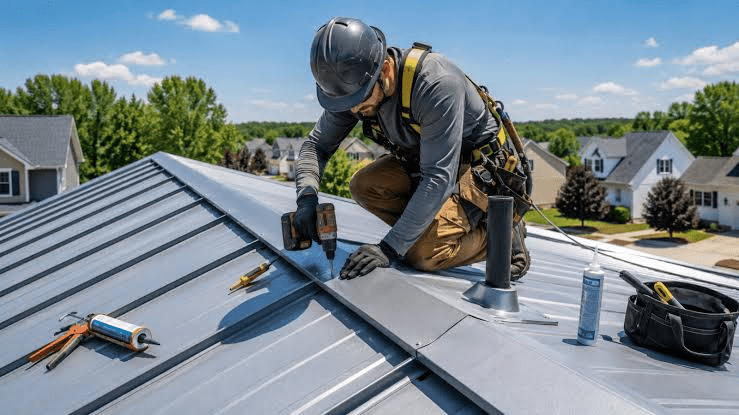
Once the underlying components are prepared, the new metal panels can be installed. Precision is important during this stage because panels must be aligned correctly and fastened according to the manufacturer’s specifications.
Fasteners play an especially important role in the performance of a metal roofing system. Incorrect placement, over-tightening, under-tightening, or using incompatible fasteners can contribute to leaks and premature deterioration. Contractors should use appropriate fasteners and follow the installation requirements of the selected roofing system.
Seams also require careful installation. In systems that use interlocking or mechanically secured seams, proper alignment and connection help maintain the roof’s resistance to water and wind.Professional installation is therefore just as important as the quality of the roofing material itself. Even an excellent metal panel can perform poorly if it is installed incorrectly.
Energy Efficiency and Metal Roofing
Energy efficiency is another factor that can influence a property owner’s decision to install a metal roof. Depending on the material, coating, insulation, ventilation, and overall building design, a metal roofing system can contribute to improved temperature management.
Reflective coatings can help reduce the amount of solar energy absorbed by the roof surface. This can be particularly useful in buildings where heat gain is a concern. However, roofing material should not be viewed independently from the rest of the building envelope. Insulation, ventilation, windows, doors, and heating and cooling systems all influence energy performance.
During a replacement project, property owners have an opportunity to evaluate the entire roofing assembly and identify improvements that may contribute to better long-term efficiency.Proper ventilation is an important but sometimes overlooked part of roof performance. Adequate airflow can help manage heat and moisture in the roof assembly. Poor ventilation may contribute to condensation, moisture problems, and premature deterioration of certain roofing components.
A roofing professional should evaluate existing ventilation during the replacement process. Depending on the building design, improvements may involve intake vents, exhaust vents, ridge ventilation, or other appropriate solutions.Ventilation requirements vary by roof design and building construction, so property owners should avoid assuming that one ventilation strategy will work for every structure.
Benefits of Replacing an Aging Metal Roof
Replacing an aging roof can provide several long-term benefits. One of the most obvious is improved protection against weather. A new roofing system can address deteriorated panels, damaged flashing, worn fasteners, and other components that may have become unreliable.
A replacement can also improve the appearance of a property. Modern metal roofing comes in a broad range of colors, finishes, and profiles, allowing owners to update the building’s exterior.Another potential advantage is reduced maintenance. An older roof with recurring leaks and frequent repairs can demand considerable attention. A properly installed replacement may provide more predictable performance and reduce the need for repeated emergency repairs.
There may also be opportunities to improve insulation, ventilation, drainage, and energy performance during the replacement project. Addressing these components together can create a more comprehensive roofing upgrade.
Maintaining a New Metal Roof
Although metal roofing is durable, it is not maintenance-free. Regular inspections can help identify small issues before they become significant. Property owners should periodically look for damaged panels, loose fasteners, blocked drainage areas, deteriorated sealants, and signs of corrosion.
Leaves and other debris should not be allowed to accumulate around drainage points. Gutters, downspouts, valleys, and other water-management components should remain clear so that water can move away from the roof efficiently.
Branches should also be kept away from the roof when possible. Falling branches can scratch, dent, or puncture metal panels, while constant contact from vegetation can damage protective coatings.After severe weather, an inspection can be particularly useful. Early detection of storm damage can prevent small problems from developing into larger leaks.
Understanding the Cost of Replacement
The cost of metal roof replacement can vary significantly depending on several factors. Roof size, material selection, panel profile, roof complexity, labor requirements, removal costs, structural repairs, insulation, underlayment, flashing, and ventilation can all affect the final price.
A simple roof with easy access may require less labor than a complex structure with multiple levels, penetrations, valleys, or difficult working conditions. Premium materials and specialized finishes may also increase the initial investment.
Property owners should avoid selecting a contractor solely on the basis of the lowest estimate. A significantly lower price may indicate differences in materials, installation methods, warranties, preparation, or scope of work. Comparing detailed estimates can provide a more meaningful understanding of what each contractor is offering.
Selecting a Qualified Roofing Contractor
Choosing an experienced contractor is one of the most important decisions in a replacement project. A contractor should have appropriate experience with metal roofing systems and understand the installation requirements of the selected material.
Property owners should ask about previous projects, warranties, insurance, project timelines, materials, cleanup procedures, and the specific installation process. Written estimates should clearly explain what is included so that unexpected costs are less likely to arise.
Communication is also important. A professional contractor should be willing to explain the work, answer questions, discuss potential complications, and provide updates throughout the project.The contractor’s installation quality can have a major effect on the roof’s long-term performance. For this reason, experience and workmanship should receive as much consideration as the material itself.
When Replacement Should Not Be Delayed
Delaying necessary roof replacement can create additional problems. A small leak may eventually damage insulation, decking, walls, ceilings, or interior finishes. Repeated exposure to moisture can also encourage deterioration and create conditions that are more difficult and expensive to correct.
Visible corrosion, widespread panel damage, recurring leaks, sagging areas, failed seams, or significant structural deterioration should not be ignored. Even if a property owner is uncertain whether replacement is necessary, arranging a professional inspection can provide useful guidance.
Taking action early allows more time to compare materials, obtain estimates, schedule contractors, and prepare the property. Waiting until a major leak or storm emergency occurs can limit options and increase pressure to make a quick decision.
Final Thoughts on Long-Term Roof Protection
A metal roof replacement is a significant investment, but it can provide long-term protection and improve the overall condition of a property. The success of the project depends on more than selecting attractive panels. Proper inspection, material selection, roof preparation, underlayment, flashing, ventilation, fastening, installation, and maintenance all contribute to the final result.
Property owners should approach replacement as a complete roofing project rather than simply exchanging old panels for new ones. Evaluating the underlying structure and improving vulnerable components at the same time can help create a more reliable roofing system.
Professional commercial cleaning and property maintenance may help keep a building’s interior and exterior presentable, but roofing requires specialized expertise and dedicated care. By recognizing early signs of deterioration and addressing problems before they become emergencies, property owners can protect their investment and maintain a safer, more comfortable building.
Ultimately, a successful roof replacement combines quality materials with skilled workmanship and ongoing maintenance. With thoughtful planning and professional installation, a new metal roofing system can provide dependable weather protection, enhance the property’s appearance, and serve as a durable component of the building for many years.