The Best Room in the House No Longer Has One Job
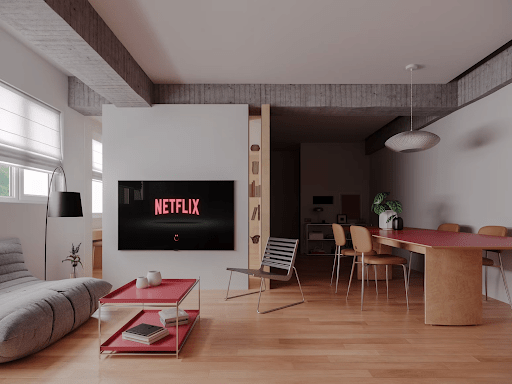
Luxury leisure is moving indoors, though not because affluent homeowners stopped traveling, dining out or attending premieres. The sharper change is architectural: hardware disappears quietly into walls, ceilings and furniture, allowing one room to serve a Friday film, Saturday football and a quiet Sunday listening session. CEDIA’s planning framework treats audio, video, data, heat and lighting as one design problem. The strongest rooms shed their equipment when nobody is using it. Motorized shades, concealed speakers, acoustic joinery and one-touch control make the experience feel composed rather than installed. The new status symbol is not a larger black rectangle. It is a room that changes character without looking like a showroom.
When the Screen Vanishes After the Credits
A television once dictated the furniture plan. Now designers can hide a projector screen in a ceiling pocket, place a display behind moving artwork or specify modular MicroLED panels at architectural scale. Samsung’s 146-inch The Wall demonstrates the extreme end of that shift, with self-emitting modules forming a near-seamless canvas.
Brightness does not solve every room. Projectors reward controlled light and larger images; emissive displays suit daytime use. The decision is not brand or resolution. It is whether the room will remain dark, how far viewers sit from the image and what should occupy the wall when the system sleeps.
7.1.4 Is a Layout, Not a Shopping List
The numbers in a 7.1.4 Dolby Atmos layout describe seven ear-level channels, one low-frequency channel and four overhead channels. Buying eleven speakers does not guarantee convincing sound. Placement, room symmetry, bass behavior and acoustic treatment decide whether a whisper stays intelligible and an explosion remains controlled.
Luxury interiors can treat absorption and diffusion as millwork. Fabric wall panels hide treatment; perforated surfaces conceal speakers; a ventilated equipment rack moves heat and fan noise away from the seats. Budget for measurement and calibration before upgrading decorative seating. A beautifully upholstered room with uneven bass is still a poor cinema.
Ten Minutes Between Two Longer Rituals
At-home entertainment no longer arrives in two-hour blocks. People move between a streamed match, a music queue, a group chat and short games without formally ending the evening. The tower rush online page fits that stop-and-resume rhythm because Galaxsys designed Tower Rush as a fast game built around stacking floors and rising odds. Released on February 28, 2024, the title lists a variable RTP range of 96.2% to 97.6%, depending on configuration. Each additional floor extends the round and increases exposure to a failed build, so the decision is whether to stop rather than how to predict a guaranteed outcome. A session cap works better than reacting to the previous result. RTP is a long-run mathematical return, not a forecast for tonight’s play.
Five Remotes Are Four Too Many
The least glamorous part of a luxury room determines how often it gets used. A guest should not need instructions to lower shades and hear the correct speakers. Scenes can coordinate lighting, climate, display and audio, while physical buttons remain useful when a phone is elsewhere.
Digital gaming needs the same restraint. Instant access is useful only when limits and records remain visible. On Melbet India, the useful pre-session checks are the game rules, listed RTP configuration, stake limits and account controls. Players should confirm that the service is lawful where they live, read bonus and withdrawal terms and use deposit or time limits where offered. Withdrawal may depend on identity verification under the operator’s current rules, so check KYC requirements before depositing. A fixed balance keeps casino spending separate from household subscriptions.
Why the Listening Room Refuses to Multitask
Not every space benefits from transformation. A dedicated vinyl listening room works precisely because it removes choice: two speakers, one chair, records within reach, no alerts on the wall. Here, silence between tracks is part of the design brief.
The expensive work is often invisible. Floating floors, isolated wall assemblies and solid doors reduce transmission; carefully placed treatment controls reflections without deadening the room. Mechanical noise matters too. A faint HVAC rush that vanishes during a film can remain obvious during the opening bars of a piano recording.
Design for the Bad Swing
A simulator is not merely a screen with a launch monitor. The room must accommodate the tallest user’s full swing, the depth required for ball flight or radar tracking, impact-screen clearance and protection from the shot nobody expected. Ceiling fixtures and decorative pendants are liabilities here.
Good projects make the bay earn its floor area. Retractable screens, flush storage and movable seating allow the same volume to host coaching, exercise or a match broadcast. Before construction, test both right- and left-handed swings with the actual club length. The elegant render is irrelevant if a driver meets the ceiling.
Audit the Friction, Not the Gadget Count
Before approving an entertainment room, run three scenarios: one person starts a film, a guest plays music, and the network fails during a live event. Each should have a clear path that does not require the installer.
- Keep essential lighting and volume controls physical.
- Provide ventilation and service access for every concealed component.
- Record input names, account ownership and warranty details in one household document.
The most convincing luxury room is ready in seconds, quiet when idle and repairable without opening a finished wall.