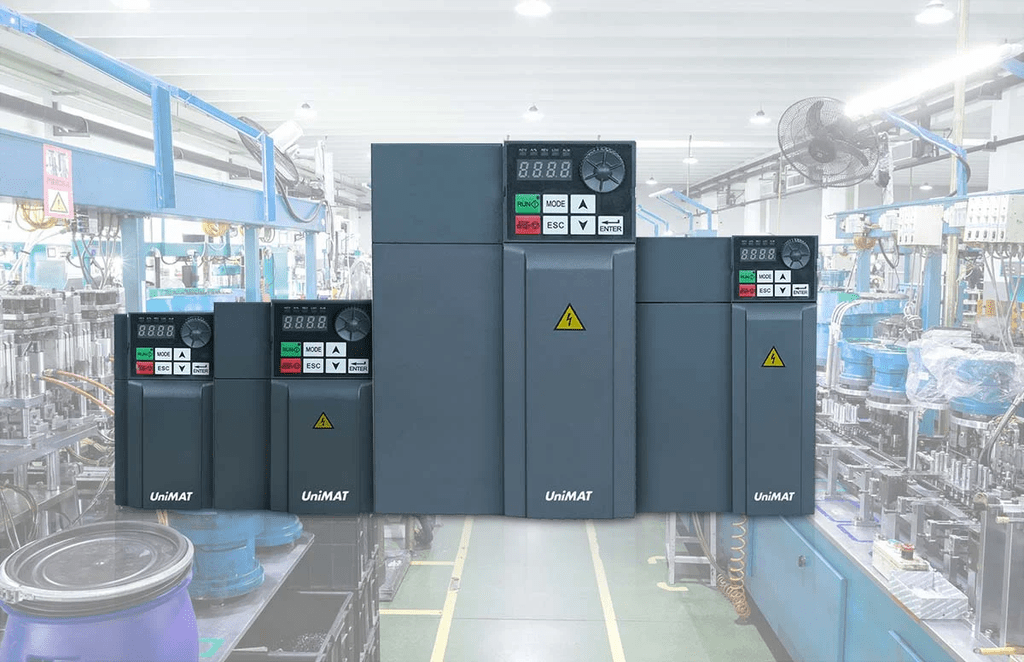
How VFDs Help Facilities Improve Motor Control
Motors are responsible for a significant share of the energy used in many commercial and industrial facilities. Pumps, fans, conveyors, compressors, and other motor-driven equipment often operate for long periods, making motor control an important consideration for both performance and operating costs. Variable frequency drives give facility teams a more precise way to control motor speed and torque instead of relying on simple on-and-off operation.
By adjusting the electrical frequency and voltage supplied to a motor, a VFD can match motor output more closely to actual system demand. That ability can improve equipment performance, reduce unnecessary energy use, and create smoother operating conditions. For facilities looking to modernize motor control, VFDs can become an important part of a broader automation and efficiency strategy.
What Is a Variable Frequency Drive?
A variable frequency drive, commonly called a VFD, is an electronic device used to control the speed of an alternating-current motor. It works by converting incoming AC power and then supplying the motor with electricity at an adjustable frequency and voltage. Because an AC motor’s operating speed is closely related to electrical frequency, changing the frequency allows the drive to control motor speed.
Traditional motor controls may simply start a motor at full speed and keep it running there until it is shut off. A VFD provides much more flexibility by allowing the motor to operate at the speed the application actually requires. This can be particularly useful for systems where demand changes throughout the day.
VFDs are commonly used with equipment such as:
- HVAC supply and return fans
- Cooling tower fans
- Chilled-water and condenser-water pumps
- Booster pumps
- Process pumps
- Conveyors
- Compressors
- Mixers and other industrial machinery
VFDs Allow Motor Speed to Match Demand
One of the biggest advantages of VFDs is the ability to match motor output with changing operating requirements. Many systems do not need to run at maximum capacity every minute they are operating. Without variable-speed control, a motor may continue running at full speed even when system demand is relatively low.
A VFD allows the motor to slow down when full output is unnecessary and increase speed when demand rises. In an HVAC application, for example, a fan might operate at a lower speed during periods of reduced occupancy and increase output when additional airflow is required. A pump can similarly adjust its speed as pressure or flow requirements change.
This type of responsive operation gives facility teams greater control over building systems. When combined with sensors, building automation controls, or programmable logic controllers, VFDs can automatically respond to real-time conditions instead of relying entirely on manual adjustments.
Variable Frequency Drives Can Reduce Energy Consumption
Energy efficiency is another major reason facilities install VFDs. Motors operating at full speed consume energy even when the connected system does not need maximum output. Reducing motor speed during periods of lower demand can substantially reduce the electricity required by certain applications, especially fans and centrifugal pumps.
This relationship is particularly important for centrifugal loads. A relatively modest reduction in fan or pump speed can produce a much larger reduction in power demand. As a result, applications with long operating hours and frequently changing loads are often strong candidates for VFD control.
Facilities evaluating energy savings should consider several factors before determining whether a VFD retrofit makes sense, including:
- Motor size
- Daily operating hours
- Existing control method
- Frequency of partial-load operation
- Utility rates
- Mechanical system requirements
- Existing automation infrastructure
A detailed assessment can help determine where VFDs are most likely to provide meaningful operational and energy benefits.
Softer Starting Can Reduce Mechanical Stress
Starting a motor directly across the electrical line can create a rapid increase in current and torque. That sudden start may place additional mechanical stress on belts, couplings, bearings, shafts, and other connected components. Frequent starting and stopping can make these stresses more noticeable over time.
A VFD can gradually accelerate the motor instead of immediately applying full operating speed. This controlled ramp-up can create smoother starts and reduce the shock placed on mechanical equipment. The drive can also provide controlled deceleration when the motor stops.
Smoother operation may help reduce unnecessary wear within the overall system. While VFDs do not eliminate normal maintenance requirements, they can help create operating conditions that are easier on certain mechanical components.
Better Process Control Improves Facility Performance
VFDs are not used solely for energy conservation. In many facilities, their biggest advantage is improved control over an operating process. Being able to adjust motor speed precisely allows operators and automated systems to fine-tune airflow, pressure, flow rates, production speeds, and other variables.
Consider a conveyor system that needs different speeds depending on the material being processed. A VFD can allow operators or control systems to change conveyor speed without replacing mechanical components. Pumps can also be controlled to maintain a desired pressure instead of cycling repeatedly between fully on and fully off.
That flexibility can make equipment easier to integrate into modern automated systems. Facilities can use VFDs with sensors and controllers to create motor-driven systems that respond dynamically to real operating conditions.
VFDs Can Support Building Automation Systems
Modern building automation systems are designed to collect information and adjust equipment based on factors such as temperature, pressure, occupancy, schedules, and system demand. VFDs can play an important role within these systems because they provide a way for automation controls to directly adjust motor output.
For example, a building automation system may monitor static pressure in an air duct. As pressure changes, the automation system can send a command to the VFD controlling the supply fan. The drive then increases or decreases fan speed to help maintain the desired pressure.
Similar control strategies can be applied to pumps and other equipment. Integrating VFDs with automation systems can give facility managers greater visibility and control while reducing the amount of unnecessary full-speed operation.
Where Facilities May Benefit Most From VFDs
Not every motor requires a variable frequency drive. Motors that operate continuously at a fixed load may provide fewer opportunities for variable-speed control. Applications with changing demand, however, can often make better use of VFD technology.
Good candidates commonly include equipment that currently relies on throttling valves, dampers, bypass systems, or frequent cycling to regulate output. In these situations, reducing the motor’s actual speed may provide a more direct way to control the process.
Before installing a VFD, facilities should evaluate motor compatibility, electrical conditions, environmental requirements, control objectives, and equipment specifications. Proper drive sizing and installation are important for achieving reliable performance.
What Facility Teams Should Consider Before Installation
Selecting a VFD involves more than matching it to a motor’s horsepower rating. Engineers and electrical professionals also need to consider voltage, current, load characteristics, enclosure requirements, control methods, and the environment where the equipment will operate.
Facilities should also consider whether electrical harmonics, electromagnetic interference, motor cable length, or motor insulation could become concerns. Some applications may require additional filtering, line reactors, output reactors, or other equipment depending on system design.
Planning should also include programming and commissioning. Parameters such as acceleration time, deceleration time, minimum speed, maximum speed, overload protection, and control signals should be configured for the specific application.
Maintenance and Monitoring Still Matter
VFDs can improve motor control, but they are still electronic equipment that requires appropriate maintenance. Dust, heat, moisture, loose electrical connections, and inadequate ventilation can affect drive performance and service life.
Facility maintenance programs may include periodic inspection of cooling fans, filters, terminals, wiring, and environmental conditions. Drive fault histories can also provide valuable information when troubleshooting motor or process problems.
Many modern drives provide diagnostic information that can help maintenance personnel identify abnormal conditions. When connected to a building automation or supervisory control system, certain operating data and alarms may also be monitored remotely.
Frequently Asked Questions About Variable Frequency Drives
What does a variable frequency drive do?
A VFD changes the frequency and voltage supplied to an AC motor so its speed and torque can be controlled. This allows motor output to match the requirements of the application.
Do VFDs reduce electricity use?
They can, particularly when controlling centrifugal fans and pumps that frequently operate below maximum demand. Actual savings depend on motor load, operating hours, system design, and control strategy.
Can a VFD be installed on any motor?
Not necessarily. Motor specifications, insulation, cooling, load characteristics, and other factors should be evaluated before adding a VFD.
What equipment commonly uses VFDs?
Common applications include HVAC fans, pumps, cooling towers, conveyors, compressors, mixers, and other motor-driven equipment that benefits from adjustable speed.
Can VFDs work with building automation systems?
Yes. Many drives can receive commands from building automation systems and other controllers, allowing motor speed to change automatically based on sensor readings, schedules, or system demand.
Do VFDs require maintenance?
Yes. Routine inspection can help identify problems involving cooling, contamination, electrical connections, and drive faults before they lead to equipment failure.
Building Smarter Motor Control Into Facility Operations
Motors are essential to countless facility systems, but operating them at full speed all the time is not always the most effective approach. Variable frequency drives give facility teams the ability to control motor speed according to actual system requirements while supporting smoother starts, more precise process control, and potential energy savings.
When properly selected, installed, and integrated, VFDs can also strengthen a facility’s broader automation strategy. By connecting motor performance with real-time operating conditions, facilities can move toward more responsive equipment control, better system visibility, and more efficient day-to-day operations.