How to Style Curtain Bangs, Even When You Don’t Feel Like It
Curtain Bangs: A Polished Look With Minimal Daily Effort
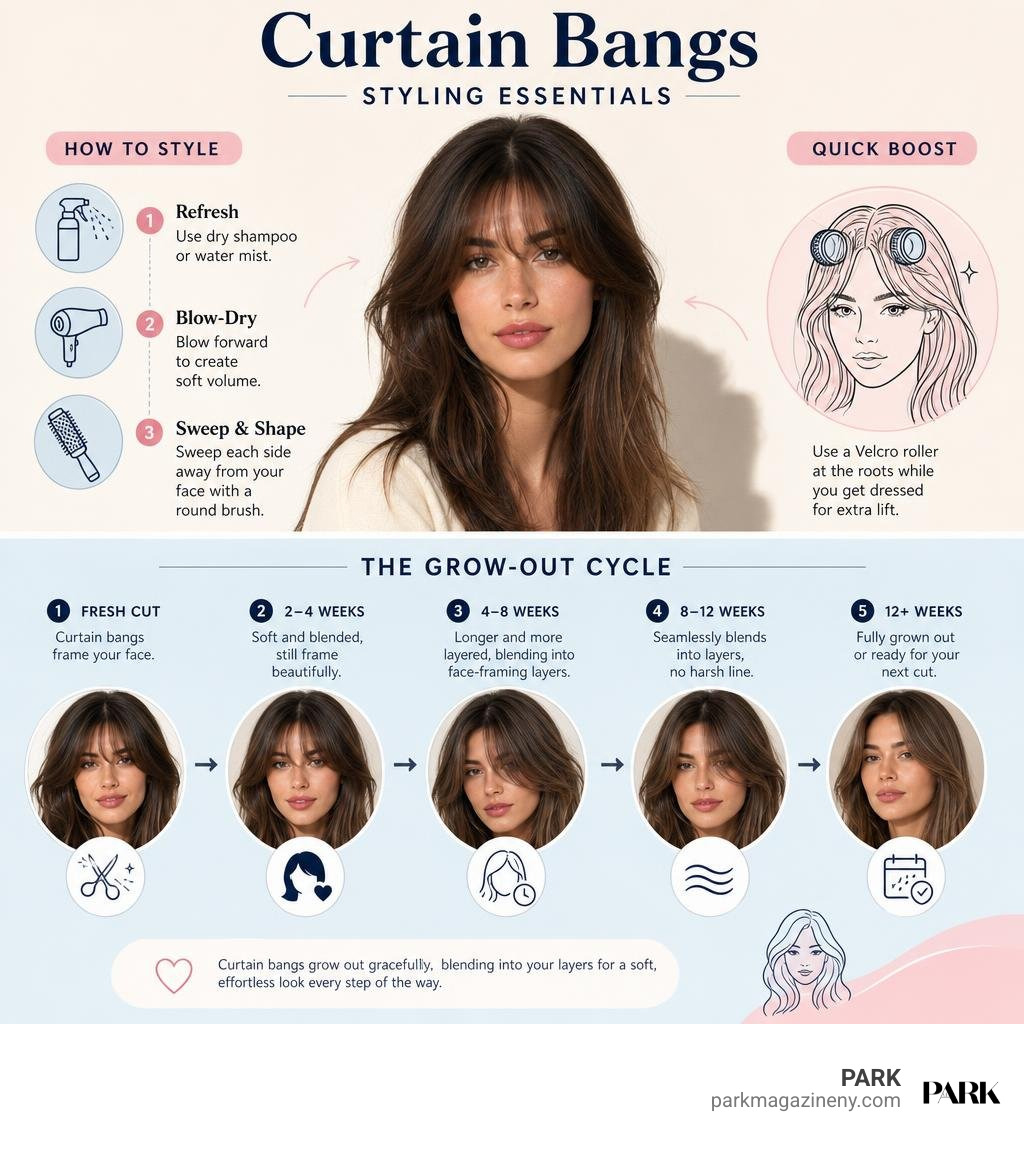
Curtain bangs are soft, center- or off-center-parted fringe that is shorter near the middle and longer toward the cheekbones. On low-effort days, refresh them with dry shampoo or water mist, then blow-dry them forward and sweep each side away from your face with a round brush. A Velcro roller while you get dressed can add lift without much work.
They are easier to wear than blunt bangs because the tapered ends blend into face-framing layers as they grow. That makes them a smart change for anyone who wants more shape around the eyes and cheekbones without committing to a heavy, straight-across fringe.
The look has clear 1970s roots, often linked to icons such as Brigitte Bardot, but it remains a modern favorite. Pinterest searches for curtain bangs have surged 600%, while related TikTok hashtags have earned millions of views. The appeal is simple: they can look intentionally styled even when the rest of your hair is in a quick bun, ponytail, or air-dried wave.
I am W.A. Muller, and this guide will help you choose, style, maintain, and grow out curtain bangs with less daily fuss.
Curtain bangs further reading:
The Ultimate Anatomy of Curtain Bangs and Face Shape Matching
At their core, curtain bangs are designed to mimic draped fabric framing a window. Instead of sitting straight across the forehead like a traditional blunt fringe, they open in the center and cascade outward. This arch creates a gentle angle that draws the eye directly toward the cheekbones, temples, and jawline.
When we look at modern hairstyling, understanding how different bangs behave is essential before booking an appointment.
| Bang Style | Cut Profile | Daily Styling Time | Grow-Out Transition | Best Suited For |
|---|---|---|---|---|
| Curtain Bangs | Shorter center, tapered longer toward cheekbones | 2–5 minutes | Blends into long layers within 3–6 months | Universal; balances round, square, heart, and oval faces |
| Blunt Bangs | Straight horizontal cut across the forehead | 10–15 minutes | Requires pinning back or awkward side sweeps | Oval, oblong, and high foreheads |
| Wispy Bangs | Fine, feathered, piecey strands with light density | 3–5 minutes | Melts into length softly | Fine hair textures and smaller foreheads |
Cosmetologists categorize facial balance using geometric principles. For round face shapes, keeping the center pieces shorter while tapering the outer strands below the cheekbones visually elongates the face. For square jawlines, feathered curtain bangs soften strong angles by creating gentle diagonal movement. Heart-shaped faces benefit from cheek-grazing fringe that balances a broader forehead with a narrower chin, while oval faces have the symmetry to pull off virtually any length variation.
Curtain bangs are also exceptionally flattering for mature skin. Soft, feathered strands drape across the temples, naturally softening fine lines along the forehead without the harsh, heavy perimeter of blunt cuts. When pairing a fresh cut with a clean morning routine, knowing how to choose the right concealer for your skin tone ensures your radiant skin and face-framing hair work together effortlessly.
Adapting Fringe for Every Hair Texture
Every hair texture interacts with face-framing cuts differently. A tailored approach ensures your bangs look intentional rather than uncooperative:
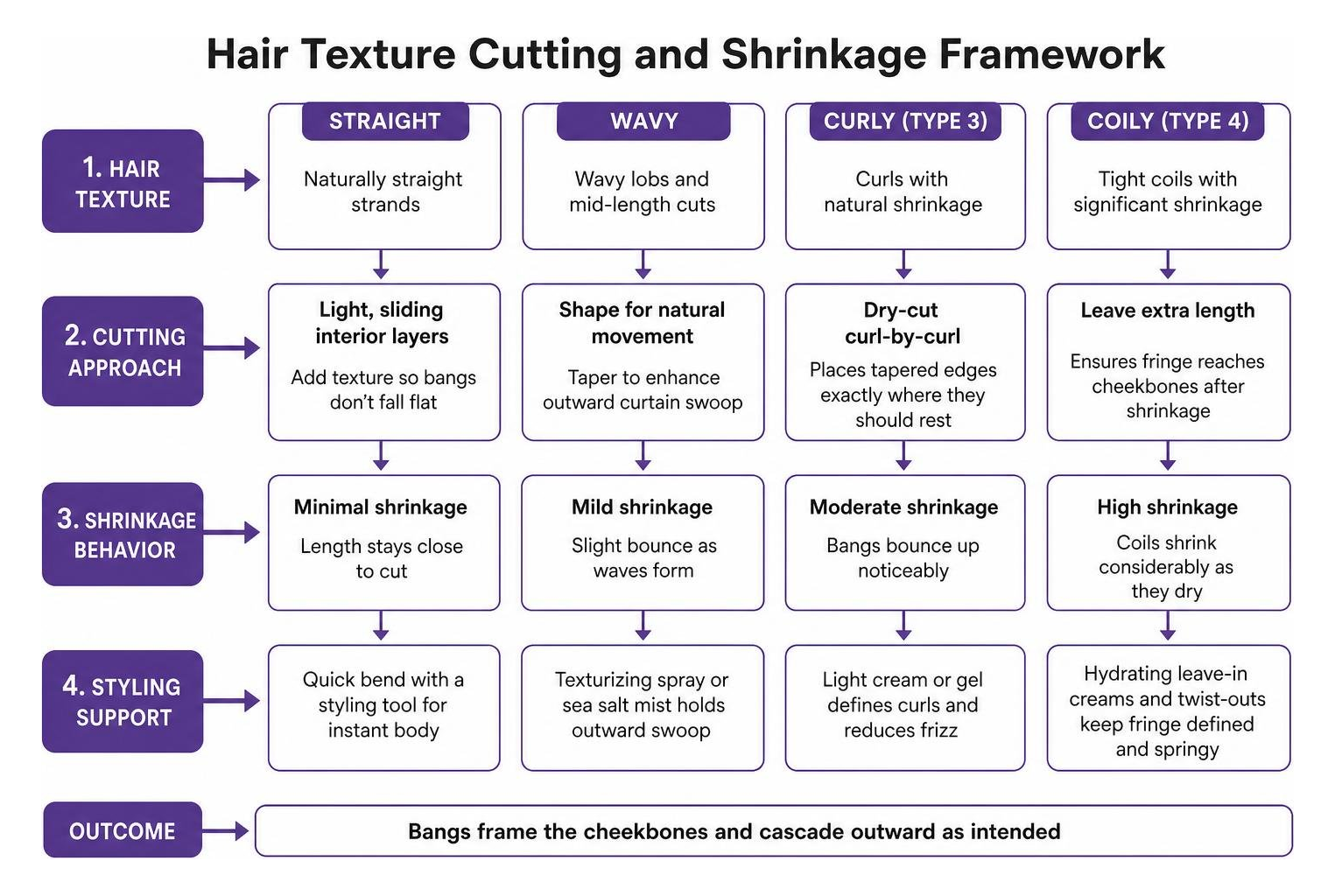
- Straight Hair: Naturally straight strands benefit from light, sliding interior layers. Without texture, straight bangs can fall flat against the forehead. A quick bend with a styling tool gives them instant body.
- Wavy Hair: Wavy lobs and mid-length cuts offer natural movement. Wavy textures hold an outward curtain swoop easily with a bit of texturizing spray or sea salt mist.
- Curly Hair (Type 3): Curls require dry-cutting techniques. When curly hair is cut wet, natural shrinkage causes the fringe to bounce up significantly shorter than planned. Cutting curl-by-curl allows your stylist to place the tapered edges right where they should rest.
- Coily Hair (Type 4): Tight coils shrink considerably as they dry. Leaving substantial extra length ensures the bangs frame the cheekbones once styled. Hydrating leave-in creams and twist-outs keep coily curtain fringe defined and springy.
Staying ahead of current fashion trends in New York means embracing your natural texture while letting tailored layers do the hard work for you.
Lazy-Day Styling: How to Look Polished in Under Five Minutes
Styling your fringe does not require an elaborate morning session. Hair shape is determined by temporary hydrogen bonds. When hair is damp or exposed to heat, these bonds soften; as hair cools and dries in a specific position, the bonds lock into place. Mastering directional airflow allows you to style your fringe in minutes.
Because fringe rests directly against the forehead, it absorbs natural facial oils, sunscreen, and moisturizer faster than the rest of your hair. On busy mornings, you do not need to wash your entire head. Simply isolate the bang section at the sink, wash with a drop of shampoo, and rough-dry. A proactive mist of dry shampoo applied to clean roots will absorb oils before they cause separation.

Pairing low-effort curtain bangs with a messy top knot or a sleek half-up style creates an elevated aesthetic for casual meetings or brunch. If you wear prescription frames or sunglasses, consulting the modern NYC professional’s guide to eyewear: function meets subtle style helps you balance frame dimensions with face-framing strands.
Styling Curtain Bangs for Low-Effort Days
To get an effortless swoop with minimal tools, follow this simple workflow:
- Dampen and Prep: Lightly mist your bangs with water and apply a dime-sized amount of lightweight heat protectant.
- Directional Blowout: Using a 1.75-inch ceramic or boar-bristle round brush, roll the entire bang forward toward your nose while directing the airflow downward. This resets stubborn roots and eliminates cowlicks.
- The Outward Sweep: Split the fringe down the center. Place the brush on the right side, rolling up and back toward the temple while drying. Repeat on the left side.
- Cool Shot Setting: Hit each side with your dryer’s cool shot button for five seconds to lock the hydrogen bonds into their outward curve.
- Heatless Roller Trick: Alternatively, roll warm, damp bangs over a medium Velcro roller away from your face while applying your morning skincare. Unroll, tousle with your fingers, and mist with light texturizing spray.
Maintenance, DIY Trimming, and the Grow-Out Phase
Curtain bangs maintain their ideal shape when trimmed every 4 to 6 weeks. However, unlike blunt bangs that demand strict salon visits to stay out of your eyes, curtain fringe simply transitions into cheek-grazing layers as it grows.
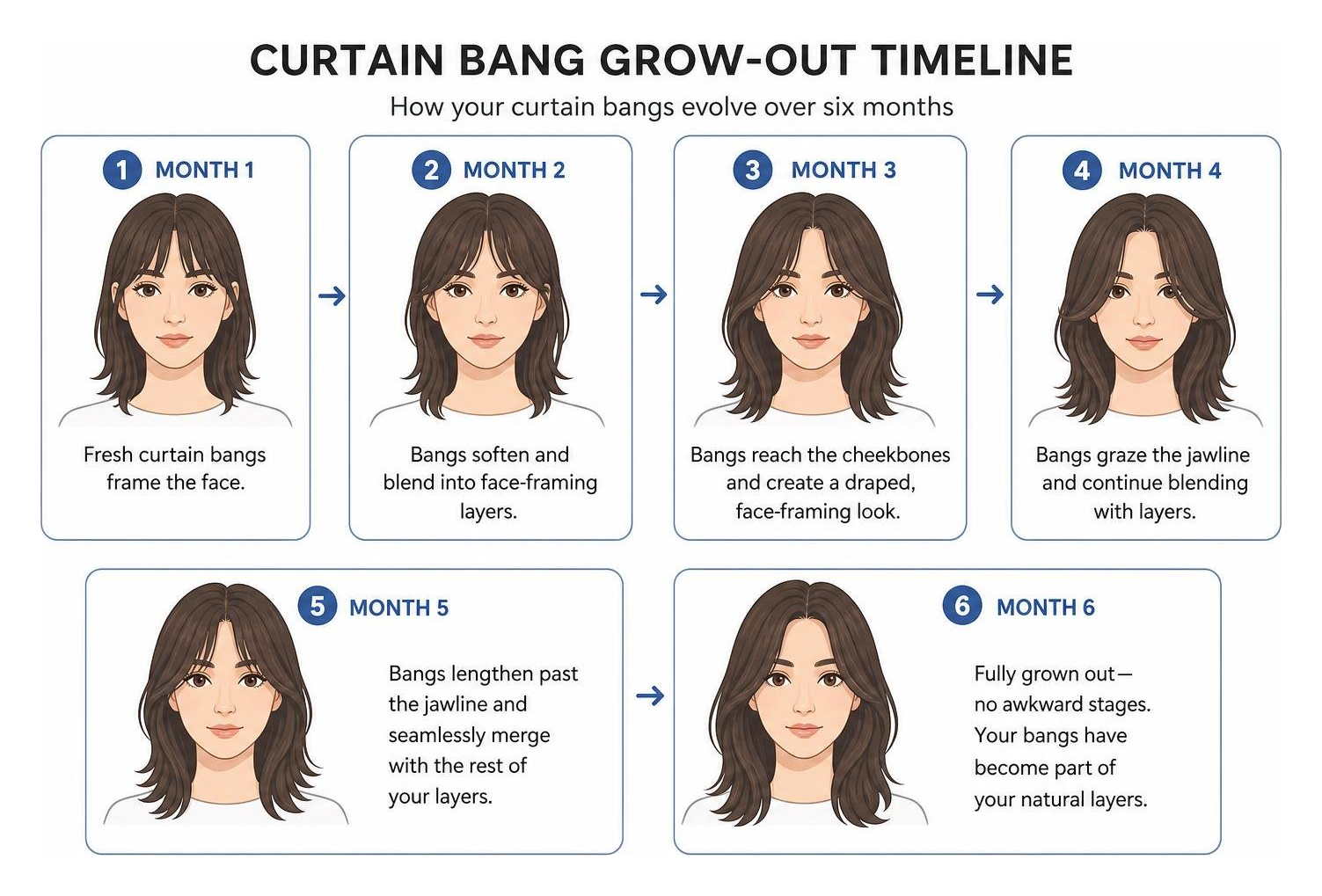
Over a 3 to 6-month period, your fringe gracefully evolves into drape bangs hitting the jawline, eventually merging into your standard layers without any awkward intermediate phases.
Trimming Curtain Bangs at Home Between Salon Appointments
If you cannot make it to the salon for a quick maintenance clean-up, you can tidy up the ends at home with the right technique:
- Use the Right Tools: Never use standard household scissors. Invest in sharp stainless steel haircutting shears and texturizing shears.
- Cut Dry Only: Always trim on dry, styled hair so you see the exact length and natural bounce.
- Section the Triangle: Using a tail comb, part a clean triangle at the front of your hairline, pointing back toward the crown, and clip the rest of your hair safely away.
- Cross-Forehead Technique: Comb the right section across your forehead toward the left eyebrow, hold the ends between your fingers, and point-cut vertically at a slight angle. Repeat on the opposite side.
- Point-Cut and Soften: Release both sides. Snip vertically into the ends using texturizing shears to soften any blunt lines and create a seamless, feathered edge.
Frequently Asked Questions About Face-Framing Fringe
How do I stop my bangs from splitting in the middle?
An unwanted part or split is usually caused by a natural cowlick drying flat. To fix this, dampen the roots completely. Using a fine-tooth comb or round brush, blow-dry the roots back and forth across your forehead in an X-pattern before sweeping them to the sides. This resets the root direction before setting the final shape.
Are curtain bangs high-maintenance for fine or thin hair?
Not at all. Fine hair often looks much fuller with curtain bangs because the light, tapered framing adds body around the face. To keep fine hair from falling flat, use a lightweight root-volumizing spray rather than heavy creams or oils, and set the fringe with a Velcro roller for long-lasting lift.
How long does it take to grow out curtain bangs?
Curtain bangs typically take 3 to 6 months to grow out fully into medium-length layers. Because the sides are already cut at an angle, you can easily sweep them to the side, pin them with creaseless clips, or tuck them behind your ears as they lengthen.
Conclusion
Curtain bangs remain one of the most versatile and forgiving hairstyles you can choose. Whether you are running out the door on a Monday morning or dressing up for an evening event, a few quick styling motions provide instant structure and timeless elegance.
Just as a great haircut reframes your look, investing in timeless lifestyle pieces brings lasting value to your everyday routine. Explore our curated overview of the ultimate luxury investments worth considering to discover classic additions for a well-rounded wardrobe.