How to Choose the Right Rigid Box Packaging Supplier for Your Brand
Choosing a supplier for premium boxes can affect far more than appearance. Poor sizing, weak board, uneven wrapping, or inconsistent finishes can turn a strong design into disappointing packaging.
A reliable rigid box packaging supplier should understand the product first, then recommend a structure that suits its weight, shape, presentation, and handling needs. Buyers should compare suppliers on production quality, sampling, customisation, and consistency rather than price alone.
What Should a Rigid Box Packaging Supplier Be Able to Provide?
A capable supplier should offer more than a catalogue of box styles.
Look for custom sizing, suitable board options, printing support, inserts, surface finishes, prototypes, and guidance before full production begins. The supplier should also explain why one structure may suit your product better than another.
That advice matters. A box made for a lightweight gift item may not perform well for a heavy bottle or delicate product.
Strong suppliers ask useful questions before quoting. They want to know the product dimensions, weight, quantity, preferred opening style, branding needs, and whether the item requires extra support inside the box.
Start With the Product Before Choosing the Box
The product should decide the package, not the other way around.
Measure the item carefully and consider how much movement is acceptable once it sits inside the box. Weight, fragility, shape, storage, and shipping conditions can all change the structure you need.
For example, a perfume bottle may need a fitted insert that holds it upright. An apparel set usually needs more open internal space and may rely more on presentation than impact protection.
This is why rigid packaging boxes should not be chosen from external dimensions alone. Internal fit, board strength, insert design, and opening experience all need to work together.
Which Rigid Box Style Fits Your Product?
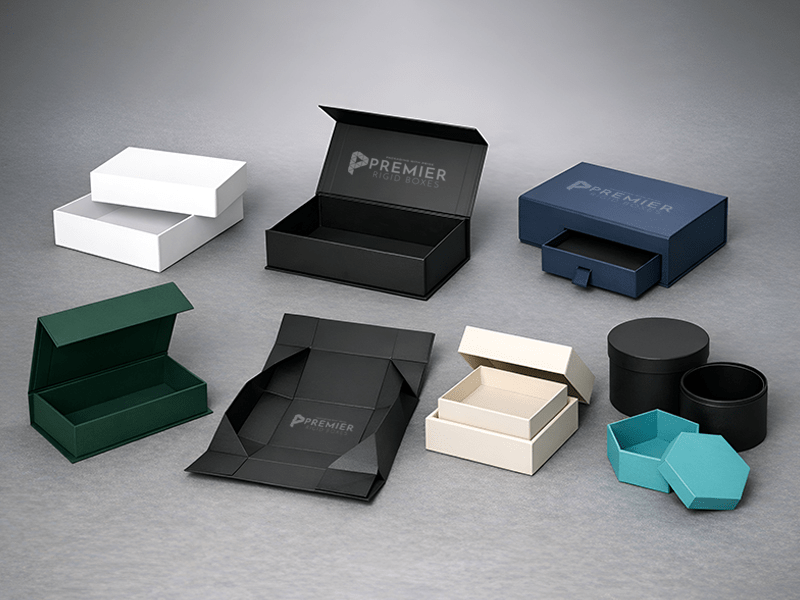
Different constructions create different opening experiences and storage requirements.
Two-Piece Boxes
A separate lid and base work well when the product should appear gradually as the lid lifts away. This format is simple, familiar, and suitable for many gift, apparel, beauty, and retail items.
Magnetic Closure Boxes
Magnetic lids offer controlled opening and can be useful when customers may keep and reuse the box. Magnet placement and lid alignment need to be accurate for the closure to feel balanced.
Sleeve and Drawer Boxes
Drawer-style boxes create a sliding reveal. They work particularly well when presentation forms part of the customer experience, but the inner tray needs enough clearance to move smoothly.
Collapsible Rigid Boxes
Collapsible structures can reduce the space required during storage and transport before assembly. They may suit brands that need a rigid appearance while managing warehouse space more carefully.
How Do You Judge Material and Construction Quality?
Photos rarely show the details that separate a well-made box from an average one.
Check whether the walls feel firm and even. Corners should look square rather than crushed or rounded unintentionally. Wrapped paper should sit smoothly without bubbles, visible glue marks, or lifting edges.
Open and close the box several times. A lid that feels too loose can reduce the sense of quality, while one that fits too tightly can frustrate customers.
If the design includes magnets, drawers, or inserts, test those parts as well. Small alignment errors become much more obvious when someone handles the finished package.
A thicker board is not automatically better. The correct thickness depends on the box dimensions, product weight, and overall structure.
Which Printing and Finishing Options Matter?
Finishes should strengthen the design, not compete with it.
Foil stamping can draw attention to a logo or short piece of text. Embossing and debossing add physical depth. Spot UV can highlight selected areas, while matte, soft-touch, or gloss surfaces change how the box feels and reflects light.
Using several treatments at once does not guarantee a stronger result. In many cases, one carefully chosen finish creates more impact than multiple decorative effects.
Before approving production, view artwork at actual size. Fine lettering, thin foil lines, and small embossed details may look clear on screen but behave differently on a physical surface.
What Should You Ask Rigid Boxes Suppliers Before Ordering?
Price comparisons make more sense when every supplier is quoting the same specifications.
Ask about minimum order quantities, board thickness, box dimensions, insert materials, printing methods, finishing options, lead times, and quality checks.
You should also find out whether the supplier can provide a prototype or sample before the full run.
Colour consistency deserves attention if you plan to reorder regularly. Ask how repeat orders are matched, especially when your brand relies on a specific printed colour.
Good rigid boxes suppliers should also tell you what files they need for artwork and which areas of the design may be affected by folds, corners, magnets, or wrapped edges.
Why Sampling Matters Before Bulk Production
A sample can expose problems that a digital mockup cannot.
You may discover that the lid lifts too easily, the insert grips the product too tightly, or the logo sits closer to an edge than expected. The box might also feel larger in hand than it appeared on screen.
Use the sample with the real product whenever possible. Open it, close it, lift the item out, and check how it looks from a customer’s point of view.
That small review stage can prevent a much larger production mistake.
Final Thoughts
The right supplier should help you make better packaging decisions before manufacturing starts. Clear specifications, accurate samples, suitable materials, and consistent production matter more than choosing the lowest quote.
Brands comparing styles and custom options can explore rigid packaging boxes from Alpha Global Packaging to review structures that may suit different products and presentation needs.
Frequently Asked Questions
What should I look for in a rigid box packaging supplier?
Look for custom sizing, material knowledge, sample availability, print consistency, clear communication, quality control, and experience with the type of structure your product requires.
Can rigid packaging boxes be made in custom sizes?
Yes. Custom dimensions can be produced around the product, insert, and desired presentation. Accurate measurements should be confirmed before tooling or production begins.
What information should I provide to a rigid box supplier?
Share product dimensions, weight, required quantity, preferred box style, artwork, finishes, insert needs, and any storage or shipping concerns that may affect construction.
Should I request a sample before ordering rigid boxes?
Yes, especially for custom sizes, fitted inserts, magnetic closures, or large orders. A physical sample lets you check fit, handling, appearance, and finishing before committing to full production.