Need Corporate Catering In Los Angeles? Here’s What To Look For And What To Expect
Food can shape how people experience a business event. A well-planned menu helps employees feel appreciated, gives clients a warm welcome, and creates an atmosphere that feels polished without becoming stiff. The right catering team also removes a long list of logistical concerns, allowing event organizers to focus on guests, presentations, and company priorities.
Los Angeles businesses host everything from intimate boardroom meetings to rooftop receptions, production lunches, networking events, and large company parties. Each occasion has its own pace, guest expectations, and service requirements. Knowing what to look for in a caterer can help businesses create events that run smoothly and reflect their professional standards.
Look For Experience With Corporate Events
Corporate events aren’t the same as private dinner parties or casual social gatherings. Meetings may follow a strict agenda, presentations can run longer than expected, and meal service often needs to happen within a specific window. As Crateful Catering, a premier caterer in the area, explains: “A catering team should understand those realities before menu planning begins.”
Experience with business events helps a caterer anticipate details that might otherwise get overlooked. The team should ask about the venue, arrival schedule, meal period, guest count, room layout, loading access, and cleanup expectations. It should also understand when service needs to remain discreet and when the food should become a central part of the experience.
A capable corporate catering team should be prepared for occasions such as:
- Executive meetings that require polished food and quiet, attentive service.
- Employee lunches designed to reward teams or support company culture.
- Client presentations where hospitality contributes to a strong impression.
- Product launches, networking receptions, and branded company events.
- Holiday parties, milestone celebrations, and employee appreciation events.
- Conferences, retreats, workshops, and team-building activities.
Clear communication is just as important as a creative menu. Event organizers should know who the primary contact is, what information the caterer needs, and how changes will be handled as the event approaches.
Expect Menu Options That Match The Occasion
A corporate lunch for 20 employees shouldn’t feel like a scaled-down gala dinner. In the same way, an important client reception shouldn’t be planned around food that feels like ordinary office delivery. The menu should match the purpose, setting, timing, and tone of the event.
Tray-passed hors d’oeuvres can keep networking events moving, while buffet and family-style selections encourage guests to settle in and enjoy a complete meal. Plated service may be a better fit for executive dinners, awards ceremonies, or formal company celebrations.
Businesses should review a caterer’s corporate event menu before making a decision. The available options should offer enough variety to accommodate different preferences without making the menu feel scattered or excessive.
A well-rounded menu may include:
- Passed appetizers for cocktail receptions and networking events.
- Fresh salads that add color, texture, and balance.
- Pasta dishes suitable for lunch or dinner service.
- Seafood, poultry, and meat entrées for substantial meals.
- Vegetable-focused dishes that feel complete and carefully prepared.
- Desserts and smaller sweets that provide a polished finish.
The menu should feel appropriate for a professional setting while still giving guests something memorable to enjoy.
Choose The Right Service Style
Service style affects more than presentation. It influences timing, guest movement, portion control, staffing, and the overall energy of the event. The best choice depends on how formal the occasion is and what guests are expected to do while they eat.
Tray-passed service works well for cocktail receptions, networking events, and product launches. Guests can move through the space, speak with different people, and enjoy a selection of smaller bites without stopping for a formal meal.
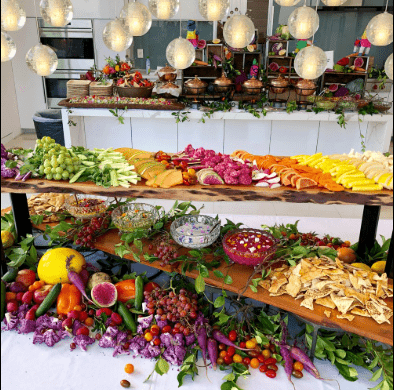
Buffet service offers guests flexibility and can efficiently serve larger groups. It also allows attendees to select the foods and portions they prefer. A well-managed buffet should remain organized, attractive, and replenished throughout the service period.
Family-style dining creates a more communal atmosphere. Shared platters encourage conversation and can make an executive dinner, retreat, or team celebration feel more personal. Plated meals are better suited to formal events where presentation, timing, and individual service are priorities.
Interactive stations can add energy without distracting from the gathering’s business purpose. Options may include:
- A live pasta station with dishes prepared and served by chefs.
- A taco station featuring several proteins, vegetables, and accompaniments.
- A seafood or crudo station with chilled selections and garnishes.
- A dessert station that gives guests several smaller choices.
The right format should support the event schedule rather than interrupt it. An experienced caterer can explain the advantages of each option and recommend a setup based on the venue, guest count, and timeline.
Ask How Dietary Needs Will Be Handled
Dietary accommodations are now a standard part of corporate event planning. Vegetarian, vegan, gluten-free, and dairy-free requests may all appear on the same guest list. Food allergies can require an additional level of care and communication.
Businesses should ask how dietary information will be collected, documented, and shared with the culinary and service teams. Guests should be able to identify suitable dishes without having to search for a staff member or repeatedly explain their needs.
The goal isn’t simply to remove ingredients from a standard plate. A thoughtful caterer creates options that feel complete and intentional. Guests with dietary restrictions shouldn’t receive an afterthought while everyone else enjoys a carefully composed meal.
Clear menu labels can also make buffet and station service more comfortable. Guests can make informed choices, service lines move more efficiently, and event organizers spend less time answering food-related questions.
Review The Quality And Range Of The Food
Corporate catering should still feel like a dining experience. Fresh ingredients, balanced flavors, careful preparation, and attractive presentation can separate a memorable meal from food guests forget as soon as the meeting ends.
Businesses should review the caterer’s actual menu before making a decision. A broad selection can indicate culinary flexibility, but variety alone isn’t enough. The dishes should work together and make sense for the setting.
A strong menu may combine seafood, poultry, meat, seasonal vegetables, salads, pastas, and thoughtfully prepared side dishes. The selections should provide balance without forcing guests to choose between dishes that feel too similar.
The catering team should also explain how the menu can be adjusted for the season, service format, and number of guests. A successful menu doesn’t need dozens of unrelated choices. It needs enough variety to satisfy the group while maintaining a clear culinary direction.
Confirm What The Catering Team Provides
A proposal should explain more than the cost of food. Corporate events may require delivery, setup, serving equipment, tableware, linens, bartenders, chefs, servers, bussers, and cleanup support. Missing details can create unexpected work or additional charges later.
Before approving a proposal, businesses should confirm whether it includes:
- Delivery, setup, service, breakdown, and removal.
- Serving equipment, warming equipment, platters, and display pieces.
- Plates, flatware, glassware, napkins, and other tabletop items.
- Culinary staff, servers, bartenders, and event captains.
- Beverage service, ice, mixers, garnishes, and bar supplies.
- Taxes, staffing charges, rental costs, and other applicable fees.
The catering contact should also explain what the venue must provide. Some locations have kitchens, prep spaces, loading docks, or service elevators. Others may require the catering team to bring nearly everything needed for the meal.
A clear scope helps everyone understand their responsibilities. It also makes competing proposals easier to compare because the business can evaluate the overall experience rather than just price per person.
Discuss Timing, Delivery, And Venue Access
Los Angeles traffic can affect delivery routes, staff arrival, rental schedules, and food preparation. A professional caterer should account for travel time and venue access while building the event plan.
Event organizers should share accurate information about parking, loading zones, elevators, security procedures, and building restrictions. Office towers, studios, private venues, and rooftop spaces can each present different logistical challenges.
The event timeline should include more than the meal start time. Setup may need to begin well before guests arrive, and cleanup may be limited to a specific window at the venue. Presentations, speeches, and meetings can also shift the food service schedule.
Experienced teams prepare for those variables. They coordinate arrival times, protect food quality, and communicate with the venue or event planner as needed.
Understand What Influences The Cost
Pricing depends on the menu, guest count, service style, staffing, rentals, venue conditions, and event duration. A buffet lunch will usually have different requirements from a chef-attended station or plated executive dinner.
Premium ingredients, complex preparation, specialized equipment, and extensive staffing can increase the total cost. Delivery distance, parking, service charges, and rental needs may also affect the proposal.
A lower quote doesn’t always represent better value. One caterer may include staffing and equipment, while another may list those items separately or omit them. Each proposal should be reviewed carefully, and anything that isn’t clearly explained should be addressed before signing.
Providing accurate information early can lead to a more useful estimate. Businesses should share the guest count, preferred date, venue, service period, menu interests, dietary needs, and approximate budget. Those details help the catering team recommend realistic options rather than a generic package.
Expect A Clear Planning Process
Strong corporate catering begins well before food reaches the venue. The planning process should feel organized, responsive, and collaborative from the first conversation.
The caterer should confirm the event details, develop menu recommendations, explain service options, and provide a written proposal. As the date approaches, the team may need final guest counts, dietary information, venue contacts, timelines, and access instructions.
Changes can happen, especially with business events. Guest counts may rise, meeting schedules may shift, or the venue may introduce new requirements. Businesses should ask about deadlines for final decisions and how last-minute adjustments are handled.
The process shouldn’t leave event organizers chasing answers. Consistent communication provides confidence that the culinary, service, and logistics teams are working from the same plan.
Request A Custom Catering Proposal
A company event deserves more than a standard menu dropped into a conference room. The food, presentation, and service should feel appropriate for the guests and aligned with the experience the business wants to create.
Businesses searching for corporate catering Los Angeles should look for a team that can support employee lunches, executive meetings, networking receptions, holiday parties, company celebrations, and larger branded events. The caterer should be able to recommend a menu, identify the appropriate service format, accommodate dietary needs, and coordinate practical event details.
A custom proposal should be based on the event date, guest count, venue, service needs, preferred menu, and overall budget. Sharing those details early gives the catering team enough information to create a plan that feels tailored rather than packaged.
Frequently Asked Questions About Corporate Catering In Los Angeles
What Should A Business Look For In A Corporate Caterer?
A business should look for experience with professional events, menu flexibility, clear communication, and dependable service. The caterer should ask detailed questions about the schedule, venue, guests, and service expectations. A written proposal should clearly explain the menu, staffing, rentals, fees, and included services.
How Far In Advance Should Corporate Catering Be Booked?
Booking several weeks ahead gives a business more time to secure its preferred date, menu, and staffing. Larger events, holiday parties, and gatherings during busy seasons may require additional notice. Smaller office meals may be possible on a shorter timeline, depending on availability and complexity.
What Information Is Needed For A Catering Quote?
A business should be prepared to provide the event date, venue, guest count, meal time, preferred service style, and dietary requirements. Sharing an approximate budget can also help the catering team recommend suitable options. Venue access details may be needed before the proposal is finalized.
Can A Corporate Menu Include Vegetarian And Vegan Choices?
A well-planned menu can include substantial vegetarian and vegan selections alongside seafood, poultry, and meat dishes. Dietary options should feel complete rather than secondary. Guest needs should be discussed early so that the kitchen and service teams can properly prepare and label dishes.
Is Buffet Or Plated Service Better For A Company Event?
Buffet service is flexible and often works well for employee lunches, conferences, and larger groups. Plated service creates a more formal atmosphere and supports controlled timing during executive dinners or celebrations. The venue, schedule, guest count, and budget will help determine the better choice.
Can Corporate Catering Include Interactive Food Stations?
Interactive stations can work well for networking events, celebrations, and gatherings where guests are encouraged to move through the space. Pasta, taco, seafood, and dessert stations can add variety and visual interest. They may require additional chefs, equipment, preparation space, and venue coordination.
Does A Corporate Caterer Provide Staff And Equipment?
Full-service catering may include chefs, servers, bartenders, event captains, serving equipment, tableware, and cleanup. The exact inclusions vary between proposals and service formats. Businesses should request a complete breakdown, so they know what the caterer provides and what the venue or organizer must arrange.
How Is The Final Guest Count Handled?
Most caterers set a deadline to confirm the final guest count before the event. That number affects food preparation, staffing, rentals, and the final invoice. Businesses should ask how increases or decreases will be handled after the deadline, especially if attendance may change.
Can A Caterer Work At Offices And Private Event Venues?
Corporate caterers can often serve offices, studios, conference spaces, rooftops, and private venues. Each location has different rules for access, parking, preparation, power, and cleanup. Sharing venue details early allows the catering team to identify any special requirements before the event.