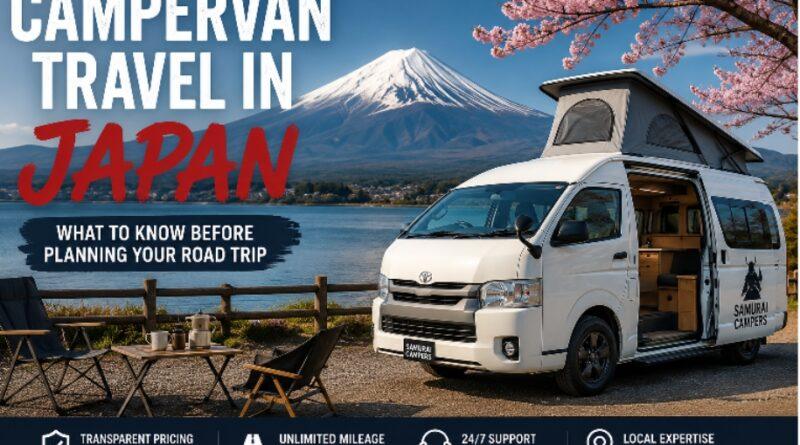
Campervan Travel in Japan: What to Know Before Planning Your Road Trip
Japan’s famous rail network makes it easy to travel between major cities. It is less useful, however, when the places on your itinerary include a remote lakeside campsite, an early-morning mountain trail, a coastal viewpoint or a small hot-spring town without a convenient station.
That is where campervan travel changes the experience.
A campervan allows travelers to connect destinations that would otherwise require multiple trains, buses and hotel check-ins. It is not automatically the cheapest or easiest choice for every Japan itinerary, but it can be the most practical option for travelers who value flexibility, rural scenery and control over their schedule.
The key is understanding what campervan travel in Japan actually involves before booking a vehicle.
This guide explains when a campervan makes sense, what costs to compare, how to choose the right vehicle and what first-time visitors frequently overlook.
Why Japan Looks Different From the Road
A conventional first trip to Japan often follows a predictable corridor:
Tokyo, Hakone, Kyoto, Osaka and perhaps Hiroshima.
These destinations are popular for good reason, but they represent only a small part of the country. A road trip makes it easier to reach places located between the major railway stops rather than simply moving from one transport hub to another.
Depending on the region and season, a campervan itinerary can include:
- Quiet sections of the Izu Peninsula
- Lakes and forest roads around Mount Fuji
- Mountain towns in Nagano and Gifu
- Coastal communities along the Sea of Japan
- Rural areas of Shikoku
- Volcanic landscapes and hot springs across Kyushu
- National parks and wide-open routes in Hokkaido
- Smaller fishing ports, farms and roadside markets
Japan’s official tourism organization also presents campervan travel as a practical way to reach lesser-known countryside destinations and travel at a more independent pace.
The difference is not simply that a campervan takes you farther. It changes how the day is structured.
Instead of checking out of a hotel, carrying luggage to a station and waiting for a departure, travelers can wake near the next activity, prepare breakfast, change the route according to the weather and stay longer when they find somewhere worth exploring.
That freedom has value—but only when the itinerary is designed around it.
Who Should Consider a Campervan Road Trip?
Campervan travel suits some trips much better than others.
It is usually a strong option for:
Travelers prioritizing rural Japan
Public transport is excellent in major cities, but service becomes less frequent in some countryside and mountain areas. A vehicle gives travelers more control over arrival times and connections.
Couples who prefer flexible itineraries
Couples can change direction without reorganizing several hotel reservations. A compact or mid-sized campervan can also provide enough sleeping space without becoming difficult to drive.
Families carrying substantial luggage
Moving suitcases, child equipment and outdoor gear between trains can become tiring. Keeping everything in one vehicle reduces repeated packing and unpacking.
Hikers, cyclists, surfers and photographers
Outdoor activities often begin early and end far from urban transport routes. A campervan can serve as transport, equipment storage, a changing area and sleeping accommodation.
Travelers staying outside major city centers
A campervan becomes more useful when most nights are spent in regional areas rather than central Tokyo, Kyoto or Osaka.
It is usually a weaker choice for travelers whose entire itinerary is concentrated in dense urban areas. City-center parking can be expensive, narrow streets require attention, and trains are often the easier option for moving between major attractions.
The strongest itineraries therefore combine transport methods logically. A traveler might explore Tokyo without a vehicle, collect a campervan before entering the countryside, and return it before spending several days in central Osaka.
Campervan, Rental Car or Rail Pass?
There is no universally superior transport option. The right choice depends on where you are going, how many people are traveling and how frequently you plan to change accommodation.
Rail Travel
Rail is usually the best option when:
- The itinerary focuses on major cities
- Travelers want fast intercity transfers
- Nobody wants to drive
- Hotels are close to stations
- The schedule is fixed in advance
Its main limitation is that travelers remain tied to stations, timetables and the location of their accommodation.
Standard Rental Car
A rental car works well when:
- Hotels have already been booked
- Travelers need rural transport but not sleeping facilities
- The trip involves day excursions from one accommodation base
- A smaller vehicle is preferred
However, the total trip cost still includes hotels, and travelers must repeatedly load and unload luggage.
Campervan
A campervan can make more sense when:
- The route includes several rural destinations
- The group would otherwise need multiple hotel rooms
- Travelers want to reduce daily check-ins
- Outdoor activities are central to the trip
- The itinerary may change according to weather
- Sleeping and transport need to be combined
The mistake is comparing only the campervan’s rental rate with the price of a train ticket or small car. A realistic comparison should include the entire daily travel cost.
The Real Cost of a Campervan Trip in Japan
A campervan is not automatically a budget option. It becomes financially attractive in specific situations, especially when several travelers share the vehicle or when accommodation prices are high.
Before booking, compare the following costs.
Vehicle rental
The daily rate may change according to the vehicle category, season, trip length and collection location.
Fuel
Larger and heavier campervans generally use more fuel than compact cars. Mountain routes, winter driving and long distances can increase consumption.
Expressway tolls
Japan’s expressways can save considerable time, but toll charges can accumulate on long routes. Travelers should decide when the faster expressway is worth paying for and when local roads offer a better experience.
Campsites and RV facilities
Some nights may require a paid campsite or designated RV facility. Prices and included services vary, so travelers should check whether electricity, toilets, showers, waste disposal or water access are provided.
Parking
Parking costs matter most near cities and popular attractions. Rural parking is often easier, but travelers should never assume that an empty space permits overnight stays.
Insurance and protection
The cheapest advertised rental rate may exclude important protection. Compare the excess, exclusions, roadside assistance, tire and windscreen coverage, and what happens if the vehicle cannot be driven.
Equipment charges
Check whether bedding, cooking equipment, chairs, tables, heaters, child seats, portable batteries or other essentials are included or charged separately.
Seasonal equipment
Winter tires, snow chains, heating equipment or other cold-weather provisions may add to the total.
The correct calculation is:
Campervan rental + fuel + tolls + parking + campsites + insurance + equipment
Compare that total against:
Rail or car rental + hotels + luggage transfers + local transport + additional booking fees
A campervan may not win on price every time. Its greater advantage is often the combination of flexibility, transport, storage and accommodation.
Choosing the Right Campervan for Japanese Roads
Choosing the biggest vehicle available is usually a mistake.
Japan has excellent highways, but travelers may also encounter narrow residential streets, compact parking spaces, mountain roads and campsite entrances with limited turning space. Vehicle size affects the entire trip—not just sleeping comfort.
Mini-Campers
Mini-campers are best suited to solo travelers or couples who prioritize easy handling.
Typical advantages include:
- Easier city and attraction parking
- Better maneuverability on narrow roads
- Lower fuel consumption
- Less intimidating dimensions for first-time drivers
The trade-off is reduced interior space. Travelers should check bed dimensions, storage capacity and whether luggage must be moved before sleeping.
Mid-Sized or High-Roof Campervans
These vehicles generally offer the strongest balance for couples or small groups.
They may provide:
- More comfortable sleeping arrangements
- Better headroom
- Greater luggage capacity
- Space for basic cooking and indoor seating
- Easier driving than a full-sized motorhome
For many first-time campervan visitors, this category offers enough comfort without creating unnecessary difficulty on smaller roads.
Large Campervans and Motorhomes
Larger vehicles suit families and groups needing multiple beds, more storage and expanded living facilities.
Before choosing one, consider:
- Vehicle height and width
- Parking restrictions
- Fuel consumption
- Bed layout
- Whether beds require daily conversion
- Child-seat compatibility
- Heating and cooling capacity
- Toilet or water-system arrangements
- Driver confidence
The correct vehicle is the smallest one that can comfortably support the travelers, luggage and season.
What to Check Before Booking
A low headline price can become expensive when essential items are added later. Read the rental terms and obtain clear answers to the following questions.
Is mileage limited?
Long-distance road trips can become significantly more expensive when daily or total mileage limits apply.
What insurance is included?
Ask for the excess amount, major exclusions and whether single-vehicle incidents are treated differently.
Is a security deposit required?
Confirm the amount, payment method, refund process and circumstances in which deductions may be made.
What equipment comes with the vehicle?
Do not assume that bedding, cookware, utensils, chairs or a table are included.
Is roadside support available in English?
Mechanical problems and accidents are stressful enough without a language barrier. Confirm the support hours and the procedure for requesting help.
Are toll devices available?
An ETC device can make expressway travel more convenient, although travelers still need to understand how toll charges will be settled.
Can the company help with route planning?
Local advice can prevent unrealistic itineraries, difficult roads, seasonal closures and inappropriate overnight stops.
What are the collection and return rules?
Confirm operating hours, late-return charges, cleaning requirements, fuel policy and the time needed for the vehicle orientation.
Samurai Campers has operated since 2015 and offers a fleet of more than 150 vehicles through Tokyo, Osaka and Fukuoka. Its fleet includes compact mini-campers, mid-sized and high-roof campervans, and larger vehicles for families or more demanding routes. The company also emphasizes transparent pricing, unlimited mileage, multilingual support and practical route assistance.
Travelers comparing a campervan rental in Japan service should evaluate these operational details—not just the number displayed beside the “per day” rate.
Where Can You Stop Overnight?
One of the most damaging campervan myths is that travelers can park and sleep anywhere.
They cannot.
Campervan travelers should use legal, appropriate overnight locations and verify local rules instead of relying on assumptions or outdated comments from travel forums.
Possible options include:
- Registered campsites
- Designated RV parks
- Auto-camping facilities
- Private facilities that explicitly allow overnight vehicles
- Other approved locations where overnight use is clearly permitted
Japan’s network of Michi-no-Eki roadside stations is useful for taking breaks, accessing regional information and discovering local products. Japan’s Ministry of Land, Infrastructure, Transport and Tourism describes these stations as places for rest, information and local interaction.
However, a rest stop should not automatically be treated as a campsite. Travelers must check the rules of each facility. Setting out chairs, cooking equipment, awnings or camping gear in an ordinary parking area can be inappropriate even when resting inside a vehicle is tolerated.
Responsible overnight behavior includes:
- Arriving quietly
- Avoiding unnecessary engine idling
- Keeping parking spaces clear
- Taking rubbish away when bins are unavailable
- Never disposing of wastewater improperly
- Avoiding outdoor cooking unless specifically allowed
- Respecting signs and staff instructions
- Leaving early when the location is intended for short rest
Poor behavior does not only create a risk for one traveler. It can cause facilities to tighten restrictions for everyone using campervans.
Driving in Japan: Practical Issues First-Time Visitors Miss
Japan drives on the left. That fact is easy to remember; applying it consistently after turning, leaving a parking area or entering a quiet road requires more concentration.
Travelers should also prepare for the following.
Valid driving documentation
The required permit depends on the traveler’s licensing country and applicable agreements. Confirm the exact requirement before departure rather than assuming that a domestic license is sufficient.
Narrow local streets
Navigation apps sometimes select technically possible roads that are uncomfortable for a large vehicle. When two routes have similar travel times, the major road is usually the safer choice.
Railway crossings
Approach crossings carefully and follow local traffic requirements. Never treat them as ordinary intersections.
Speed limits
Rural roads can feel open while still carrying relatively low limits. Allow more time than the distance alone suggests.
Mountain and winter conditions
Snow, ice, fog, steep gradients and seasonal road closures can completely change an itinerary. Winter travelers need appropriate tires, equipment and route knowledge.
Parking height restrictions
Multi-storey and covered parking areas may have height limits that exclude campervans. Know the vehicle’s exact height before entering.
Fatigue
Campervan travel makes spontaneous detours easy, but longer driving days are not always better. Japan’s scenery is most rewarding when the itinerary leaves enough time to stop.
Japan’s National Police Agency publishes English-language traffic guidance for international drivers, and travelers should review official rules before collecting a vehicle.
A Better Way to Build a Campervan Itinerary
A common planning mistake is trying to cover too much.
Japan may look compact on a map, but mountain roads, city traffic, attraction stops and slower local routes can turn a modest distance into a full travel day.
A more realistic approach is to organize the trip around regional clusters.
Example: Tokyo and Central Japan
A route might combine:
- Tokyo collection point
- Mount Fuji or the Fuji Five Lakes
- Izu Peninsula
- Nagano
- Matsumoto
- Takayama
- Return through Yamanashi or Saitama
Travelers beginning their journey in the capital can compare vehicle sizes, pickup details and local route options through Samurai Campers’ campervan rental in Tokyo branch page before finalizing their itinerary.
Example: Osaka and Western Japan
A western route could include:
- Osaka collection point
- Kii Peninsula
- Wakayama
- Lake Biwa
- Rural Kyoto or northern Hyogo
- Setouchi coast
- Shikoku, when trip length permits
Example: Fukuoka and Kyushu
Kyushu is particularly suitable for a regional road trip because volcanic areas, hot springs, coastal roads and rural attractions are distributed across the island.
A route might connect:
- Fukuoka
- Aso
- Kurokawa Onsen area
- Beppu
- Miyazaki
- Kagoshima
The best itinerary is not the one with the most destinations. It is the one that protects enough time for unplanned stops.
How Many Hours Should You Drive Each Day?
For a scenic campervan trip, two to four hours of planned driving per day is often more comfortable than repeatedly scheduling six-hour transfers.
That does not mean every day must be short. It means the itinerary should account for:
- Grocery stops
- Fuel
- Meals
- Campsite check-in times
- Onsen visits
- Photography stops
- Roadside stations
- Weather delays
- Narrow roads
- Unexpected attractions
A route that looks efficient in a spreadsheet can feel rushed on the road.
Build at least one flexible day into a trip longer than a week. It can absorb poor weather, fatigue or a destination that deserves more time.
Seasonal Planning
Japan’s seasons change both the scenery and the practical requirements of campervan travel.
Spring
Spring offers mild conditions in many regions, but cherry blossom periods can increase traffic and campsite demand. Mountain areas may remain cold after cities have warmed.
Summer
Summer provides access to highland and northern routes, but heat and humidity can make an unventilated campervan uncomfortable. Confirm the vehicle’s cooling arrangements and avoid assuming that air conditioning operates all night without external power or engine use.
Autumn
Autumn foliage makes mountain routes especially attractive. Popular areas can become crowded, and nighttime temperatures may drop sharply.
Winter
Winter road trips require the most preparation. Heating, insulation, winter tires, road closures, frozen water systems and reduced daylight all affect the journey.
Vehicle suitability should therefore be judged against the exact route and month—not the average weather for Japan as a whole.
What to Pack
Packing too much reduces living space. Packing too little creates unnecessary shopping stops.
Useful items include:
- Soft-sided luggage instead of rigid suitcases
- Layers suitable for changing elevations
- Slip-on shoes for frequent entry and exit
- A compact flashlight
- Reusable water containers
- Charging cables and portable power
- Offline navigation
- Basic food for late arrivals
- Small rubbish bags
- Towels when they are not included
- Earplugs for unfamiliar overnight environments
- A written record of the vehicle’s height and width
Avoid bringing large cooking setups before confirming what equipment is already provided.
Common Campervan Mistakes
Booking the largest vehicle
More space sounds attractive until the driver reaches a narrow road or compact parking area.
Building a city-heavy itinerary
A campervan offers its greatest value in regional areas, not while sitting in expensive urban parking.
Ignoring total trip costs
Fuel, tolls, campsites and insurance can materially change the budget.
Driving too far every day
A road trip becomes a sequence of transfers instead of an experience.
Assuming every roadside station permits overnight stays
Always confirm facility-specific rules.
Depending entirely on mobile data
Download maps and essential booking information before entering rural areas.
Treating the van like a hotel room
Space is limited. Daily organization, ventilation and rubbish management matter.
Choosing a rental company solely by price
Support, insurance clarity, vehicle condition and transparent inclusions may be worth more than a small difference in the daily rate.
Final Decision: Is a Campervan Right for Your Japan Trip?
Choose a campervan when your trip is built around countryside access, outdoor activities, flexible routing and multiple regional stops.
Choose rail when your priority is moving efficiently between major city centers.
Choose a normal rental car when you need regional mobility but prefer fixed accommodation.
A well-planned campervan trip can reveal a side of Japan that is difficult to experience through a city-only itinerary: sunrise beside a mountain lake, dinner from a local roadside market, a quiet coastal road and the freedom to change direction when the weather changes.
The vehicle itself is only part of the experience. The quality of the trip depends on choosing an appropriate campervan, understanding the complete rental terms, planning realistic driving distances and respecting the places used along the way.
Do those things properly, and the road between Japan’s famous destinations may become the most memorable part of the journey.
Frequently Asked Questions
Is campervan travel legal in Japan?
Yes, campervan travel is legal, provided the driver has valid documentation, follows Japanese traffic laws, parks legally and uses appropriate overnight locations.
Can tourists drive a campervan in Japan?
Many international visitors can drive in Japan with the correct license and supporting documentation. Requirements vary according to the country that issued the license, so travelers must verify their eligibility before arriving.
Is it legal to sleep in a campervan anywhere in Japan?
No. Travelers should use campsites, RV parks or other locations where overnight vehicle use is permitted. An available parking space does not automatically mean camping or overnight stays are allowed.
Is a campervan cheaper than hotels and trains?
It can be, particularly for families, groups or itineraries involving expensive accommodation. However, travelers must include fuel, tolls, parking, campsites, equipment and insurance in the comparison.
What size campervan is best for Japan?
Solo travelers and couples often benefit from compact or mid-sized vehicles because they are easier to maneuver and park. Families may need a larger campervan, but should carefully consider vehicle dimensions and road accessibility.
Can I drive a campervan in Tokyo or Osaka?
It is possible, but dense traffic, limited parking and narrow streets can make city driving inconvenient. Many travelers explore the city first and collect their campervan when they are ready to begin the regional portion of the trip.
How long should a Japan campervan trip be?
A regional trip can work in five to seven days, but 10 to 14 days provides more flexibility and reduces the pressure to drive long distances every day.
Do campervans in Japan include bedding and cooking equipment?
Inclusions vary by rental provider and vehicle. Travelers should confirm bedding, cookware, utensils, chairs, tables, heating, cooling and other equipment before booking.