5 Best Drug Testing Kits UK Businesses Rely On for Workplace Compliance in 2026
Workplace drug testing has moved past simple compliance checkbox thinking. UK employers face genuine legal risk if an impaired staff member causes injury or damage, and the Health and Safety at Work Act 1974 demands clear duty of care across every organisation. The right kit doesn’t just return a number; it builds a defensible paper trail.
Format selection matters just as much as the test itself. Saliva, urine, and combined approaches each fit different needs; on-site spot checks work differently from pre-employment screening. Below are the five kits UK businesses turn to most for workplace compliance.
1. Multi-Panel Urine Drug Test Kits
Multi-panel urine kits form the backbone of workplace screening programmes in the UK. When employers set up a formal testing policy, drug testing kits for businesses are almost always the first product category they explore. Urine testing catches a wider drug range and maintains longer detection windows compared to alternatives; that’s why it’s the go-to format for post-incident investigations, random screening rounds, and pre-employment checks. Cannabis detection windows stretch to 30 days for regular users. Cocaine metabolites, by contrast, stay detectable for roughly two to four days.
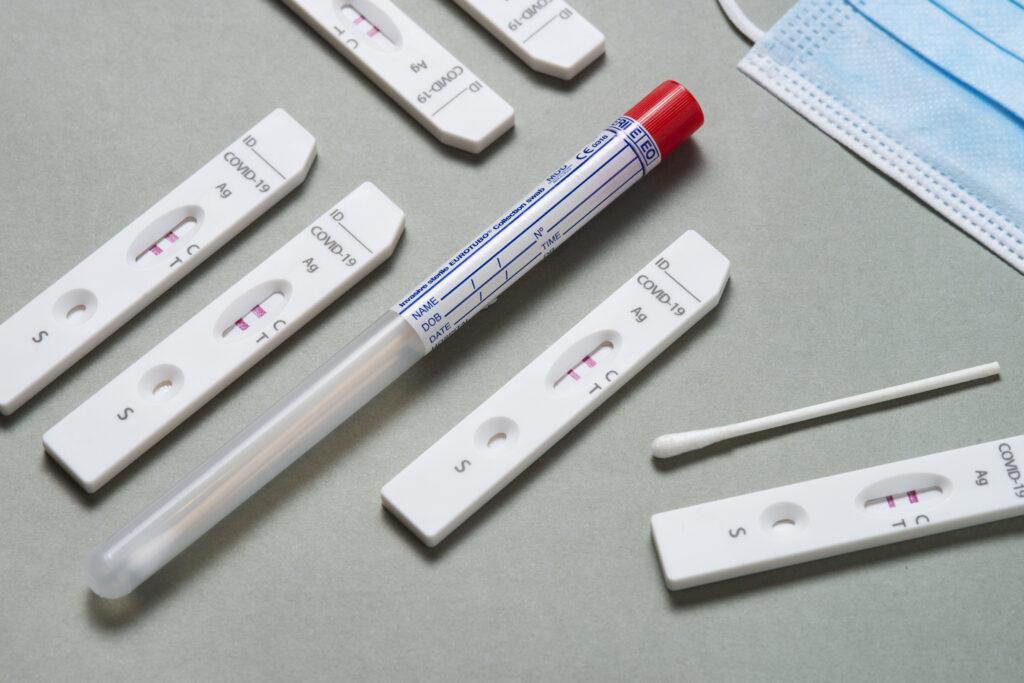
A typical multi-panel kit screens five to twelve substances at once: cannabis, cocaine, opiates, amphetamines, benzodiazepines, methadone, and more. Results show up in five to ten minutes; you won’t need lab equipment on site. For HR managers, that speed counts: act on a result the same day instead of waiting several days for outside analysis.
UKCA-certified kits hit 99.7% accuracy, the threshold most occupational health policies demand before using results in discipline. But always pair a positive screening result with lab confirmation before taking formal action. Screening kits point the way; laboratories prove the case.
2. Oral Fluid (Saliva) Drug Test Kits
Saliva testing picks up very recent use. Detection windows run 24 to 48 hours for most substances, so a positive result means use within the last one or two days, not sometime in the last month. That specificity makes saliva the tool of choice for post-accident testing and reasonable-suspicion checks, when you need to know if someone was actually impaired during a specific shift rather than whenever they last used.
Collection is simple. A swab sits inside the donor’s cheek or under their tongue for a set time, then gets transferred to a test cassette. No privacy worries around observed collection; it’s also far harder to fake than urine. For transport and logistics companies needing fast field-based testing, saliva kits work as a practical default. Many align with roadside legal cut-off levels, so results match drug-impairment limits under Section 5A of the Road Traffic Act 1988. Network Rail contractors rely on oral fluid kits because the network’s own standards require tests reflecting current impairment, not historical use.
3. Combined Drug and Alcohol Test Kits
Most workplace incidents stem from alcohol or drugs, sometimes both. Combined kits test for each in a single procedure, slashing the time and paperwork of running two separate tests. A combined saliva kit screens up to ten drugs and delivers a breathalyser-style alcohol result within ten minutes.
Safety-sensitive sectors feel this impact sharply. Construction sites under CDM regulations, factory floors, and transport hubs all sit in environments where either substance creates real hazard. Running one combined test also blocks a donor from claiming prescribed medication caused the drug result while an alcohol problem goes unnoticed. The combined format tightens what you actually know. Some combined kits package a separate breathalyser unit; others build alcohol detection into the same panel. Check which format your policy specifies before bulk ordering, since workplace policies often treat alcohol testing method separately from drug testing method.
4. Laboratory Confirmation Test Kits
Point-of-care screening catches things fast, but not with certainty for a tribunal. Lab confirmation is step two in any real workplace testing programme. The confirmation process uses gas chromatography-mass spectrometry (GC-MS); it identifies specific drugs with precision no immunoassay strip achieves. Employment tribunals accept GC-MS results as evidence, and they’ll hold up to legal challenge. A screening-only result generally won’t.
The workflow isn’t complicated:
- Collect a urine or saliva sample in a tamper-evident collection kit.
- Seal it with a chain-of-custody form attached.
- Send via next-day courier to an accredited lab.
- Get a certified report in two to five working days, typically.
And here’s the trap most businesses walk into: chain of custody. A broken seal, unsigned form, or missed signature at collection kills the whole result. Train whoever does testing on documentation before they ever administer a kit. The actual test is straightforward; it’s the paperwork discipline around it that makes programmes work or fail.
5. Breathalysers and Dedicated Alcohol Testing Kits
Alcohol stays the most commonly detected substance in UK workplace testing. A breathalyser measures breath alcohol concentration directly and returns a result in seconds. Professional-grade devices, calibrated to workplace cut-offs rather than impairment thresholds, give HR managers a legally defensible number instead of just a yes/no.
Digital breathalysers with printed or exportable results carry stronger evidential weight than disposable single-use units. Disposables still work for initial checks or high-volume screening days where budget matters; they just return pass/fail instead of a precise concentration. Both formats see use across the UK; your choice depends on whether your policy needs a specific BAC figure on record or simply a positive/negative outcome. Fuel cell sensor technology’s the standard in professional units; semiconductor devices cost less but lose accuracy at low concentrations. And for any business in a safety-sensitive sector, fuel cell is the right call.
Conclusion
The 5 best drug testing kits UK businesses rely on map out a natural sequence: urine kits for broad screening, saliva kits for recent-use detection, combined kits for dual-risk environments, lab confirmation for evidential weight, and breathalysers for alcohol-specific work. No single kit works everywhere, so most workplace testing policies specify at least two formats depending on context. Match the kit to what you’re actually testing for, train the people who’ll run tests, and keep that chain of custody airtight. That discipline, not the kit itself, is what makes a result stand up or fall apart.