How to Reduce Treadmill Noise in an Apartment
Staying active while living in an apartment often requires a bit of compromise, especially when it comes to fitness equipment. Treadmills are fantastic for getting your daily steps in, but the combination of a whirring motor and heavy footfalls can quickly turn you into the least popular person in your building.
Fortunately, you don’t have to choose between your cardio routine and your neighbors’ sanity. By making a few strategic adjustments to your setup, maintenance routine, and workout habits, you can drastically cut down on the racket. Here is exactly how to quiet things down.
Identify the Source of the Treadmill Noise
Before you can fix the problem, you need to figure out what is actually causing the noise. Turn your treadmill on and listen closely while it is running empty, and then again while you are walking on it.
- Is it a heavy, rhythmic thumping? That is impact noise transferring through the floorboards from your footsteps.
- Is it a high-pitched squeak or a loud whooshing sound? This points to friction, meaning the belt likely needs lubrication or alignment.
- Is it a metallic rattling? You probably have some loose hardware vibrating as the machine runs.
Once you know what you are dealing with, you can target the issue directly.
Reduce Floor Vibration With Proper Placement and Padding
Impact noise is the number one cause of neighbor complaints. Every time your foot strikes the deck, that kinetic energy travels straight down into the floor.
Use a Thick Treadmill Mat
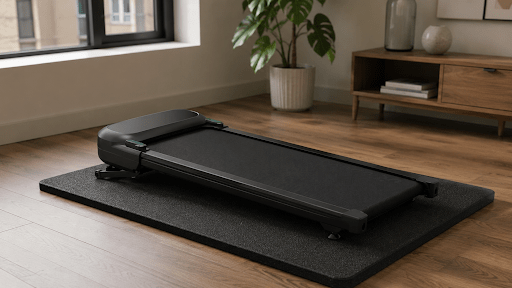
A standard yoga mat will not cut it here. You need a high-density, heavy-duty rubber treadmill mat. Placing a thick mat underneath your machine acts as a shock absorber, deadening the vibrations before they can travel through the floor and into the apartment below you.
Place It Away From Shared Walls
Sound and vibration travel easily through thin apartment walls. If possible, avoid placing your treadmill flush against a wall you share with a neighbor. Setting the machine up closer to the center of the room or against a load-bearing exterior wall will help minimize the sound transfer.
Make Sure the Treadmill Sits Flat on the Floor
If your floors are even slightly uneven, your treadmill will rock back and forth with every step. This creates a persistent knocking sound. Use a level to check the deck, and adjust the leveling feet on the bottom of the machine until it sits perfectly flat and stable.
Lower Mechanical Noise Through Regular Maintenance
Treadmills require regular upkeep to run smoothly. A machine that is ignored will inevitably become loud and clunky.
Clean and Lubricate the Belt
Friction is the enemy of a quiet walking pad. Over time, dust and debris build up under the belt, drying out the deck. If your treadmill sounds like it is struggling or making a loud scraping noise, it is time to apply 100% silicone treadmill lubricant. A well-lubricated belt glides quietly over the deck and takes a massive strain off the motor.
Center and Adjust the Belt
If your belt is drifting too far to the left or right, the edges will rub against the side rails, causing a constant fraying or squeaking sound. Check the manufacturer’s instructions to adjust the rear roller bolts with an Allen wrench. A perfectly centered belt is a quiet belt.
Tighten Loose Parts
The constant vibration of daily use will eventually loosen the bolts holding your treadmill together. Take a few minutes every month to go over the machine and tighten up the frame, the console screws, and the handrails to eliminate annoying rattles.
Minimize Noise by Adjusting Your Workout Habits
Sometimes, the machine is perfectly fine, and the noise is simply coming from how you are using it.
Lower the Walking Speed
Running at 8 mph in a second-floor apartment is going to sound like a stampede, no matter how much padding you use. If you need a more intense workout without the noise of running, try lowering your speed and raising the incline. You will get a great cardiovascular burn with a much softer footfall.
Walk With Lighter Steps
Pay attention to your form. Many people tend to strike the deck heavily with their heels when walking on a treadmill. Try to land more toward your mid-foot and engage your core. Walking with a lighter, more controlled stride significantly cuts down on the booming impact noise.
Use It During Daytime Hours
Even the quietest treadmill produces some ambient noise. Be a considerate neighbor and avoid logging your miles at 5:00 AM or midnight when the building is dead silent. Stick to daytime or early evening hours when normal household noises—like TVs and dishwashers—will naturally mask the sound of your workout.
Choose a Quiet Walking Pad Designed for Apartment Use
If you are currently shopping for a machine and live in a space with thin walls, you might want to skip the massive, commercial-style treadmills altogether.
Modern walking pads and under-desk treadmills are specifically engineered for small spaces and shared environments. Look for models equipped with brushless motors—like those from UREVO—as they run significantly quieter and smoother than traditional brushed motors. Because they have a lower profile and lack bulky frames, they naturally produce less rattling and vibration.
Final Thoughts
Living in an apartment doesn’t mean you have to give up your indoor walks. By investing in a good rubber mat, keeping up with basic belt maintenance, and being mindful of your stride and schedule, you can easily keep the peace in your building. A little bit of proactive soundproofing goes a long way in turning your apartment into a functional, neighbor-friendly home gym.