Why the Living Room Still Feels Unfinished
You can get the sofa right, find the rug, hang the art, and still feel as if the living room has not quite clicked. In many city homes, the problem is not a missing accent chair. It is the wall across from the sofa, the dining corner that gathers mail, or the front-door pile that keeps drifting into the room.
In a city apartment, co-op, or townhouse living area, 3-piece modular sideboards can give that wall a real job without making it feel like a construction project. Modular storage works well in rooms that change roles quickly: weeknight dinner, work call, weekend drinks, and the everyday landing zone for keys, chargers, glasses, and bags.
The room has furniture, but it still feels unfinished
In a narrow living-dining room, the problem often shows up after the main furniture is already in place. The sofa works, the rug works, but the wall across from it still has no real job.
The missing anchor is often not dramatic. It may be a long, low storage cabinet that gives mail, chargers, books, and glasses somewhere to go. It handles living room storage without adding a tall visual block.
This is especially useful in a narrow living-dining room or a prewar apartment where the entry opens almost straight into the main space. A wall that looks unfinished from the sofa may also be the first thing guests see from the door.
Well-placed modular sideboard cabinets can make that wall feel planned rather than patched together. The room starts to feel arranged around real life, not just filled with furniture.
One long wall usually needs one clear job
City homes often ask one wall to do too much. It may sit across from the sofa, run beside the dining table, or carry the transition from entry to living area. Leaving it empty can make the room feel temporary. Filling it with several small pieces can make it feel busy.
One longer sideboard setup can be calmer than a console here, a basket there, and a small cabinet squeezed near the radiator. It can hold books, candles, glassware, board games, extra throws, and the things that usually move from table to table.
The wall does not need to be filled from end to end. A better city-room move is to leave space for a lamp, framed art, a mirror, or a clean stretch of wall. The storage gives the room structure, while the empty space keeps it from feeling tight.
That kind of restraint helps in a brownstone parlor floor as much as it does in a newer apartment. The room feels less like a furniture arrangement and more like a place with a point of view.
Built-ins are great, but not always realistic
Built-ins can be beautiful, but they are not the right answer for every home. Co-op rules, rental walls, budget, timing, and renovation fatigue all matter. Even owners who can build may not want to make one layout permanent.
A modular storage piece gives the wall structure without closing down future choices. It can sit under art now, shift closer to a dining corner later, or move with a new sofa layout. That flexibility matters when rental walls, co-op rules, or changing work-from-home habits make permanent choices feel too rigid.
Room proportion should guide the choice. A narrow console may look lost on a long wall. A tall cabinet may make the space feel boxed in. A low sideboard often lands in the middle, with enough presence to settle the wall and enough air above it to keep the room open.
The point is not to imitate custom millwork. The point is to get the useful part of a storage wall without making the room feel overbuilt.
The front-door mess needs a real landing place
In many city homes, the front door opens close to the living room. That means entry clutter becomes living room clutter fast. Keys, sunglasses, dog leashes, tote bags, mail, gloves, receipts, and lip balm all need a place before they take over the first surface they find.
Hidden storage near that first wall can change the feeling of the whole apartment. The room no longer looks like it is waiting to be tidied. It feels ready for someone to sit down, pour a drink, or set the table.
The fastest fix is not always cleaning harder before people come over. It is having one obvious place for the things that drift. A drawer for keys, a cabinet for games, and a closed door for the less photogenic pieces can do more than another decorative tray.
The goal is not to erase daily life. It is to stop the smallest objects from setting the mood for the entire room.
Let the wall look lived-in, not staged
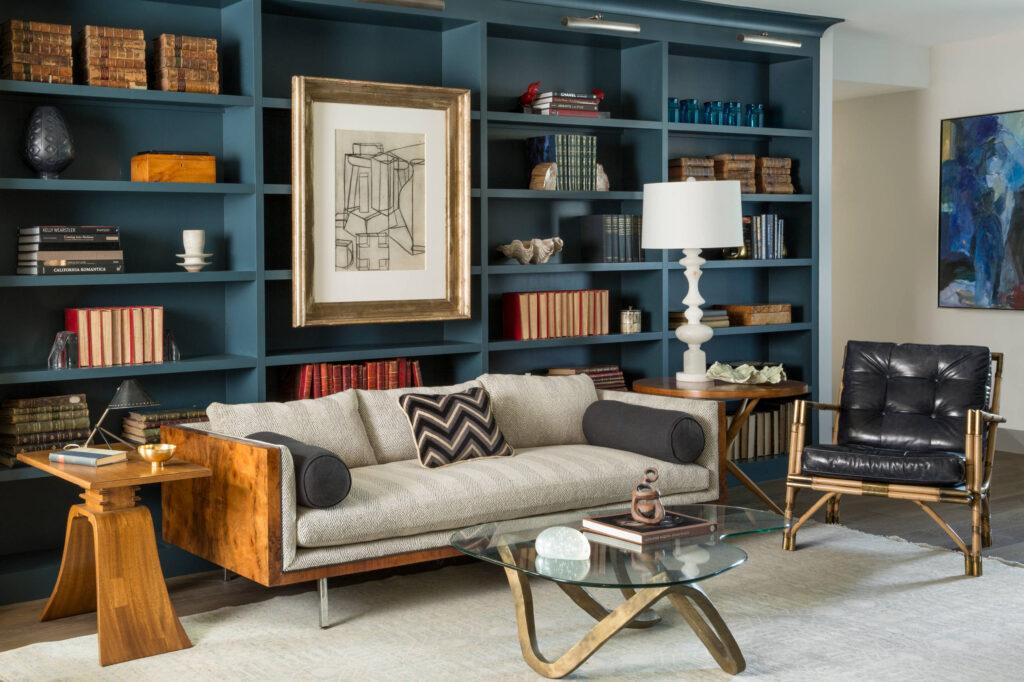
A city living room should not look cleared for a listing photo. It should feel personal, useful, and a little layered. The top of the sideboard can hold a lamp, a low bowl, a few books, flowers, ceramics, or a framed photo.
The surface still needs discipline. Once the sideboard exists, the top should not become a second kitchen counter. A tray can gather practical items, but the rest of the surface needs enough space to look intentional.
A little imperfection is fine. A book left open, fresh flowers in a simple vase, or a ceramic bowl that catches keys can make the room feel lived in. The difference is that those details look chosen, not abandoned.
A finished city living room does not need to be grand. It needs a wall with purpose, storage that fits the way people actually come and go, and enough open surface left that mail, bags, and chargers do not take over the room by Tuesday.
That is often what makes the room feel like home instead of a waiting area between appointments.