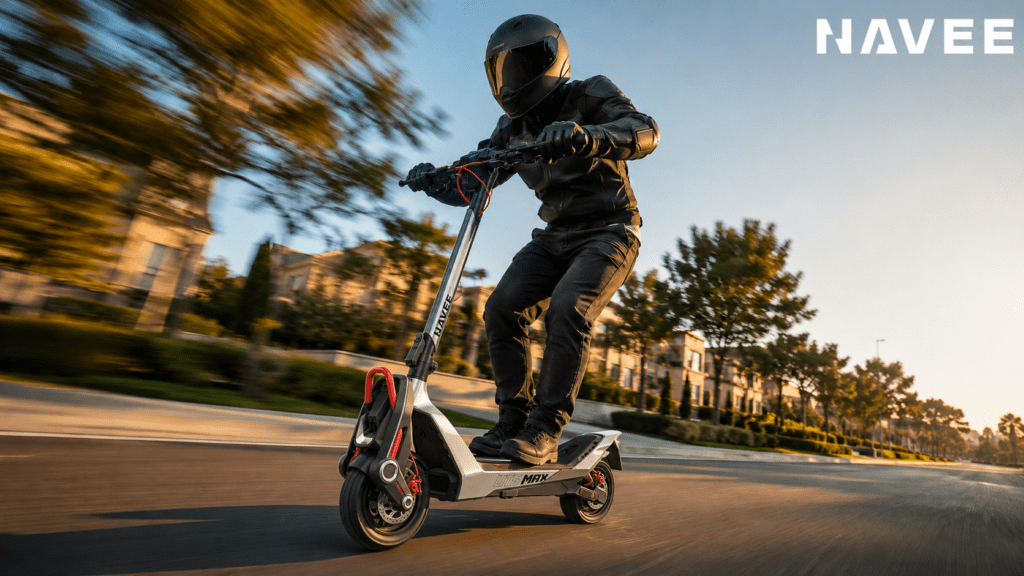
Can Electric Scooters Go 40 MPH? Speed, Safety, and Legal Limits
Certain high-performance electric scooters can reach speeds of 40 mph. However, traveling at these speeds on a standing platform requires significantly different hardware and engineering than a standard commuter model.
This article breaks down how these high-speed scooters achieve this performance, the difference between advertised and real-world speeds, the necessary safety gear, and the legal restrictions you will face on public roads.
Can Electric Scooters Really Reach 40 MPH?
Yes, but standard entry-level commuter models cannot achieve these speeds. Reaching 40 mph requires a high-performance scooter. Top-tier manufacturers build these models from the ground up, ensuring every component is structurally reinforced to handle higher velocities safely.
What Makes a High-Speed Electric Scooter Go Faster?
Operating an electric scooter at 40 mph requires specialized powertrain engineering and significantly more power than a standard model.
Motor Power and Battery Output
A standard commuter scooter typically utilizes a single 250-watt to 350-watt motor. In contrast, a scooter capable of reaching 40 mph generally features dual motors with a combined output of 2,000 to 3,000+ peak watts.
To support these motors, manufacturers use high-voltage battery systems—typically 60V or 72V configurations. These batteries deliver the necessary current to accelerate and sustain higher speeds without overheating the electrical components.
Rider Weight and Road Conditions
A scooter’s top speed is not a hard-coded guarantee; it depends heavily on several external variables:
Rider Weight: Heavier riders require more torque, which can reduce the maximum attainable speed.
Terrain and Incline: Climbing steep hills drains power and drops velocity, whereas flat, smooth pavement allows for maximum performance.
Environmental Factors: Headwinds and low tire pressure increase drag, which noticeably lowers overall speed.
Advertised Speed vs. Real-World Speed (Voltage Sag)
When choosing an electric scooter, don’t rely too heavily on the manufacturer’s advertised speed specifications. Brands typically test their vehicles under “ideal conditions”—that is, on a closed, flat track by lightweight test riders.
In everyday riding, the biggest difference lies in voltage drop. When the battery level drops below 50%, the voltage naturally decreases, thus reducing the top speed. A scooter with a claimed top speed of 40 mph will typically only reach its top speed at 100% battery; as the battery depletes, the top speed will gradually decrease.
Is 40 MPH Safe on an Electric Scooter?
Riding at 40 mph on a standing platform carries inherent risks. Unlike driving a car, you stand completely upright on small wheels just inches from the pavement. At these speeds, minor road imperfections like small potholes, pebbles, or loose gravel can easily cause a loss of control. Managing this velocity safely depends entirely on two factors: motorcycle-grade hardware and proper rider protection.
Critical Mechanical Safeguards
Hydraulic Disc Brakes: Front and rear hydraulic brakes are necessary. Standard mechanical cable brakes cannot provide the immediate stopping power required for reliable high-speed deceleration.
Wider, Pneumatic Tires: Tires measuring 10 to 12 inches offer a larger contact patch with the road, improving traction and stability over debris.
Robust Suspension: A dual hydraulic or coil suspension system is essential to absorb road impacts and prevent “speed wobble”—a dangerous handlebar oscillation that can cause a crash.
Rider Experience and Protective Gear
Operating a high-speed scooter requires precise throttle control, excellent balance, and proper weight distribution during braking. Because the physical risks match those of riding a motorcycle, standard bicycle gear is inadequate. A complete safety kit should include:
Full-Face Helmet: A DOT- or ECE-rated full-face helmet is required to protect your face and jaw.
Armored Clothing: A motorcycle jacket or abrasion-resistant apparel protects the skin from severe road rash.
Riding Gloves: Heavy-duty gloves with reinforced palms protect your hands during a fall.
Pads: High-quality knee and elbow guards provide critical joint impact protection.
Are 40 MPH Electric Scooters Street Legal?
Public infrastructure rules generally place strict limits on micromobility speeds.
Speed Limits and Road Rules
Federal and state laws often classify electric scooters similarly to electric bicycles, capping legal speeds on public streets or bike lanes at 15 to 20 mph, with a maximum motor output of 750 watts.
Operating a scooter at 40 mph on public sidewalks is illegal in almost all jurisdictions. While riding in a standard traffic lane may be permitted on low-speed roads, traveling at 40 mph often exceeds local micromobility regulations.
License, Helmet, and Registration Requirements
High-speed scooters occupy a complex regulatory space:
Classification: In some jurisdictions, a scooter capable of 40 mph may be legally reclassified as a moped or motorcycle.
Paperwork: If reclassified, you may legally require a driver’s license, registration, and insurance. However, because many motor vehicle departments lack a specific registration category for high-speed standing scooters, obtaining legal registration can be difficult.
Regulations vary significantly by state and city, making it essential to verify local laws before purchasing.
Do You Really Need a 40 MPH Electric Scooter?
While most daily commuters do not require a 40 mph scooter, high-performance models offer specific practical advantages:
Traffic Matching: On suburban roads with 35 mph speed limits, the ability to match the speed of surrounding traffic can improve safety by reducing the speed differential between the scooter and cars.
Hill Climbing: Motors designed for higher speeds provide the torque necessary to maintain pace on steep inclines.
Recreational Use: High-performance models offer an engaging experience for enthusiasts and hobbyists.
However, these models are heavy—often weighing between 70 and 100+ pounds—making them difficult to transport or carry up stairs.
What to Check Before Buying a High-Speed Electric Scooter
Before purchasing a high speed electric scooter, evaluate the following structural and technical specifications:
Build Quality and Frame Rigidity: Opt for reputable manufacturers that use high-grade materials, such as aircraft-grade aluminum, and robust folding mechanisms. Component or stem failure at high speeds is highly dangerous.
Battery Quality: Ensure the scooter uses lithium-ion cells from reliable manufacturers. Low-quality batteries degrade faster and present higher safety risks.
Steering Damper Compatibility: A steering damper adds resistance to the steering mechanism, reducing the risk of high-speed wobbles. If not included as a standard feature, ensure the model supports an aftermarket damper.
If you’re looking for a high-performance electric scooter that meets stringent safety and structural standards, consider NAVEE, especially its flagship UT series. The UT5 Ultra X model features powerful dual motors, dual hydraulic suspension, and 12-inch self-healing tubeless tires, providing optimal high-speed stability and precise braking performance.
Final Thoughts
Electric scooters capable of reaching 40 mph offer advanced engineering, excellent hill-climbing power, and the ability to keep pace with local traffic. However, operating at these speeds requires a serious commitment to safety. Riders should invest in proper protective gear, practice handling the vehicle in a controlled environment, and remain compliant with local traffic laws.