Refresh Without Replacing: How Bathroom Vanity Refacing and Thermofoil Repair Give Cabinets a Second Life
Cabinet replacement is expensive, disruptive, and in many cases unnecessary. When the cabinet boxes themselves are structurally sound — when the carcasses are plumb, the shelves are solid, and the interiors are undamaged — the case for a full replacement comes down to appearance rather than function. Cabinet refacing and thermofoil door repair address the appearance problem at a fraction of the cost and a fraction of the disruption of full cabinet replacement, by updating what is visible while preserving what is working. Understanding how each process works, when it is appropriate, and what results it produces helps homeowners make an informed decision rather than defaulting to the most expensive option.
Bathroom Vanity Refacing: The Case for Keeping the Box
Bathroom vanities take a different kind of wear than kitchen cabinets. Humidity from showers and baths, spilled water around the sink, and the daily accumulation of moisture in an enclosed space all work on cabinet surfaces over time — producing peeling veneer, faded finishes, watermarked doors, and hardware that no longer functions smoothly. When a vanity reaches this state, the instinct is often to replace it entirely. But the cabinet box — the structural carcass that holds everything together — is typically unaffected by the surface damage that makes the vanity look worn.
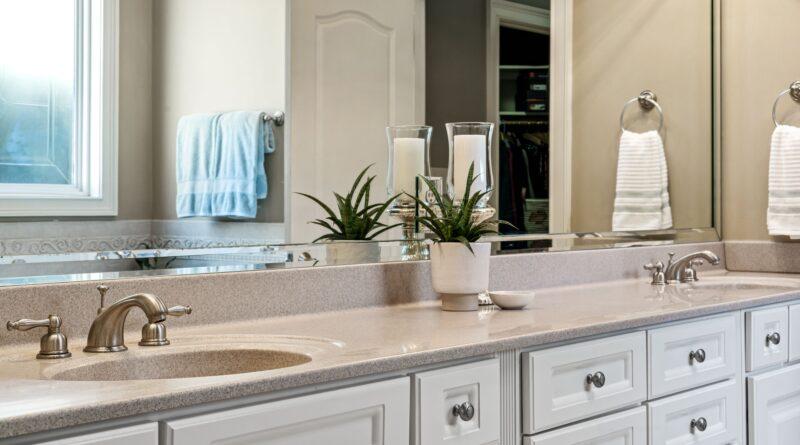
Refacing bathroom vanity involves applying new veneer or laminate to the visible exterior surfaces of the existing cabinet boxes and replacing the doors, drawer fronts, and hardware with new components that match the updated finish — producing the appearance of a new vanity without removing the existing structure from the wall or disconnecting the plumbing.
What bathroom vanity refacing typically involves:
- Surface preparation — cleaning and lightly sanding existing cabinet faces to ensure proper adhesion of new veneer or laminate
- Veneer or laminate application — thin wood veneer or rigid thermofoil laminate applied to the face frames, side panels, and any exposed surfaces
- New doors and drawer fronts — manufactured to match the selected style and finish, replacing the existing fronts entirely
- New hardware — hinges, pulls, and knobs selected to complement the updated finish
- Edge banding — covering exposed edges of existing surfaces where the new veneer meets trim or countertop
- Final fitting and adjustment — doors and drawers adjusted for smooth operation and consistent gap spacing
The result of a well-executed vanity reface is visually indistinguishable from a new cabinet installation — the same updated appearance, without the cost of demolition, disposal, new cabinetry, and reinstallation. For bathrooms where the layout is working well and the plumbing is properly positioned, refacing preserves what functions and updates what is visible, typically at thirty to fifty percent of full replacement cost.
When Refacing Is the Right Choice — and When It Is Not
Cabinet refacing works best when the existing cabinet boxes are structurally sound, when the layout of the space is satisfactory, and when the primary motivation for updating the cabinets is aesthetic rather than functional. A bathroom vanity with solid joints, undamaged shelves, and properly positioned plumbing is an excellent candidate for refacing. A vanity with significant water damage to the cabinet box, deteriorating particleboard that has swollen and delaminated, or a layout that does not work well for the space is better addressed through replacement.
The inspection that precedes a refacing project determines which situation applies. A professional who assesses the cabinet box condition before quoting the work can identify whether the structure is sound enough to reface effectively or whether the underlying damage makes replacement the more cost-effective long-term solution. Refacing over a compromised box produces a result that looks good initially but develops problems as the underlying damage continues to affect the structure.
Cabinet Refacing in Downers Grove: What the Local Market Looks Like
Cabinet refacing is a service with significant quality variation across providers. The difference between a professional refacing job and a poorly executed one is not always apparent at completion — it becomes apparent over time, as veneer that was not properly adhered begins to lift at the edges, as doors that were not correctly hung begin to sag, and as finish materials that were not selected for bathroom conditions begin to show moisture damage.
Cabinet refacing downers grove is a service available from contractors with varying levels of specialization in this specific work. The factors that distinguish experienced refacing specialists from general contractors who occasionally reface include familiarity with the material options — rigid thermofoil, wood veneer, laminate — and their appropriate applications, precision in fitting new doors and drawer fronts for consistent gap spacing, and the ability to match the new finish to existing elements in the space such as trim, flooring, or countertop.
What to evaluate when selecting a cabinet refacing contractor:
- Portfolio of completed bathroom and kitchen refacing projects — photographs that show the quality of veneer application and door fitting
- Material samples — the ability to provide physical samples of veneer and laminate options rather than only catalog images
- Process explanation — a clear description of how the existing surfaces are prepared, what adhesive systems are used, and how doors are fitted and adjusted
- Warranty terms — what is covered if veneer lifts, doors develop alignment issues, or finish materials fail within a reasonable period
- References from comparable projects in similar settings — bathroom refacing references rather than only kitchen projects
Thermofoil Cabinet Doors: How They Work and Why They Fail
Thermofoil is a vinyl film that is heat-bonded to an MDF substrate to produce a cabinet door with a smooth, seamless surface that can mimic the appearance of painted wood at a lower cost. Thermofoil doors were widely installed in kitchens and bathrooms from the 1990s through the 2000s and remain common in homes built or renovated during that period. The material performs well under normal conditions but has a specific and well-documented failure mode: delamination.
Thermofoil delamination occurs when the vinyl film separates from the MDF substrate — most commonly at the edges, around routed profiles, and near heat sources such as ovens and dishwashers. The separation begins as a small bubble or lifted edge and progresses as moisture infiltrates the gap between the film and the substrate. In bathroom applications, the humidity environment accelerates delamination on doors near the shower or above the sink. Once delamination begins, it does not reverse on its own and will continue to spread if not addressed.
Thermofoil cabinet door repair addresses delamination through professional re-bonding of lifted areas using contact cement and heat application, or through replacement of the affected doors with new thermofoil or alternative material doors that match the existing cabinet finish — the appropriate approach depending on the extent of the delamination and the condition of the MDF substrate.
Thermofoil Repair vs. Door Replacement: How the Decision Is Made
When thermofoil repair is appropriate:
- Delamination is limited to a small area — an edge or corner — and has not extended across the door face
- The MDF substrate is undamaged — no swelling, warping, or moisture absorption
- The vinyl film is intact except at the separated area — no cracking, fading, or surface deterioration elsewhere
- The door profile is a standard design for which replacement doors are available if repair does not hold
When door replacement is the better option:
- Delamination covers a significant portion of the door face or has spread to multiple doors
- The MDF substrate has absorbed moisture and shows swelling or warping
- The thermofoil film has yellowed, cracked, or developed surface deterioration beyond the delaminated area
- Multiple doors in the same kitchen or bathroom are showing early-stage delamination — indicating that the remaining doors will follow
A professional assessment of the specific doors determines which approach is appropriate. Attempting to re-bond extensively delaminated thermofoil, or repairing doors with compromised MDF, typically produces a result that fails again within months. When replacement is warranted, new thermofoil doors can be ordered to match existing cabinets closely — allowing selective replacement of damaged doors without refacing the entire installation.
The Cost Comparison: Refacing, Repair, and Replacement
The financial case for refacing and thermofoil repair over full replacement is straightforward when the cabinet structures are sound. Full kitchen or bathroom cabinet replacement involves demolition and disposal of existing cabinets, purchase and installation of new cabinetry, potential countertop replacement if the new cabinet dimensions differ, and in bathroom applications, potential plumbing work if the new vanity configuration is different. The total cost of full replacement is typically three to five times the cost of refacing.
Thermofoil door repair is the most targeted and least expensive intervention — addressing specific doors that have delaminated without touching the rest of the installation. For a kitchen or bathroom where most doors are in good condition and only a few have developed problems, targeted repair is the most cost-effective solution and the one that least disrupts the existing appearance of the space. The key is addressing delamination when it first appears, before it spreads to the point where the doors cannot be effectively repaired and must be replaced.