What Do Clay Masks Do? Benefits, Types & How to Use
Key Takeaways
- Clay masks use adsorption (not absorption) to bind impurities to their surface and pull them out of pores.
- Different clays – kaolin, bentonite, French green, and Rhassoul – offer varying levels of oil control, exfoliation, and sensitivity tolerance.
- Using a clay mask once or twice a week can reduce shine, refine pore appearance, and calm mild breakouts.
- Over-drying is a real risk; always remove the mask before it cracks and follow with targeted repair ingredients.
- The deepest cleanse deserves the deepest repair – pairing a clay mask with a PDRN recovery treatment can restore your skin’s barrier overnight.
What Do Clay Masks Do for Your Face?
When you ask “what do clay masks do” or “what do clay masks do for your face,” the answer starts at a molecular level. Clay particles carry a negative electrical charge. Once mixed with water and applied to the skin, those charged particles act like tiny magnets, attracting positively charged impurities such as sebum, bacteria, and environmental pollutants. This process is called adsorption – the impurities stick to the clay’s surface rather than being absorbed into it.
Board-certified dermatologist Dr. Evan Rieder explains that this ion-exchange mechanism is what makes clay so effective at drawing oil and dirt out of pores. The mineral particles literally pull the gunk off your skin, then it all gets rinsed away when you wash the mask off. The result? A complexion that feels tighter, looks more matte, and appears less congested.
Here are the primary ways what do clay masks do for your face translates into visible results:
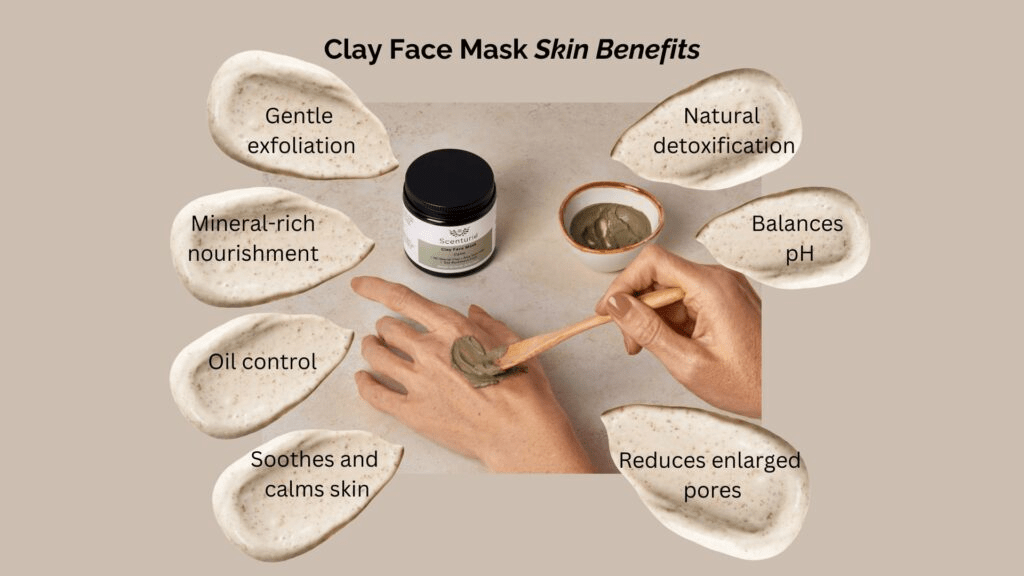
- Deep pore cleansing – Clay penetrates into the opening of pores, binding to oxidized sebum and debris that can lead to blackheads.
- Oil control and shine reduction – By removing excess surface oil, clay helps keep T-zone greasiness in check for hours.
- Gentle exfoliation – As you rinse the dried mask away, the fine clay particles buff off dead skin cells, revealing smoother texture underneath.
- Minimized pore appearance – While you can’t permanently shrink pores, clearing out the gunk that stretches them makes them look significantly smaller.
- Calming of mild inflammation – Many clays contain minerals like silica and zinc that soothe redness and irritation, particularly helpful for acne-prone skin.
It’s important to note what clay masks don’t do. They won’t “detox” your body – your liver and kidneys handle actual detoxification. And they aren’t a one-and-done miracle cure for severe cystic acne. But for anyone dealing with excess oil, clogged pores, or that dull, rough texture that creeps up midweek, clay masks deliver a clinically backed reset.
How Do Clay Masks Work? Understanding the Science
If you’ve ever wondered “how do clay masks work,” the answer lies in their unique mineral composition. Each type of clay has a distinct particle size, mineral profile, and ionic charge, all of which determine how aggressively it pulls oil and how suitable it is for different skin types. Let’s break down the science behind how does a clay mask work – and why not all clays are created equal.
The Adsorption Process
When a clay mask is applied wet, water molecules activate the clay’s negatively charged platelets. These platelets then seek out positively charged substances on your skin: sebum (oil), bacteria, heavy metals from pollution, and even leftover makeup residue. Research published in peer-reviewed dermatology journals confirms that bentonite clay, for instance, can effectively bind to and remove these impurities without stripping the skin’s entire lipid barrier – provided it’s used correctly.
As the mask dries, the clay matrix contracts, creating a gentle physical suction that pulls debris from deeper within the pore. This contraction is what causes that familiar tightening sensation. However, leaving the mask on until it cracks can reverse the benefits, pulling moisture back out of the skin and causing irritation. The ideal window is about 10 minutes, or until the clay is just firm but still slightly tacky.
Kaolin vs. Bentonite vs. French Green Clay
Understanding what do clay masks do depends heavily on which clay you choose. Here’s a quick comparison of the three most common types:
| Clay Type | Particle Size & Strength | Best For | Key Benefit |
| Kaolin (White) Clay | Fine, gentle | Sensitive, dry, or normal skin | Mild oil absorption without over-drying; soothes inflammation |
| Bentonite Clay | Large, highly absorbent | Oily, acne-prone, congested skin | Powerful adsorption; expands up to 20x its size to trap impurities |
| French Green Clay | Medium-fine, mineral-rich | Combination, oily, or dull skin | Contains algae and chlorophyll for added healing and circulation boost |
Kaolin is the gentlest of the trio, with a neutral pH that respects the skin’s moisture barrier. Bentonite, formed from volcanic ash, has a higher pH and an almost sponge-like capacity to absorb oil – which is why it’s a staple in many acne-targeting treatments. French green clay sits in the middle, offering strong cleansing with a dose of trace minerals that improve microcirculation.
What Does Indian Clay Mask Do?
“What does Indian clay mask do” is a question that usually points to Aztec Secret Indian Healing Clay, a popular bentonite clay product. “Indian clay mask” is simply pure calcium bentonite clay, sourced from Death Valley, California – not India. Its fame comes from its intense pulling power. When mixed with water or apple cider vinegar, it forms a thick paste that dries quickly and feels like a vacuum for your pores.
Because it’s so absorbent, Indian clay is best limited to oily or highly congested skin. It can be too aggressive for sensitive or dry complexions, potentially causing redness and flaking. If you use it, always follow with a deeply repairing moisturizer – this is where targeted recovery ingredients become non-negotiable.
How to Choose and Use a Clay Mask for Best Results
Even the best clay mask can backfire if you use it incorrectly. Here’s how to match your clay to your skin type and avoid the most common mistakes.
- Oily and acne-prone skin: Opt for bentonite or French green clay once or twice a week. These types aggressively absorb excess sebum and help prevent pore blockages that lead to breakouts.
- Combination skin: Try kaolin or a multi-clay blend. Apply only to the T-zone (forehead, nose, chin) while leaving drier cheeks masked with a hydrating treatment – a technique known as multi-masking.
- Dry or sensitive skin: Stick to white kaolin clay and limit use to once every 10–14 days. Avoid letting the mask dry completely; rinse while it’s still slightly damp.
- Normal skin: Any clay type works, but a weekly French green or Rhassoul mask can maintain clarity and radiance.
Application wisdom matters just as much. Never let a clay mask dry until it cracks – that tight, flaky stage signals moisture is being pulled from your skin’s surface, not just dirt from pores. Aim for 8–12 minutes, then rinse with lukewarm water using gentle circular motions to enhance exfoliation. And always, always moisturize immediately after.
Clay Masks and Your Skincare Routine
A clay mask fits into your routine after cleansing and before serums or moisturizers. The sequence is simple: double cleanse (oil-based cleanser first, then water-based), apply your clay mask, rinse, and then flood your skin with hydration and repair ingredients. This is the moment when your freshly emptied pores are most receptive to active ingredients – so what you apply next determines whether your skin rebounds or rebels.
If you skip moisturizer or use something too lightweight, your skin may overcompensate by ramping up oil production, undoing all the clay’s good work. Instead, after a clay mask, reach for formulas that deliver barrier-repairing lipids, humectants like hyaluronic acid, and cell-communicating ingredients that signal regeneration.
This is precisely why deep cleansing needs to be followed by deep repair. A clay mask does the hard work of purging; a recovery mask or treatment does the essential work of rebuilding.
Pairing Deep Cleansing with Deep Repair
Clay masks remove. Repair masks restore. They are two sides of the same skin-health coin. Once your pores are clear of impurities, the skin barrier is temporarily vulnerable and primed for regeneration. This is the perfect window to supply the cellular building blocks your complexion craves.
A PDRN mask works differently than a clay mask – rather than pulling anything out, it infuses the skin with highly purified DNA fragments that are 98% identical to human DNA. These fragments, known as polydeoxyribonucleotides (PDRN), activate adenosine A2A receptors to stimulate fibroblast proliferation, boost collagen synthesis, and accelerate tissue recovery, according to a 2025 review in MDPI Applied Sciences. That’s exactly what skin needs after the intensive cleansing of a clay treatment.
Pier Augé’s PDRN hydrating mask is designed as the perfect post-clay companion. Its technology transforms from a creamy texture into a weightless, translucent veil, delivering biomimetic repair without clogging the freshly cleaned pores you just worked hard to clear. Clinical testing showed a 52.69% radiance boost and 45.86% hydration surge in just 15 minutes, and a 20.69% reduction in wrinkles over 14 days. That means you can deeply detoxify with a clay mask and then sleep your way to visibly smoother, firmer skin overnight.
For mornings or as a daily prep step, Pier Augé’s Gentle Lotion Active Tonic gently infuses PDRN and hyaluronic acid into the skin, keeping the barrier strong so that your clay mask sessions remain effective without over-stripping. Using a PDRN toner regularly ensures your skin is always ready to handle a deep cleanse and recover gracefully.
FAQ
What do clay masks do for your face?
Clay masks adsorb excess oil, unclog pores, gently exfoliate dead skin cells, and temporarily tighten pore appearance. They leave skin looking smoother, less shiny, and more refined. For oily and acne-prone complexions, regular use can help prevent mild breakouts by removing the debris that leads to blackheads.
How often should I use a clay mask?
For oily or combination skin, 1–2 times per week is ideal. Normal skin can handle once a week, while dry or sensitive skin should limit use to every 10–14 days and always remove the mask before it fully dries. Overuse leads to moisture barrier damage and rebound oiliness.
What does indian clay mask do differently?
Pure bentonite “Indian” clay mask has an exceptionally strong adsorption capacity. It expands in water and can extract deeply embedded oil and impurities that gentler clays might miss. However, it’s more aggressive and best suited for very oily, resilient skin. Sensitive skin types should test it sparingly.
Can clay masks make acne worse?
Yes, if misused. Leaving a clay mask on too long can irritate or over-dry the skin, triggering an inflammatory response and more breakouts. Always follow with a barrier-repairing moisturizer and avoid harsh clay formulas if you have active cystic acne or open lesions. When used correctly, clay masks support acne management but don’t replace targeted treatments.
Should I moisturize after a clay mask?
Absolutely. A clay mask strips away oil that can leave skin feeling tight and exposed. Applying a rich yet non-comedogenic moisturizer – ideally one with ingredients like PDRN, ceramides, or hyaluronic acid – immediately after rinsing helps lock in hydration and restore the barrier.
What is the difference between a clay mask and a PDRN mask?
A clay mask pulls impurities out of the skin through adsorption. A PDRN mask pushes regenerative building blocks in – specifically DNA fragments that accelerate cellular repair, collagen production, and barrier recovery. Together, they create a complete cleanse-and-repair cycle: clay deep-cleanses, PDRN deeply regenerates.
Ready to give your skin the full reset it deserves? After your next clay mask, try a PDRN repair treatment that works through the night to rebuild and restore – so you wake up to skin that feels as clean as it looks.