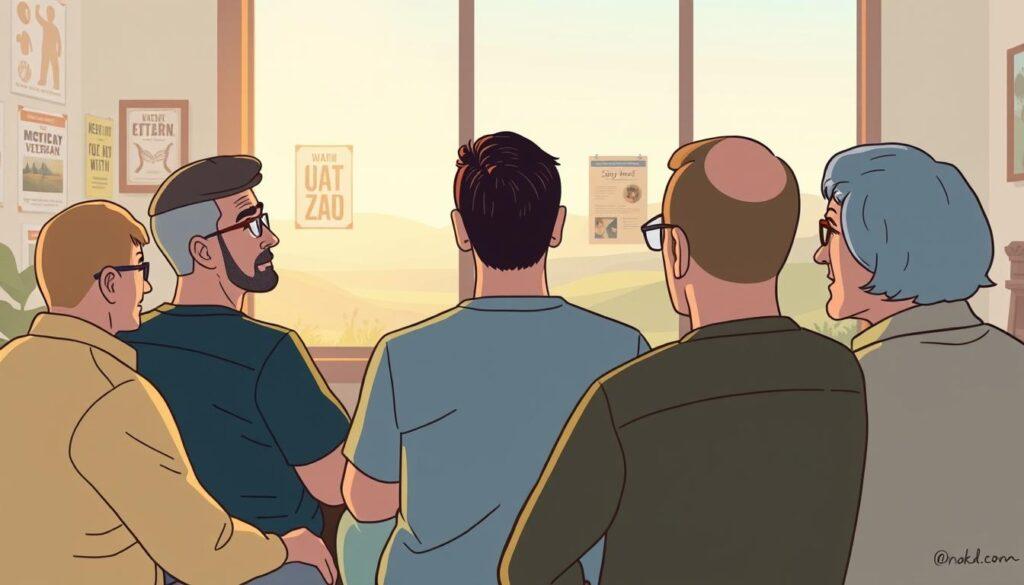
More Than Sobriety: How Veterans Rebuild Identity and Purpose in Recovery
When the Mission Ends
Service gives people something that is difficult to replicate in civilian life: clear purpose, defined roles, strong group identity, and a structure that shapes every hour of the day. For many veterans, the transition out of that structure is one of the most disorienting experiences of their lives — even when they chose it.
The loss is not just logistical. It is existential. The military becomes not just a job but an identity, and leaving it can feel like losing a version of yourself you did not know you were attached to. This transition stress — compounded, for many, by service-related trauma or injury — contributes significantly to the elevated rates of substance use and mental health challenges seen in veteran populations.
Getting into PTSD rehab for veterans or a substance use program is a critical first step. But recovery, for veterans especially, requires more than sobriety. It requires rebuilding something — a sense of who you are and what you are here for — that addiction and the transition process may have left in pieces.
The Identity Shift After Service
In the military, identity is largely collective. You belong to a unit, a branch, a mission. The values — honor, discipline, service, loyalty — are embodied not just individually but in the fabric of daily life. Rank, role, and responsibility are clear. So is the sense of mattering.
Civilian life offers none of these structures automatically. People who excelled in a highly organized, mission-driven environment often find themselves unmoored in workplaces and communities where the expectations are vague, the hierarchy is unclear, and the sense of shared purpose is absent. This is not a personal failing — it is a structural mismatch that affects many veterans and is rarely acknowledged in discussions about military-to-civilian transition.
Substance use can fill the gap temporarily. It provides a kind of structure, a community, and — at least in the short term — relief from the discomfort of purposelessness. Understanding this helps explain why veterans who are intelligent, accomplished, and capable can nonetheless find themselves deeply stuck.
Why Purpose Is a Recovery Tool
Research on long-term recovery consistently points to one of the strongest protective factors against relapse: having something meaningful to live for. This can take many forms — work, family, creative pursuits, faith, community service, advocacy. What it shares across forms is the experience of mattering, of contributing to something larger than the next twenty-four hours.
According to the National Institute on Alcohol Abuse and Alcoholism, among veterans — who have among the highest rates of alcohol use disorder of any population — sustained recovery is most common in people who develop strong social ties and a sense of purpose after leaving active duty. Recovery programs that help veterans identify and pursue meaningful goals, not just manage symptoms, address this need directly.
Purpose-oriented work in treatment might involve vocational counseling, help with education planning, or exploration of what skills and values from military service translate into civilian life. Many veterans are surprised to discover how much their experience is valued in certain fields, and how the discipline and resilience they developed in service can become foundations for a new identity rather than artifacts of a closed chapter.
Rebuilding Community Outside the Military
The loss of unit cohesion — the deep bonds of people who have lived, trained, and served together — is one of the most underappreciated dimensions of military transition. The friendships formed in service often feel irreplaceable, partly because they were forged in conditions that demand a level of trust and mutual reliance that civilian relationships rarely require.
Rebuilding community in recovery takes time and intention. For some veterans, this happens through veteran service organizations, peer support groups, or recreational programs designed specifically for former service members. For others, it develops gradually through work, neighborhood connections, or faith communities. What matters is not the specific path but the willingness to invest in new relationships even when they feel thinner, at first, than the ones left behind.
Veterans in recovery often speak about the moment when they realized they could belong somewhere again — not the same way, not with the same immediacy, but genuinely. That moment tends to coincide with a meaningful shift in stability.
Work, Structure, and the Return to Civilian Life
Structure is protective in recovery for anyone, but it is particularly meaningful for veterans whose entire adult formation may have happened within a structured environment. Having a schedule — work, appointments, meetings, routines — provides a framework that reduces the unstructured time in which cravings and old patterns find space to operate.
Employment is not just financial. It provides identity, purpose, social connection, and daily structure simultaneously. Programs that help veterans navigate the practical challenges of civilian employment — translating military experience to a resume, managing workplace dynamics that differ sharply from military ones, finding roles that feel meaningful — address a recovery-relevant need that goes beyond clinical care.
Taking the First Step
The path from active addiction to a stable, purposeful life is neither straight nor fast. It involves setbacks, periods of uncertainty, and a gradual reconstruction of something that may have been damaged over many years.
But veterans have already demonstrated the capacity for hard things. The same commitment that carried them through service — that willingness to put one foot forward even when it was difficult — is available to them in recovery. The goal is finding the right support to channel it toward building a life that is, finally, fully their own.