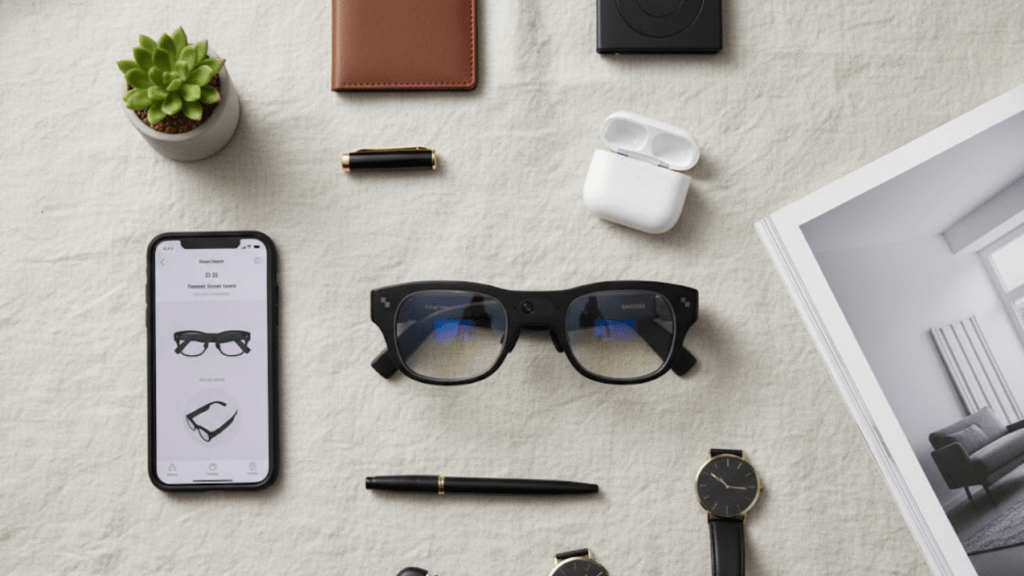
Are AR Glasses the Next Big Consumer Tech Trend?
The smart glasses market is on track to reach $24.88 billion in 2026. AR glasses have moved from niche enthusiast hardware toward more polished consumer products over the past few years — a shift that reflects maturing optics, lower component costs, and broader consumer interest.
Devices like the RayNeo Air 4 Pro AR glasses now project full HD virtual displays from frames weighing just 76 grams. These are shipping products reviewed by outlets including Tom’s Guide and TechRadar — not trade-show demos.
The real question is whether the technology, pricing, and everyday use cases have aligned enough to make AR glasses the next major consumer tech category.
A $25 Billion Market in Motion
The combined AR and VR smart glasses market grew from $21.17 billion in 2025 to a projected $24.88 billion this year, according to Research and Markets. That is a 17.5 percent year-over-year increase driven by consumer wearables, gaming, healthcare applications, and enterprise productivity tools.
IDC describes 2026 as a moment when smart glasses are moving from early-adopter tech toward a broader consumer category, helped by mature supply chains, more brands entering the space, and practical use cases beyond AI alone. Lightweight AR Glasses built for daily wear are leading that shift.
Falling component costs, better optics, and on-device AI are fueling the acceleration. But the real story is the shift in who is buying — not just early adopters, but mainstream consumers with practical daily needs.
Three Types of Smart Glasses on the Market
The smart glasses category has fragmented into three distinct segments, each built on different core technology and targeting a different type of buyer. Understanding how these segments differ is the first step toward choosing the right product:
- AI-first glasses — cameras, microphones, and AI assistants with no visual display
- Display-based AR glasses — wearable monitors that project virtual screens for gaming, productivity, and media
- HUD notification glasses — lightweight frames with small information overlays for navigation and alerts
AI-First Smart Glasses
Meta Ray-Ban 2 and Oakley Meta Vanguard lead this space. They look like standard sunglasses and provide hands-free photo capture, live translation, and voice-activated AI queries. The trade-off is straightforward: you gain everyday wearability and social acceptance but lose any visual display.
Display-Based AR Glasses
This is where RayNeo Air 4 Pro AR glasses, Xreal 1S, and Viture Beast compete. These devices project virtual screens — up to a 201-inch perceived virtual display, depending on viewing-distance assumptions — directly into the wearer’s field of view. They function as wearable monitors, gaming displays, and private cinema screens.
The key distinction for buyers: do you need a visual display? AI-first glasses excel at hands-free capture and voice assistance. Display-based models target users who want screen real estate for entertainment, gaming, or remote work.
What’s Driving Mainstream Adoption
Several converging forces help explain why display-based smart glasses are gaining real traction in 2026. The underlying technology has matured well past the early-adopter stage, prices have dropped, and genuine practical use cases have emerged.
Compact Optics Packed Into Standard Frames
Micro-OLED and Micro-LED panels now deliver full HD resolution per eye inside standard frames. The RayNeo Air 4 Pro AR glasses use dual Micro-OLED displays with HDR10 support and 1,200-nit perceived brightness at 76 grams.
AI-Powered Image Processing
On-device AI chips in display glasses handle SDR-to-HDR upscaling, 2D-to-3D conversion, and image enhancement — improving visual quality without relying on the connected device. AI-first glasses like Meta Ray-Ban handle real-time translation and visual search.
Frames Built for Extended Wear
Several current display models weigh under 85 grams. Some offer magnetic prescription lens attachments or diopter accessories. Features like adjustable brightness settings and electrochromic dimming on select models adapt the viewing experience across lighting conditions.
Prices That Reach Mainstream Buyers
Display-capable smart glasses now start around $299, while higher-end models run $449 to $549. That spread has opened the category to casual gamers, travelers, and remote workers who want a private screen without a full VR headset.
A Growing Content Ecosystem
USB-C connectivity means most phones, laptops, and handhelds work with compatible display glasses, though some devices require DisplayPort-capable ports. Cloud gaming through Xbox Game Pass and PlayStation Remote Play continues expanding the available content library.
How the Leading Models Stack Up
Choosing the right pair of AR glasses comes down to which trade-offs matter most to you as a buyer. The table below compares five leading models across the key specifications that drive most purchase decisions.
| Model | Category | Display | Weight | Price |
|---|---|---|---|---|
| Meta Ray-Ban 2 | AI / Camera | None | 53g | from $379 |
| RayNeo Air 4 Pro | Display (wearable monitor) | Micro-OLED, 1080p, HDR10 | 76g | $299 |
| Xreal 1S | Display (wearable monitor) | Micro-OLED, 1200p | 82g | $449 |
| Viture Beast | Display (wearable monitor) | Micro-OLED, 1200p, 1250 nits | ~88g | $549 |
| Even Realities G2 | HUD / AI prompt | Micro-LED waveguide | ~36g | $599 |
Display Quality and Field of View
Among display models, field of view ranges from the mid-40s to 58 degrees. RayNeo Air 4 Pro AR glasses deliver a 46-degree FOV with 1080p Micro-OLED resolution per eye and HDR10 support. Viture Beast offers the widest field at 58 degrees with higher resolution.
Weight and Wearability
Weight determines how long you can comfortably wear these devices during a session. The RayNeo Air 4 Pro weighs 76 grams — among the lightest full-display models here. Xreal 1S comes in at 82 grams. Standard prescription frames average 30 to 40 grams.
Audio and Immersion
Most display models use dual speakers. The RayNeo Air 4 Pro features B&O-tuned quad speakers designed for wider stereo separation and spatial positioning. Xreal 1S partners with Bose for its audio. For gaming and movies, speaker quality noticeably affects immersion.
Where These Glasses Fit Into Daily Life
Practical everyday utility, not novelty, is what separates lasting consumer tech from short-lived trends. For display-based smart glasses specifically, three clear use cases are driving the strongest real-world adoption among first-time buyers heading into 2026:
- Portable gaming — Steam Deck, PS5 Remote Play, and Xbox Cloud Gaming on a private widescreen display
- Remote work — adding a private portable screen for focused work, travel, or temporary second-screen setups
- Travel entertainment — watching movies and shows on a perceived 201-inch virtual screen during flights and commutes
RayNeo Air 4 Pro AR glasses handle all three scenarios with compatible USB-C DisplayPort devices. The Micro-OLED brightness, HDR10 processing, and B&O quad-speaker audio make extended sessions comfortable in environments like airplane cabins or quiet home offices.
Why One Display Model Stands Out on Value
The RayNeo Air 4 Pro AR glasses pack dual Micro-OLED displays, HDR10 support, a Vision 4000 chip, and B&O quad-speaker audio into a 76-gram frame at $299. For first-time buyers, it offers one of the strongest value propositions in the display-glasses category.
The trade-offs are real: it is a tethered display rather than standalone AR, it lacks IPD adjustment, and prescription lenses require a separate magnetic attachment. But at $299, it lowers the entry point for buyers who want HDR-capable display glasses without moving into the $449–$549 premium tier.