Electric Skateboard Mistakes Beginners Make and How to Fix Them
Most beginner falls come down to the same handful of mistakes. An electric skateboard is not a regular board: the motor changes how you balance, brake, and react. These mistakes are predictable, which means they are preventable. Here is what to watch out for.
Mistake: Starting With Poor Basic Control
Choosing the Wrong Ride Mode
New riders often grab the board, flip it to the fastest mode, and assume they will figure it out as they go. That usually ends badly. In a high-speed mode, small movements on the remote produce much bigger responses than you expect. The acceleration is sharper, the braking hits harder, and there is almost no room to recover when something goes wrong.Most boards come with a beginner or eco mode for a reason. Use it.
Standing Too Stiff or Placing Your Feet Incorrectly
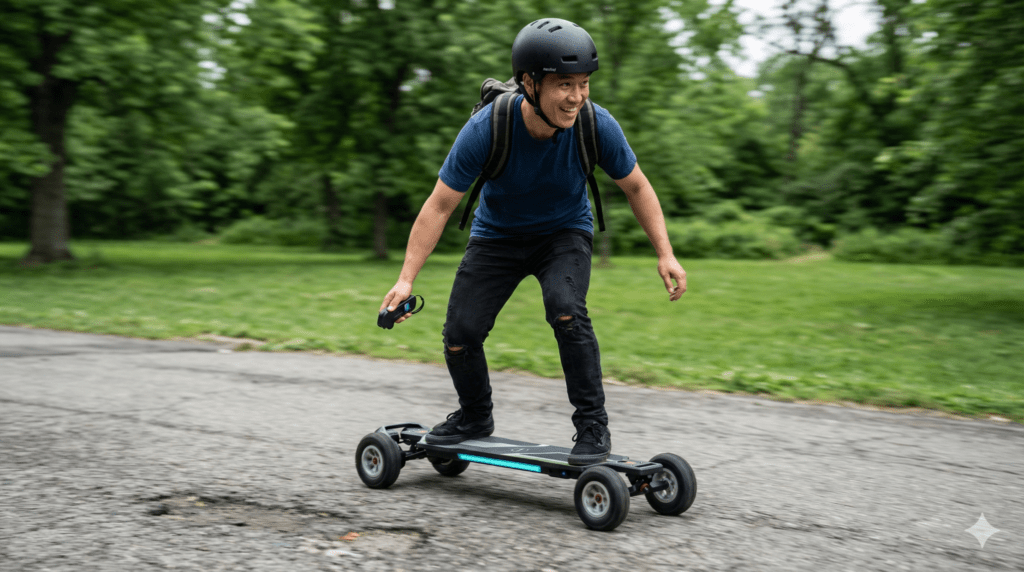
Locking your knees is the most natural thing to do when you feel unsteady, but it makes the problem worse. Every bump goes straight through your legs and into your upper body. A good starting position looks like this:
- Feet roughly shoulder-width apart
- Front foot angled slightly forward
- Back foot near the tail of the board
- Knees soft, not locked
That slight bend in the knees is what absorbs the road and keeps you stable.
Solution: Start in Beginner Mode and Practice a Relaxed, Balanced Stance
Find a flat, open space with no traffic and spend your first few sessions just getting comfortable. Practice rolling, stopping, and holding your line before you think about speed. Move up a mode only when stopping and balancing feel automatic, not when they feel pretty good.
Mistake: Accelerating and Braking Too Aggressively
Why Sudden Throttle Input Causes Falls
Squeezing the throttle hard from a standstill shifts your weight backward faster than your feet can compensate. It does not take much. A short burst of unexpected acceleration is enough to send a beginner off the back of the board. The remote on most boards is more sensitive than people expect, and new riders consistently use more input than they need.
Why Electronic Braking Needs More Anticipation
With a regular skateboard, you drag your foot. With an electric board, braking kicks in the instant you pull the trigger, and it can feel shockingly abrupt if you are not ready for it. Waiting until the last moment to brake is a habit that works on foot but fails completely here.
Solution: Use Smooth Acceleration and Practice Gradual Braking
Treat the throttle like a volume knob, not a light switch. For braking, start applying pressure well before you actually need to stop. Practicing controlled stops from low speed over and over is the single fastest way to build the muscle memory that keeps you upright in real situations.
Mistake: Ignoring Road and Traffic Conditions
Cracks, Gravel, Wet Patches, and Potholes
A gap in the pavement that a pedestrian steps over without noticing can stop a skateboard wheel cold. Sand on a corner, a wet manhole cover, or a small pothole at the wrong angle can all cause a sudden stop that sends you flying forward. Beginners are especially exposed here because scanning the ground ahead while also managing speed and balance is genuinely hard to do at first.
Crowded Sidewalks, Intersections, and Bike Lanes
An electric skateboard closes distance on a pedestrian faster than most people realize. On a crowded sidewalk, there is almost no space to maneuver. Intersections demand quick decisions about right of way and stopping distance. Bike lanes feel like the safe choice but often come with rough pavement, debris, and unpredictable cyclists.
Solution: Scan Ahead and Choose Routes That Match Your Skill Level
Keep your eyes 10 to 15 feet ahead rather than looking directly in front of the wheels. Start on quiet streets or empty parking lots. Bring in more complex environments only after the basics feel solid, not before.
Mistake: Riding Beyond Your Skill Level
Turning Too Sharply at Speed
Leaning hard into a turn at high speed pushes weight to the rail of the board faster than most beginners can handle. The board carves out before you can correct. Getting a sharp turn right at speed requires the right combination of lean angle, body position, and foot pressure, and that combination only comes with practice.
Copying Advanced Riders Too Early
Watching experienced riders make it look easy is motivating. It is also misleading. Those riders have hundreds of hours logged and have already lived through most of the mistakes in this guide. Trying to skip to their level before the foundation is there almost always leads to a fall that could have been avoided.
Solution: Build Speed, Carving, and Obstacle Control in Stages
Set a speed ceiling for each session and only raise it when that level feels genuinely comfortable, not just manageable. Work on carving at low speed first, then medium, then high. Each phase is its own skill, and rushing past them does not save time. It just delays the learning.
Mistake: Skipping Safety and Pre-Ride Checks
Protective Gear Beginners Should Not Ignore
A helmet is the starting point, not the whole picture. Wrist guards address the most common fall injury: catching yourself with your hands. Knee and elbow pads reduce the damage from the falls that are part of the learning process. The rides that feel too short or too easy to bother with gear are exactly the ones where people get hurt.
Wheels, Trucks, Belts, Screws, Remote, and Battery Checks
A loose screw on the motor mount or truck can turn into a handling problem mid-ride. Belt-drive boards need regular checks for wear and tension. A remote running low on battery behaves unpredictably. None of these take long to check, and catching them before a ride costs nothing.
Solution: Make a Quick Inspection Part of Every Ride
Run through the same short list before every session:
- Helmet and pads on
- Remote fully charged
- Screws and motor mount tight
- Wheels spinning freely with no wobble
- Battery above your minimum for the planned route
Two minutes before you roll. That is all it takes.
Conclusion
None of these mistakes are unusual, and none of them mean you are a bad rider. They are just what the early stage of learning this skill looks like. The difference between riders who improve quickly and riders who stay stuck is simple: the fast learners treat the basics as something worth getting right, not something to get past. Start slow, build the habits deliberately, and the rest follows naturally.
FAQs
What is the most common electric skateboard mistake for beginners?
Starting in a mode that is too fast before basic balance and braking are solid. Most beginner falls come from the board doing something unexpected, and that almost always traces back to a speed or braking force that was higher than the rider’s current skill level could handle.
How long does it take to feel comfortable on an electric skateboard?
Most riders find their footing within five to ten hours of practice across several sessions. Getting fully comfortable in traffic and at higher speeds usually takes a few weeks of regular riding. The process moves faster when early sessions focus on specific skills rather than just cruising around.
Why does my electric skateboard feel unstable at speed?
Speed wobble usually comes from one of three things: trucks that are too loose, a stance that is too narrow, or tension in the upper body that amplifies small imbalances. Tightening the kingpin nut slightly, widening your foot position, and consciously softening your knees will fix most wobble issues at beginner to intermediate speeds.