How to Brand Your Pop-Up Tent for Fashion Events
Fashion events are no longer built around product visibility alone. Today’s most successful activations are designed around immersion, audience interaction, and visual memorability. Whether the environment is a luxury streetwear launch, a seasonal runway activation, a fashion trade event, or a lifestyle pop-up, brands are competing for attention in increasingly experience-driven spaces.
In this environment, a pop-up tent functions as more than temporary shelter. It becomes a physical extension of brand identity. The structure, graphics, layout, materials, lighting, and visitor flow collectively shape how attendees perceive the brand within seconds of arrival.
Fashion consumers are highly responsive to presentation quality. Poorly executed event environments weaken perceived brand value immediately, while visually cohesive installations strengthen credibility, social engagement, and customer recall. This is why brands investing in experiential marketing are placing greater emphasis on temporary branded environments that create both visual distinction and emotional connection.
Fashion Event Branding Requires Environmental Consistency
One of the most common mistakes at fashion events is treating the tent as an isolated branding piece instead of an integrated environment.
High-performing fashion activations maintain visual continuity across:
- Tent graphics
- Product displays
- Staff apparel
- Lighting systems
- Furniture
- Packaging
- Digital screens
- Flooring
- Signage
When these elements operate cohesively, the space feels intentional and immersive rather than temporary. Fashion audiences respond strongly to this type of environmental alignment because it reflects the same design discipline expected within the products themselves.
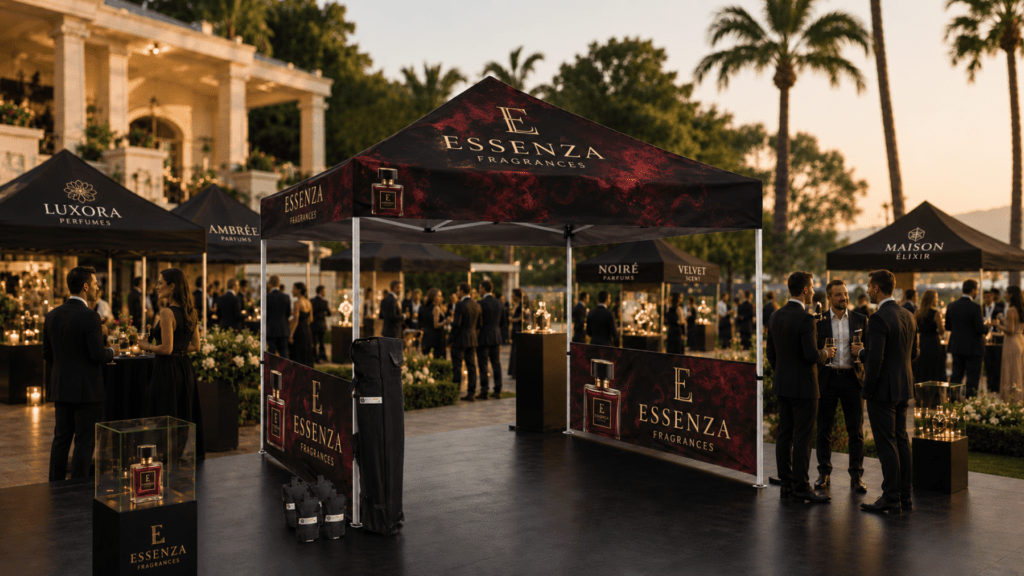
A professionally designed custom canopy tent allows fashion brands to extend campaign identity into the physical venue itself. Instead of functioning as generic event infrastructure, the tent becomes part of the storytelling architecture surrounding the collection or activation.
Visibility Is No Longer Enough in Fashion Marketing
Traditional event branding prioritized visibility. Modern fashion marketing prioritizes shareability. Consumers increasingly experience fashion events through:
- Social media content
- Influencer coverage
- User-generated photography
- Livestreams
- Mobile video
This fundamentally changes how pop-up tents should be designed. The goal is not simply attracting foot traffic. The goal is creating an environment people actively want to photograph and distribute online.
This requires deliberate attention to:
- Color contrast
- Spatial composition
- Lighting quality
- Graphic hierarchy
- Surface textures
- Open sightlines
- Camera-friendly branding zones
Fashion brands that treat their event setup as “content infrastructure” typically generate significantly greater post-event exposure.
Experiential marketing environments that integrate visual immersion with audience participation consistently outperform static displays in engagement metrics.
The Tent Exterior Should Communicate Brand Positioning Immediately
Fashion audiences process visual cues rapidly. Most attendees decide within moments whether a booth aligns with their interests, aesthetic preferences, or perceived quality expectations.
For this reason, the tent exterior should communicate positioning instantly.
Luxury-focused brands often succeed with:
- Minimal typography
- Monochromatic palettes
- Matte finishes
- Architectural spacing
- Limited messaging
Streetwear and youth-oriented brands may prioritize:
- Bold graphics
- Saturated color
- Layered visuals
- Oversized logos
- Dynamic typography
Sustainable fashion brands frequently emphasize:
- Natural textures
- Earth-tone palettes
- Organic material presentation
- Minimalist environmental styling
The design language of the tent must mirror the visual language of the collection itself. Any disconnect between product identity and environmental presentation weakens authenticity.
Fashion Pop-Ups Should Prioritize Spatial Flow
One of the strongest differentiators between amateur and professionally designed fashion activations is visitor movement strategy.
Strong pop-up environments guide attendees naturally through:
- Attraction
- Entry
- Exploration
- Interaction
- Social sharing
- Conversion
Tent layouts that overcrowd entrances, block product visibility, or restrict circulation reduce engagement duration significantly.
Instead, successful fashion pop-ups create layered visual discovery points:
- Open-front entrances
- Central product focal zones
- Secondary merchandising areas
- Photo opportunities
- Lounge or consultation spaces
This transforms the tent from a transactional booth into an experiential environment.
Research surrounding experiential retail consistently shows that layout, lighting, materiality, and environmental design strongly influence consumer engagement and perception.
Material Quality Directly Influences Brand Perception
Fashion consumers are highly sensitive to detail quality. Low-grade tent materials, poor print resolution, visible wrinkles, or inconsistent finishing can undermine brand credibility immediately.
Premium event environments typically utilize:
- Tensioned fabric graphics
- High-resolution dye-sublimation printing
- Matte-finish structures
- Concealed framework systems
- Architectural lighting integration
This matters because attendees subconsciously associate environmental quality with product quality. In luxury and premium fashion environments especially, the tent itself becomes part of the perceived product ecosystem.
Lighting Strategy Is Often the Biggest Branding Differentiator
Lighting is one of the most overlooked components in fashion pop-up branding.
Poor lighting:
- Distorts product colors
- Weakens photography
- Flattens textures
- Reduces visual depth
- Damages social content quality
Strong lighting strategy enhances:
- Garment detail visibility
- Product texture
- Brand atmosphere
- Visitor comfort
- Social media performance
Fashion activations increasingly use layered lighting systems that combine:
- Ambient lighting
- Accent product lighting
- Architectural illumination
- Interactive digital lighting
- Warm customer-facing lighting
This creates a more cinematic and immersive environment that supports both in-person engagement and digital sharing.
Branding Should Extend Beyond Logos
One of the biggest misconceptions in event branding is assuming visibility equals memorability.
Large logos alone rarely create meaningful emotional engagement.
Fashion brands create stronger recall when the tent communicates:
- Mood
- Lifestyle
- Identity
- Community
- Cultural relevance
This is why high-performing fashion activations emphasize atmosphere as heavily as graphics.
Consumers remember environments that feel emotionally distinctive.
For example:
- A minimalist luxury setup communicates exclusivity
- A music-integrated streetwear activation communicates energy
- A sustainability-focused installation communicates values
- A futuristic fashion launch communicates innovation
The tent becomes a sensory expression of the brand narrative itself.
Integrated Booth Systems Strengthen Fashion Event Presence
Fashion brands increasingly combine tents with modular exhibition systems to create more layered event environments.
Integrated trade show display booths allow brands to extend beyond simple canopy structures into fully coordinated experiential spaces that include:
- Backlit graphics
- Product showcases
- LED walls
- Interactive stations
- Lounge environments
- Retail merchandising sections
This hybrid approach is especially effective at:
- Fashion expos
- Buyer events
- Industry trade shows
- Seasonal collection launches
- Influencer activations
Rather than appearing temporary, the environment feels strategically designed and commercially mature.
Fashion Events Now Operate as Content Ecosystems
Modern fashion marketing no longer separates physical and digital branding. Every physical activation now functions simultaneously as:
- A customer experience
- A media opportunity
- A social content environment
- A brand positioning tool
This shift changes how pop-up tents should be designed entirely.
The most effective fashion event environments are now optimized for:
- Photography angles
- Influencer interaction
- Livestream visibility
- Short-form video content
- Audience participation
- Digital amplification
Brands that understand this transition design tents not only for attendees physically present, but also for the significantly larger audience viewing the activation online afterward.