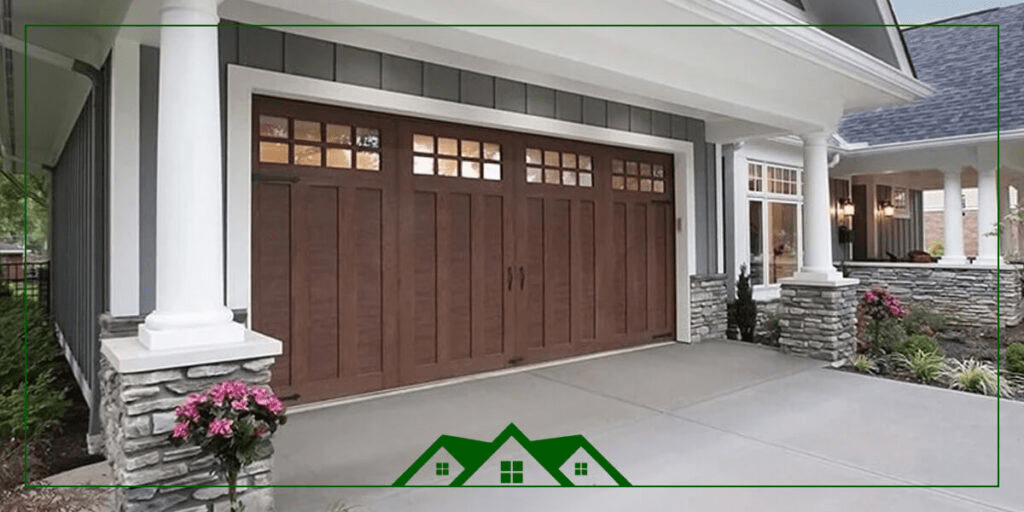
From Curb Appeal to Convenience: The Complete Guide to Choosing a New Garage Door
Your garage door is probably not the first thing you think about when planning a home upgrade but it should be. It covers a substantial portion of your home’s front elevation, it’s used multiple times every single day, and it directly affects your home’s security, energy efficiency, and overall appearance. A worn-out or poorly chosen door quietly drags everything else down. The right one pulls everything together.
This guide is for homeowners who are ready to make a smart, informed decision whether you’re replacing an aging door that’s past its prime or upgrading a builder-grade unit that never quite matched your home’s potential.
Why Your Garage Door Matters More Than You Think
Garage door replacement consistently ranks among the top home improvement projects for return on investment, often recovering more than 90% of the project cost at resale. That’s a better return than most kitchen remodels or bathroom renovations, which tend to get far more attention.
Beyond resale value, there’s the daily experience to consider. An attached garage is one of the most-used entry points in most homes. A door that operates smoothly, seals properly against drafts and pests, and looks good doing it makes a genuine difference to how a home feels, not just how it looks from the street.
Curb Appeal Starts at the Garage
Stand across the street from your house and take an honest look. In most homes, the garage door occupies anywhere from 30 to 40 percent of the front-facing exterior. That’s significant visual real estate, and it either works in your favor or against you.
This is why contemporary garage door styling has become one of the most discussed elements in residential exterior design. The era of the generic beige raised-panel door is giving way to a richer set of choices full-view aluminum and glass panels, flush steel in architectural colors like slate and charcoal, wide-plank carriage-house designs, and composite finishes that replicate wood grain without the upkeep.
The goal, though, isn’t to chase trends. It’s to find a door that belongs to your home’s architecture. A craftsman bungalow looks its best with a carriage-house style door and warm hardware. A mid-century modern home is better served by a horizontal ribbed aluminum panel with clean lines. A traditional colonial pairs naturally with a classic raised-panel door in white or soft grey. The best-looking doors aren’t always the most expensive; they’re simply the ones that fit.
Understanding Your Material Options
Material drives almost everything downstream price, maintenance requirements, insulation performance, and long-term durability.
Steel: remains the most widely chosen material. It’s durable, low maintenance, available in virtually every style, and accessible across a wide range of budgets. Pay attention to the quality of the finish, A good galvanized coating with a factory-applied paint system resists rust significantly better in humid or coastal environments.
Wood: is the premium choice for homeowners who want genuine character. A solid wood door is hard to beat aesthetically, but it requires consistent upkeep painting or staining every few years and monitoring for swelling in wet climates. For the right homeowner, that’s a reasonable trade. For others, it becomes a source of frustration.
Aluminum: suits modern and contemporary designs well, particularly full-view styles with glass panels. It’s rust-resistant and lightweight, though it dents more easily than steel and provides less insulation unless you opt for thermally broken frames.
Composite and fiberglass: offer a practical middle ground, the visual warmth of wood without the susceptibility to moisture and warping, with significantly less maintenance over time.
Insulation Is Not Optional
If your garage is attached to your living space, the door is part of your home’s thermal boundary. An uninsulated door allows heat to pour in during summer and cold to seep in during winter, which shows up directly in your energy bills and in the comfort of adjacent rooms.
Garage doors are rated for thermal performance using R-values. For most attached garages in moderate climates, an R-value between 12 and 18 is a sensible target. The price difference between an uninsulated door and a properly insulated one is typically $150 to $300 an amount most homeowners recover within a year or two through reduced energy costs.
There’s another benefit worth mentioning: noise reduction. A well-insulated door on a belt-drive opener operates noticeably more quietly than a bare steel door on a chain drive. If anyone in the house keeps early or late hours, or if there’s living space beside the garage, this matters more than most buyers anticipate before they experience the difference firsthand.
Smart Technology That Earns Its Place
Home technology can feel unnecessary when it solves problems you don’t actually have. Smart garage openers are different. For most households, they address real, recurring inconveniences in a way that quickly becomes part of daily life.
The best smart opener solutions for homeowners go well beyond opening a door with your phone. Current systems provide real-time status monitoring, automatic closing if the door is left open past a set time, full activity logs with timestamps, and flexible guest access that lets you admit a contractor or delivery person without handing over a remote. Integration with Alexa, Google Home, and Apple HomeKit means your garage can participate in broader home routines triggering lights on arrival or closing automatically as part of a goodnight sequence.
For homeowners who want to test the technology before committing to a full replacement, retrofit smart controllers from brands like Chamberlain and Meross connect to most existing openers for under $80. It’s a low-risk entry point that converts most skeptics quickly.
Safety and Durability Deserve Honest Attention
Any garage door manufactured after 1993 is required to include an auto-reverse mechanism that stops and reverses the door if it detects an obstruction. If your current door predates that standard, replacement isn’t just an upgrade it’s a safety issue, particularly in homes with children or pets.
On the mechanical side, torsion spring systems are the current standard. They’re safer than older extension spring setups and rated for 10,000 to 30,000 cycles depending on quality — roughly 14 to 40 years of normal use. When comparing quotes, ask specifically about spring ratings. It’s one of the details that separates a door that performs reliably for two decades from one that starts causing problems at year five.
Budget, Value, and Making the Decision
Installed prices generally break down as follows: entry-level insulated steel doors run $600 to $900; mid-range options with better insulation and refined hardware fall between $1,200 and $2,500; premium wood, custom panel, and full-view aluminum designs can reach $4,000 or more. These figures include professional installation, which for most homeowners is the right approach given the spring tension and electrical work involved.
The instinct to go with the lowest quote is understandable, but a garage door is a long-term mechanical system used hundreds of times each year. Spending an additional $300 to $500 on better springs, higher insulation, and a quieter drive system is almost always recovered in performance and longevity over the life of the door.
Bringing It All Together
Choosing a new garage door rewards careful thinking over impulse. Match the style to your home’s architecture rather than simply picking what looks attractive in a catalogue. Choose a material that suits your climate and your honest appetite for maintenance. Invest in proper insulation if the garage is part of your living envelope. Treat smart technology as a standard feature rather than an optional luxury. And pay attention to the mechanical components — springs, tracks, and weatherstripping that determine how the door performs five and ten years from now, not just on installation day.
A garage door done right disappears into your home in the best possible sense. It looks like it always belonged there, works without friction, and holds its value quietly over time. That’s a better outcome than most renovations and it starts with taking the decision seriously from the beginning.