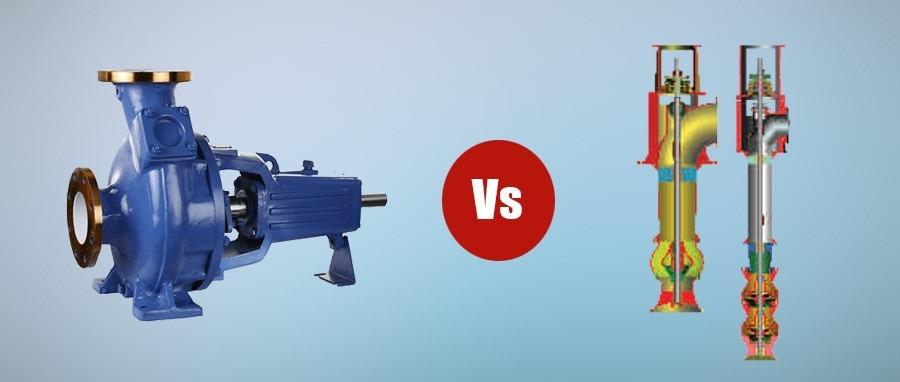
Horizontal vs Vertical Process Pumps: Which Is Better?
Key Takeaways
- Horizontal process pumps mount on a baseplate with the shaft running parallel to the ground, making them easier to inspect, align, and service.
- Vertical process pumps orient the shaft perpendicular to the ground and are better suited for tight spaces, sumps, or below-grade fluid sources.
- Suction conditions, available floor space, and maintenance access are usually the deciding factors between the two orientations.
- Neither design is universally superior. The better pump is the one matched to your specific process requirements and installation conditions.
- Working with an experienced industrial equipment supplier can significantly reduce the risk of misspecification before a pump order is placed.
Choosing a process pump should be straightforward. In practice, it rarely is. One of the most common debates for plant engineers and procurement teams is which orientation to go with: horizontal or vertical? Both designs have earned their place in industrial operations worldwide. Both are built in centrifugal configurations that handle a wide range of process fluids and pressures. But they’re not interchangeable, and getting the orientation wrong for your application doesn’t just create installation headaches. It can lead to chronic maintenance problems, reduced pump life, and efficiency losses that cost real money over time.
So what actually separates them?
What Is a Horizontal Process Pump?
A horizontal process pump sits on a rigid baseplate with the shaft running parallel to the ground. The motor and pump casing are coupled and mounted side by side, and access to the mechanical seal, bearings, and impeller is relatively straightforward from grade level. End suction, between-bearings, and double suction designs all fall into this category.
Horizontal pumps are the most common configuration in process industries. You’ll find them in chemical transfer lines, water supply systems, cooling circuits, oil and gas processing, and any application calling for steady, high-volume flow over long operating cycles. Because they’re mounted on a flat base at grade, alignment inspection and routine maintenance don’t require specialized rigging or elevated access platforms.
Manufacturers like Sulzer have built strong reputations by engineering horizontal process pumps that hold tight efficiency curves across a wide range of flow and pressure conditions. Industrial distributors serving North and South America, such as AMED, source these kinds of units from leading global manufacturers to support clients in refining, water treatment, and manufacturing sectors.
Why engineers often prefer horizontal pumps:
- Accessible for inspection, alignment checks, and seal replacement without disassembling the full unit
- Flexible piping configurations and mounting options at grade level
- Well suited to high-flow, continuous-duty service applications
- Bearing lubrication is simpler because of the horizontal shaft orientation
- Widely available in ANSI, API 610, and ISO 5199 standard configurations
What Is a Vertical Process Pump?
Vertical process pumps orient the shaft perpendicular to the ground. The motor sits on top, the casing extends downward, and in many designs the impeller operates fully submerged in the process fluid. Turbine pumps, submersible pumps, inline pumps, and vertical can (barrel) pumps all fall into this family.
The core reasons to go vertical are usually space or suction. When floor space is limited, a vertical unit’s small footprint can make the difference between a feasible installation and one that simply won’t fit. When the fluid source is below grade, like a sump, pit, or wet well, placing the impeller close to or below the liquid surface improves suction conditions and reduces cavitation risk considerably.
Municipal water systems and wastewater lift stations have relied on vertical turbine designs for generations for exactly these reasons.
Why engineers choose vertical pumps:
- Minimal floor space requirement compared to horizontal units of similar capacity
- Reduces NPSH concerns in below-grade or sump-style installations
- Some designs are self-priming or require no priming at all
- Well suited for wet wells, cooling towers, fire pump applications, and booster stations
- Often lower upfront cost for smaller-capacity or intermittent-duty applications
Key Differences Between Horizontal and Vertical Process Pumps
Installation Space and Layout
Horizontal units need a flat, unobstructed footprint. They’re longer and wider than vertical pumps of similar capacity, and their piping runs typically require more planning. If your facility has open floor space and a well-organized equipment bay, that’s rarely a problem. But in a constrained equipment room or during a retrofit into an existing layout, those space requirements can make the decision for you before you’ve even looked at a performance curve.
Vertical pumps stand upright and take up a fraction of the floor area, though they do require adequate vertical clearance for the motor and sometimes structural support above. Low-ceiling environments can create complications of their own.
Maintenance and Accessibility
Horizontal pumps are generally easier to maintain. The mechanical seal, bearings, and impeller can be accessed without disturbing adjacent piping or removing the pump from service in most designs. Technicians can perform seal replacements, inspect couplings, and check shaft alignment with standard tools and reasonable access.
Vertical pumps are a different story. Accessing internals often requires withdrawing the entire shaft assembly upward, which takes more time, more planning, and in some cases overhead lifting equipment. For facilities with tight maintenance windows or lean maintenance teams, that added complexity is a real operational consideration and shouldn’t be underestimated.
Priming Requirements
Horizontal end-suction pumps aren’t self-priming. If they lose prime, they need to be reprimed before they’ll move fluid again. Vertical designs with submerged impellers don’t have that problem, because the impeller is already in contact with the liquid. In applications where the pump runs intermittently or where the suction line might drain back between cycles, a vertical design can eliminate a persistent maintenance issue that otherwise shows up on the service log regularly.
NPSH and Suction Conditions
Net positive suction head, specifically the relationship between NPSHa (available) and NPSHr (required), is one of the more misunderstood variables in pump selection. When NPSHa drops too close to or below NPSHr, cavitation occurs. And cavitation doesn’t just cause noise and vibration. It chews through impellers fast.
Vertical pumps positioned at or below the fluid surface naturally improve NPSHa. That’s a meaningful advantage when suction head is limited and you can’t raise the supply vessel or lower the pump centerline in a horizontal installation.
Cost Considerations
Horizontal pumps generally carry a lower purchase price at comparable capacities. They’re manufactured in higher volumes, more thoroughly standardized across the industry, and easier to source. Vertical designs can cost more upfront, particularly for large-diameter turbine units or engineered-to-order configurations.
But initial purchase price isn’t the whole picture. If a vertical design eliminates the need for a separate priming system, an elevated suction vessel, or significant piping rework, the installed cost can end up surprisingly close. Total cost of ownership, including installation, maintenance labor, and energy consumption over the pump’s service life, is the number that actually matters.
When to Choose a Horizontal Process Pump
Go horizontal when floor space allows, when the application demands high flow rates over long duty cycles, and when maintenance access is a priority for your team. Between-bearings configurations, referred to as BB1, BB2, or radially split in API terminology, are the standard choice for high-pressure and high-temperature refinery and chemical plant applications because they can be serviced without disturbing the piping system.
API 610 OH2 and BB configurations are worth specifying for any critical or hazardous service where reliability isn’t optional. Horizontal pumps also make more sense when your system design calls for multiple units running in parallel, since shared baseplates and common piping headers are easier to engineer and maintain in that orientation.
AMED-US works with manufacturers across the process pump spectrum, including units designed specifically for the demanding conditions common in industrial and municipal applications across the Americas.
When to Choose a Vertical Process Pump
Vertical pumps earn their place in space-constrained installations, below-grade fluid sources, and situations where suction head is too limited for a horizontal design to operate reliably. Cooling towers, municipal wet wells, fire pump rooms, and industrial booster stations are all common environments where vertical configurations are the practical default.
They’re also the right call when the motor and bearings need to stay above a hot or corrosive process fluid, or when you’re dealing with a sump where the fluid level fluctuates significantly. Some vertical turbine designs can handle variable submergence depths better than most horizontal configurations could ever accommodate.
Which Orientation Is Actually Better?
Neither.
That’s the honest answer, and any engineer or supplier who tells you otherwise is either oversimplifying or selling you something. The better pump is the one that’s properly matched to your installation conditions, your process fluid, your operating duty, your available space, and your maintenance program.
What tends to cause problems in the real world isn’t the choice between horizontal and vertical. It’s underspecifying suction conditions, ignoring part-load operation, or selecting a pump that ends up running perpetually off its best efficiency point because the system curve was never modeled correctly. Getting those inputs right before specifying a pump is where experienced engineering judgment pays for itself many times over.
Not sure where to start with your pump specification? That’s exactly where a knowledgeable equipment supplier earns its value.
What to Look for When Specifying a Process Pump
Whether you’re going horizontal or vertical, a few parameters should always be confirmed before a purchase order is placed:
- NPSHa margin: Target at least 1.1 to 1.3 times NPSHr at all expected operating points, not just at the design flow.
- Efficiency curve: Check how the pump performs across the full expected flow range. Running far from the best efficiency point shortens pump life and increases energy costs.
- Material compatibility: Match wetted-part materials to your fluid chemistry, including any temperature extremes or corrosive elements.
- Seal arrangement: Mechanical seals need proper flush plans. API Plan 11 or Plan 23 are common starting points for general process service.
- Applicable standards: Confirm compliance with ANSI/HI 1.1-1.5, API 610, or ISO 5199 as your industry and service require.
- Supplier expertise: A pump is only as reliable as the technical support behind it. Working with a supplier that genuinely understands rotating equipment and your specific application makes a measurable difference, especially when something unexpected happens in the field.
Frequently Asked Questions
What’s the main difference between horizontal and vertical process pumps?
The fundamental difference is shaft orientation. Horizontal pumps mount on a baseplate with the shaft running parallel to the ground. Vertical pumps stand upright with the shaft perpendicular to the ground and the impeller positioned below. Each orientation suits different installation conditions, suction environments, and maintenance requirements.
Are horizontal process pumps easier to maintain than vertical ones?
In most cases, yes. Horizontal configurations allow better access to mechanical seals, bearings, and the impeller without requiring full disassembly or overhead lifting equipment. Vertical pumps often require withdrawing the shaft assembly upward to reach internal components, which generally takes more time and skilled labor.
When should I specify a vertical pump instead of a horizontal one?
Vertical pumps are the more practical choice when floor space is limited, when the fluid source is below grade such as a sump or wet well, or when available suction head is too low for a horizontal design to operate without cavitation risk. Municipal water systems and wastewater lift stations rely heavily on vertical turbine designs for these exact reasons.
What is NPSH and why does it matter for pump selection?
NPSH stands for net positive suction head. NPSHa is the suction energy available at the pump inlet. NPSHr is the minimum energy the pump needs to avoid cavitation. When NPSHa falls too close to or below NPSHr, the fluid vaporizes inside the pump, causing impeller damage that can be severe and expensive. Vertical pumps placed at or near the fluid surface naturally improve NPSHa, which is a significant advantage in low-suction-head applications.
Can I replace a horizontal pump with a vertical one in an existing system?
Possibly, but it’s not a straightforward swap. Suction and discharge piping geometry, baseplate design, motor support structures, and NPSH conditions all change with pump orientation. Any such modification should be evaluated by a qualified rotating equipment engineer before work begins.
Which pump orientation is more energy efficient?
Efficiency depends more on hydraulic design and how well the pump is matched to the system curve than on orientation. A well-selected horizontal pump running near its best efficiency point will outperform a poorly matched vertical unit, and the reverse is equally true. The most important efficiency factor is selecting a pump whose performance curve aligns closely with your system’s actual operating range across all expected conditions.
What industry standards apply to horizontal and vertical process pumps?
ANSI/HI 1.1-1.5 covers general centrifugal pump design and application. API 610 applies to centrifugal pumps used in petroleum, petrochemical, and natural gas service. ISO 5199 addresses technical specifications for process pumps. For fire pump installations, NFPA 20 sets out specific performance and installation requirements. The applicable standard depends on your industry, the fluid handled, and the criticality of the service.