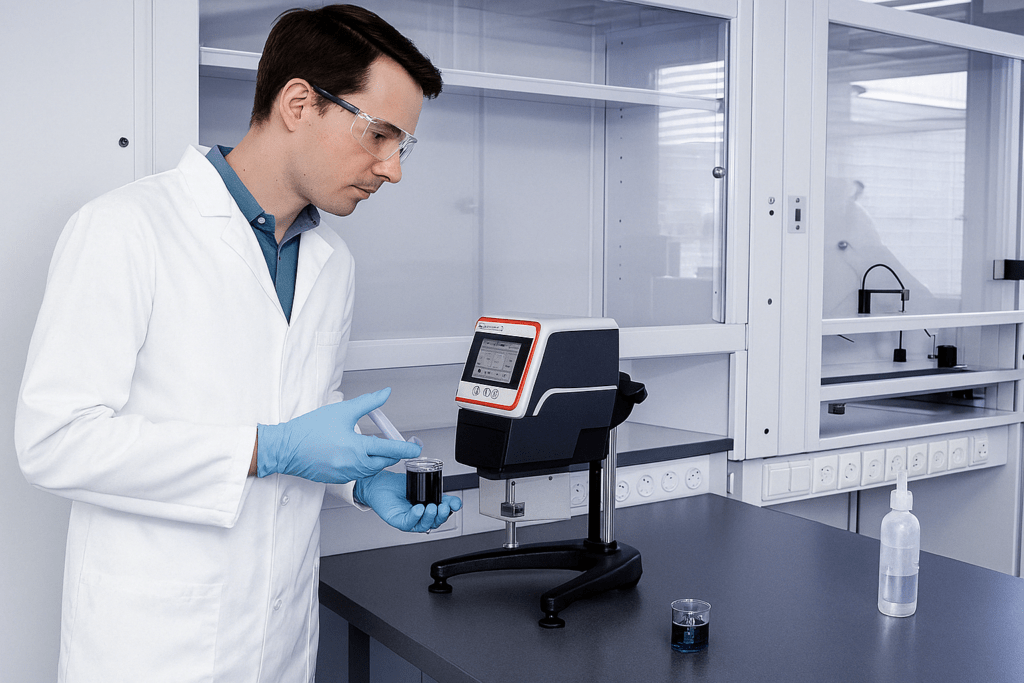
Viscometer Buying Guide: How to Choose the Right Viscosity Tester for QC and R&D
Viscometer is one of the most critical laboratory instruments for ensuring batch-to-batch consistency and process efficiency. Whether you are formulating a new pharmaceutical syrup, a high-gloss automotive paint, or a food-grade adhesive, the way a fluid flows directly impacts its performance and consumer acceptance. By accurately measuring resistance to flow, teams can optimize formulations and prevent the release of out-of-spec materials that could lead to costly production delays or field failures.
However, selecting the correct Viscosity Tester is rarely a straightforward task. The market is filled with various technologies—ranging from simple dial-reading units to advanced digital systems and specialized torque-based machines. Choosing the wrong viscosity meter can lead to inaccurate data, especially when dealing with complex non-Newtonian fluids that change behavior under different shear conditions.
This guide is designed to help you navigate these choices, allowing you to select a system based on your actual workflow needs rather than technical guesswork. To see a full range of industry-standard systems, you can compare viscometers for QC and R&D and evaluate which configuration matches your laboratory’s demands.
What a Viscometer Is Actually Helping You Control
At its core, a Viscometer is not just a device that gives you a number; it is a process control tool. In both quality control (QC) and research and development (R&D), these instruments are used to manage several critical variables:
- Batch-to-Batch Consistency: Ensuring that every production run of a product, such as ink or shampoo, meets the exact same flow specifications.
- Formulation Stability: In R&D, measuring how viscosity changes over time or under different temperatures to predict the shelf life of a product.
- Processing Behavior: Understanding how a fluid will behave when pumped through a factory line, sprayed through a nozzle, or applied with a brush.
- Repeatable QC Checks: Providing a standardized method so that different operators, across different shifts or locations, achieve identical results.
- Research Comparisons: Quantifying the impact of new additives or raw materials on the final fluid characteristics.
By integrating a reliable viscosity meter into your workflow, you move from subjective “feel” to objective data, which is essential for maintaining brand reputation and meeting regulatory standards.
Start With the Application, Not the Instrument Name
Before you look at a specific model, you must first define the constraints of your testing environment and the nature of the fluid itself. A Viscometer that works perfectly for motor oil may be entirely inappropriate for a thixotropic wall paint.
Consider the following factors when auditing your needs:
- Fluid Type: Is it a simple Newtonian fluid (like water or oil) or a non-Newtonian fluid (like ketchup or paint) that changes viscosity based on force?
- Viscosity Range: Are you measuring “thin” liquids like solvents or “thick” semi-solids like caulking compounds?
- Sample Volume: Do you have liters of material available, or are you working with precious, small-volume samples?
- Temperature Control: Does the fluid’s behavior change drastically with temperature? If so, you will need integrated temperature sensors or circulating baths.
- Operator Skill: Will the unit be used by a highly trained scientist in a quiet lab or a production operator on a busy factory floor?
Key Selection Factors Checklist:
- Expected viscosity range (low, medium, or high).
- Required reporting format (Centipoise, Krebs Units, or Shear Rate).
- Test frequency (occasional checks vs. constant throughput).
- Compliance needs (ASTM, ISO, or internal SOPs).
- Data handling requirements (USB export, printer connection, or manual logging).
The Main Viscometer Types and Where They Fit
Once you have defined your application, you can begin comparing the major categories of Viscometers available on the market today.
Dial Reading Viscometer
The dial-reading system is the original industry workhorse. It uses a calibrated spring to measure the torque required to rotate a spindle in a fluid.
- Best for: General-purpose viscosity checks on common liquids such as oils, waxes, and simple adhesives.
- Pros: Highly durable, simple to operate, and requires no complex electronics.
- Cons: Manual reading can introduce human error, and it lacks the advanced data logging of digital units.
Rotational Viscometer
A digital Rotational Viscometer is the most versatile instrument for both QC and R&D. These systems often feature touchscreens, automated speed control, and multi-point testing capabilities.
- Best for: A wide range of workflows, from low-viscosity chemicals to ultra-high-viscosity pastes.
- Pros: Exceptional flexibility with various spindle sets, high accuracy, and the ability to export data directly to a LIMS.
- Cons: Requires more setup time than a basic dial-reading unit for complex methods.
Krebs Stormer Viscometer
The Krebs Stormer Viscometer is a specialized instrument designed specifically for the paints, coatings, and inks industries. It measures viscosity in “Krebs Units” (KU), which is a standard industry metric.
- Best for: Paint and coating labs that must report in KU, grams, or centipoise (cP) according to ASTM D562.
- Pros: Standardized method that is universally accepted in the coatings industry.
- Cons: Limited to a specific viscosity range and not suitable for very thin or extremely thick non-coating fluids.
Cone and Plate Viscometer
This system uses a flat plate and a cone with a very small angle. It is used when sample volume is extremely limited or when absolute shear rate data is required.
- Best for: High-shear applications and precious samples in the pharmaceutical or cosmetics industries.
- Pros: Requires very little sample (often less than 1ml) and provides highly accurate rheological data.
- Cons: More sensitive to sample preparation and generally more expensive than standard rotational systems.
Rotational Viscometer vs. Specialized Systems: When General Flexibility Wins
For most general-purpose labs, a Rotational Viscometer is the preferred choice because it can handle a diverse mix of materials. If your lab tests a variety of adhesives one day and a liquid detergent the next, the ability to swap spindles and change speeds makes the rotational system the most cost-effective long-term investment.
Specialized systems, like the Krebs Stormer Viscometer, should be reserved for environments where a specific industry standard is the primary driver of production. If your customers demand KU-value reports, a general rotational unit—while technically capable—will never be as efficient or as recognized as a dedicated Stormer unit.
Selection Framework: Which Viscosity Tester Fits Your Workflow?
To simplify the buying process, use this “Choose This When” framework:
- Choose a general-purpose viscometer when… you are performing routine, low-stakes QC on stable liquids and need a reliable, cost-effective tool for pass/fail checks.
- Choose a Rotational Viscometer when… you handle a varied mix of fluids in both QC and R&D and need a digital interface for data traceability and method control.
- Choose a Krebs Stormer Viscometer when… your primary business is in paints, inks, or coatings where the Krebs Unit is the non-negotiable reporting standard.
- Choose a cone and plate system when… you are working with non-Newtonian fluids that are shear-sensitive or when your sample material is very expensive and volume is limited.
Where Portable Viscometers Fit
While benchtop units are the standard for high-precision R&D, Portable Viscometers have a specific place in the industrial workflow. These handheld units are used for:
- Quick “spot checks” on the production floor or in large storage tanks.
- Field testing where samples cannot be easily transported back to a lab.
- In-process monitoring to ensure a mixture is ready for the next stage of production. While Portable Viscometers typically offer lower precision than their benchtop counterparts, their mobility is invaluable for fast decision-making in the field.
What Else Affects the Final Choice
Beyond the drive system, several smaller factors can make or break your testing efficiency:
- Spindle Selection: Ensure the unit comes with a variety of spindles to cover your full range of materials.
- Speed Settings: The ability to run at multiple speeds is essential for identifying non-Newtonian behavior.
- Repeatability Needs: If you have multiple lab locations, you should standardize on the same model to ensure data is comparable.
- Temperature Consistency: Viscosity changes radically with temperature; always use a system with an integrated temperature probe for reliable QC.
Common Buying Mistakes
- Choosing Only by Price: A cheap Viscosity Tester that cannot handle the shear requirements of your fluid is a wasted investment.
- Ignoring Fluid Behavior: Assuming a fluid is Newtonian when it actually has a yield stress or is shear-thinning.
- Buying a Specialized System for a General Lab: Don’t buy a Stormer unit if you aren’t testing coatings; you’ll find the lack of flexibility frustrating.
- Neglecting Operator Training: Complex digital systems require training to ensure that spindles are handled correctly and speeds are set according to SOPs.
QC vs. R&D: Why the Same Lab May Need Different Viscosity Tools
It is common for larger facilities to utilize two different types of instruments. The QC lab may prioritize a rugged, high-speed Rotational Viscometer for clearing 50 batches a day with standardized reports. Meanwhile, the R&D lab may utilize a cone-and-plate system to study how a new polymer behaves under high shear or how it interacts with different temperatures. Recognizing that QC and R&D have different goals—repeatability vs. discovery—can help you justify a multi-instrument strategy.
Why Buyers Compare Viscometer Solutions on Qualitest North America
Navigating the nuances of fluid characterization requires access to a broad range of technologies. Viscometer solutions on Qualitest provide a neutral ground to compare dial-reading, digital rotational, cone-and-plate, and specialized Stormer systems in one place. By aligning your specific industry requirements with the right mechanical platform, you ensure that your Viscometers provide actionable data that actually improves your product quality.
Explore viscosity tester options on Qualitest North America and request a quote for the configuration that best fits your QC and R&D workflow.