Say Goodbye to Chemical Rust Removers: Laser Cleaning Technology Revitalizes Your Old Tools
Old tools often carry more value than they first appear to. A rusty wrench in the garage, a pair of old pliers from a family workshop, a garden shear left in a shed, or a metal mold sitting in storage may still have years of use left. The problem is the rust.
Many people reach for chemical rust removers, sandpaper, wire wheels, or grinding tools first. These methods can work, but they often bring other problems: strong smells, messy liquid waste, scratched metal, lost markings, rounded edges, and a lot of cleanup after the job.
Laser cleaning gives tool restoration a different path. It is not about soaking or scraping everything away. It uses focused laser energy to remove rust, paint, oxides, and surface contaminants more selectively, which makes it useful for people who want to clean old metal tools while keeping their shape, edges, texture, and useful details.
Why Old Tools Deserve More Than Chemical Rust Removers
Chemical rust removers are popular because they are easy to buy and simple to understand. For a cheap tool with light rust, they may be enough. But old tools are not always simple. Some have fine teeth, stamped markings, narrow joints, thin edges, or original surfaces worth preserving.
A wire wheel may clean fast, but it can also remove good metal. Sandpaper can reach flat areas, but it struggles around hinges, grooves, and textured surfaces. Acid-based removers may loosen rust, but they still require soaking, brushing, rinsing, drying, and later protection against new corrosion.
For a garage owner or small repair shop, the real issue is not only “Can I remove the rust?” It is “Can I remove the rust without creating more work?” When tools need to stay accurate, readable, or usable after cleaning, control matters more than brute force.
How Laser Cleaning Removes Rust Without Scrubbing the Metal Away
Cleaning laser works by directing concentrated energy at the unwanted surface layer. Rust, oxide, paint, oil residue, and coatings absorb that energy differently from the base metal. When the settings are controlled well, the contaminated layer breaks away or vaporizes while the metal underneath is preserved more carefully than with heavy mechanical grinding.
This is why laser cleaning is useful for old tool restoration. It is a non-contact process, so there is no sanding pad or wire brush constantly scraping across the whole surface. Instead of wearing down the tool to make it look clean, the process targets the layer that needs to be removed.
Pulsed laser cleaning is especially helpful because the energy arrives in short bursts. That makes it easier to remove rust layer by layer, rather than heating the whole object continuously. For example, when cleaning an old wrench, the aim is not to polish it until it loses its original shape. The goal is to remove rust, reveal the usable metal, and leave the tool ready for oiling, marking, storage, or repair.
Chemical, Mechanical, and Laser Cleaning: What Really Changes?
Chemical removers are usually affordable at the start, but they can be messy. A tool may need soaking, brushing, rinsing, drying, and coating after treatment. If the tool has deep grooves or joints, chemical residue can hide in small spaces. There is also the question of smell, skin contact, disposal, and whether the chemical is suitable for the metal.
Mechanical methods are faster, but they can be rough. Sandpaper, grinding discs, and wire wheels can remove rust quickly, but they may also erase stamped numbers, soften sharp edges, scratch the surface, or damage thin sections. For tools with history or precision surfaces, that can be a real loss.
Laser cleaning is more controlled for repeat work. It is especially useful when a workshop needs to clean many tools, molds, metal plates, or parts without constantly buying chemicals or replacing abrasive materials. The operator can adjust settings based on rust thickness, coating type, and surface condition. That makes the process more predictable for repair shops, collectors, and small workshops handling different metal items.
When Rust Cleaning Becomes Part of a Bigger Repair Workflow
Rust removal is often only the first step. After cleaning, a tool may need oiling, marking, repainting, polishing, sharpening, or reassembly. Some parts may also need welding, fastening, or replacement if they are cracked, loose, or worn.
This matters because the surface condition after cleaning affects the next repair step. A rusty surface can hide cracks, pits, weak joints, or old coatings. Once the rust is removed, the user can better judge whether the tool is still safe to use or whether it needs more work.
Aluminum parts need extra care. Some lightweight handles, fixtures, machine covers, and workshop parts may include aluminum or aluminum alloys, and these materials behave differently from steel. If the restoration project involves lightweight aluminum parts after rust or oxide removal, learning the basics of laser welding aluminum can help users understand why cleaning, surface condition, and heat control matter before any repair step.
The main point is simple: clean metal is easier to inspect, repair, label, and protect.
Recommended Xlaserlab Product: Q1 for Tool Rust Removal and Surface Renewal
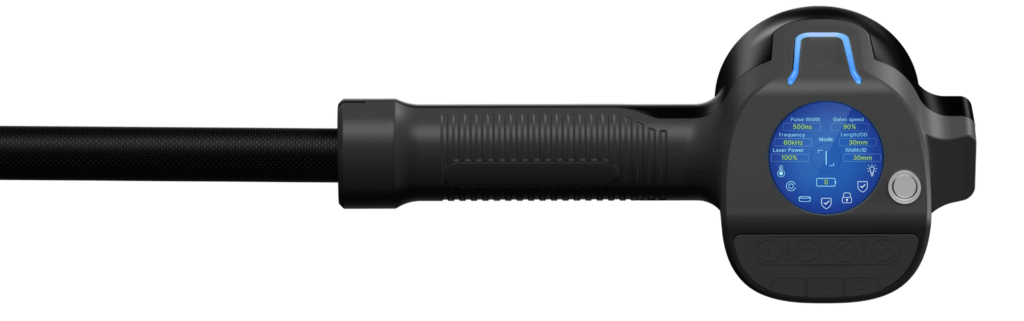
For old tool restoration, the most suitable Xlaserlab product is the Q1 Laser Cleaning Machine. This topic is about rust removal, surface renewal, and bringing metal tools back into usable condition, so Q1 fits better than a welding-focused machine. Q1 is positioned as a 2-in-1 MOPA pulsed laser cleaner and engraver, designed for cleaning tasks such as rust, paint, and coating removal, while also supporting precise metal engraving or marking when a restored part needs identification.
In a real workshop, a user might clean rust from an old wrench, remove paint from a metal plate, clean oxidation from a small machine part, and then add a simple identification mark after restoration. That kind of workflow is very different from soaking tools in chemical remover or grinding the surface by hand. The value of Q1 is controlled pulsed laser cleaning: users can work layer by layer and reduce the risk of removing useful base metal. Its portable luggage-style design and lightweight output head also make it practical for garages, repair shops, mobile maintenance, and on-site cleaning work. Users still need wavelength-matched safety glasses, gloves, ventilation, material testing, and proper parameter control before cleaning thin, valuable, or coated tools.
Choosing the Right Setup for Cleaning, Marking, and Repair
A rust removal setup should match the type of work being done. A hobbyist cleaning a few garden tools may need a different workflow from a repair shop restoring batches of metal parts. Before choosing equipment, it helps to ask what happens after cleaning. Will the tool only be oiled and stored? Will it need marking? Will a cracked metal part need welding later? Will a painted plate need coating removal before refinishing?
For shops that clean old parts first and then repair or rebuild metal components, a handheld metal laser welder may belong to a separate repair workflow, while a pulsed laser cleaner like Q1 is more suitable for the rust removal and surface preparation stage.
Keeping these roles separate avoids confusion. Q1 is for cleaning, surface renewal, and metal marking. A welding machine is for joining metal after the part is inspected and prepared. In a small workshop, the two workflows may sit next to each other, but they do different jobs. Clean first, inspect second, then decide whether marking, coating, sharpening, welding, or replacement is needed.
Which Old Tools and Metal Parts Are Good Candidates for Laser Cleaning?
Not every old tool should be cleaned the same way. The best candidates are metal parts where rust or coating is the main problem, and where preserving the base shape matters. Thin decorative pieces, antique tools, painted surfaces, and tools with rubber or plastic handles need more caution.
| Tool or Part Type | Good Fit for Laser Cleaning? | Why It Works | Extra Caution |
| Wrenches and pliers | Yes | Removes rust while keeping shape | Avoid overheating thin edges |
| Garden shears | Yes | Cleans rust around blades and joints | Protect handles and springs |
| Metal molds | Yes | Preserves detailed surfaces | Test on a small area first |
| Painted metal plates | Often | Removes coating and rust | Check paint type and fumes |
| Thin decorative tools | Sometimes | Good for light rust | Use lower power and testing |
| Tools with plastic grips | Limited | Metal area may be cleaned | Shield or remove non-metal parts |
This table is a starting point, not a replacement for judgment. Valuable antique tools, thin blades, unknown coatings, and parts with mixed materials should always be tested in a small area first. If a tool has rubber grips, wood handles, springs, or plastic inserts, those areas should be removed or protected before cleaning.
Safety and Practical Tips Before Using Laser Cleaning on Tools
Laser cleaning looks clean from the outside, but it still needs careful safety habits. Rust, paint, oil, and coatings can create fumes or particles during removal. Reflective metal surfaces also require proper eye protection.
Before cleaning tools, identify the base metal as much as possible. Remove or protect rubber, wood, and plastic handles. Start with a small test area, especially on thin or valuable tools. Use laser safety glasses matched to the laser wavelength, along with gloves and protective clothing. Keep ventilation or fume extraction active during the work.
After rust removal, do not leave the tool bare for too long. Clean the surface, dry it, and apply oil, wax, or a suitable protective coating to slow future corrosion. Restoration does not end when rust disappears; it ends when the tool is protected enough to stay useful.
Conclusion: Laser Cleaning Helps Old Tools Work Again Without the Chemical Mess
Laser cleaning technology is not about forcing every user to abandon traditional rust removal. Chemical removers, sandpaper, and wire wheels still have simple use cases. But when precision, repeatability, less mess, and surface protection matter, laser cleaning becomes a stronger option.
For old tools, the real value is not just making metal look shiny. It is removing rust while preserving shape, markings, edges, and usability. For garages, workshops, repair services, and restoration users, that can mean cleaner tools, less waste, and a more controlled way to bring old metal back to work.