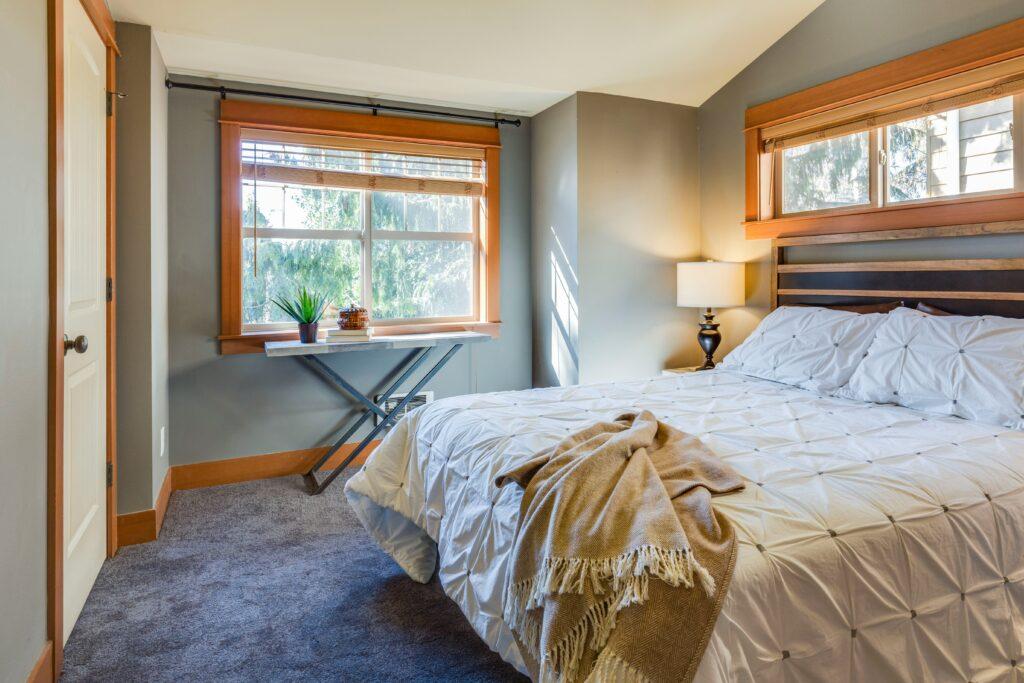
Bed Size Is Quietly Becoming One of the Most Important Choices in the Home
For a long time, beds were chosen with a kind of quiet practicality. They needed to fit the room, match the frame, and serve their purpose without drawing too much attention. Size, in particular, was often dictated by what would physically work, rather than what would actually feel better to live with.
That way of thinking is starting to shift. As people become more intentional about how their homes support their daily lives, the bed is no longer just a background decision. It’s becoming something that has a direct impact on comfort, energy, and overall wellbeing.
The Bedroom Is No Longer Secondary
There has been a noticeable rebalancing in how people think about different spaces in the home. Areas designed for entertaining have traditionally taken priority, while bedrooms were treated more privately and, often, more passively.
That distinction is changing. As routines evolve and more time is spent at home, the bedroom is being reconsidered as a space that needs to function well, not just exist. Sleep quality is no longer treated as something separate from the environment. Instead, it’s being understood as something that is shaped by it.
Size Is Starting to Reflect How People Actually Sleep
One of the more interesting developments is the growing attention on bed size. Larger beds are no longer framed purely as a luxury. In many cases, they’re becoming a practical decision, particularly in shared spaces where even small disturbances can affect sleep.
At the same time, smaller formats are being used more deliberately. A single bed, for example, isn’t simply the default for a compact room. It’s often chosen with intention in guest spaces, apartments, or multi-use areas where flexibility matters just as much as comfort. The decision becomes less about fitting something in and more about making the room work.
There’s More Science Behind This Than People Realise
Part of what’s driving this shift is a better understanding of how sleep actually works.
Research has consistently shown that the surface people sleep on affects everything from comfort to how often they wake during the night. Support, pressure distribution, and even the amount of space available all play a role in how restful sleep feels.
Space, in particular, is often overlooked. Having more room to move can reduce disturbance, especially for couples, and can make a noticeable difference to overall sleep quality. It’s one of those factors that people don’t always think about upfront, but quickly recognise once it changes.
Design Is Becoming More Functional
This growing awareness is feeding into a broader shift in how interiors are approached. There’s less emphasis on purely visual decisions and more focus on how things perform over time.
The bed sits right at the centre of that. It influences layout, movement, and how a room feels both visually and physically. Changing the size of a bed can open up a space or anchor it, depending on how it’s used.
That’s why more people are stepping back and considering the bigger picture before making a choice. Exploring options through a dedicated bed shop like Bed Post is often part of that process, not just to find something that fits, but to find something that genuinely improves how the space works.
Smaller Spaces Are Driving Smarter Decisions
In more compact homes, these choices become even more important. Every element needs to justify the space it takes up.
A well-sized bed can make a room feel balanced and usable, while the wrong choice can limit how the space functions. In these cases, single or smaller formats are often selected not as a compromise, but as a way to create flexibility.
What’s changed is the intention behind the decision. People are thinking about how they live in a space, not just how it looks.
Comfort Is No Longer Treated as Optional
At the same time, comfort has moved up the priority list.
There’s a growing understanding that sleep quality has a direct impact on everything else. Energy levels, mood, and even focus during the day are all influenced by how well someone rests at night. That awareness is making it harder to ignore when something isn’t working.
As a result, decisions around beds are becoming more deliberate. Size, materials, and support are all being considered together, rather than as separate factors.
Looking at the full range available through Bedpost is often part of that shift, where the goal is not just to replace what’s there, but to improve how the space functions on a daily basis.
The Subtle Decisions That Shape Everyday Life
What makes this change interesting is how understated it is. A bed doesn’t usually stand out as a design feature in the same way other pieces might, but it has a much bigger impact over time.
It affects how a room feels when you walk into it, how easily you move through it, and how well you sleep at the end of the day. Those are the kinds of decisions that don’t always draw attention, but they shape daily life in a very real way.
As interiors continue to evolve, it’s often these quieter choices that matter most.