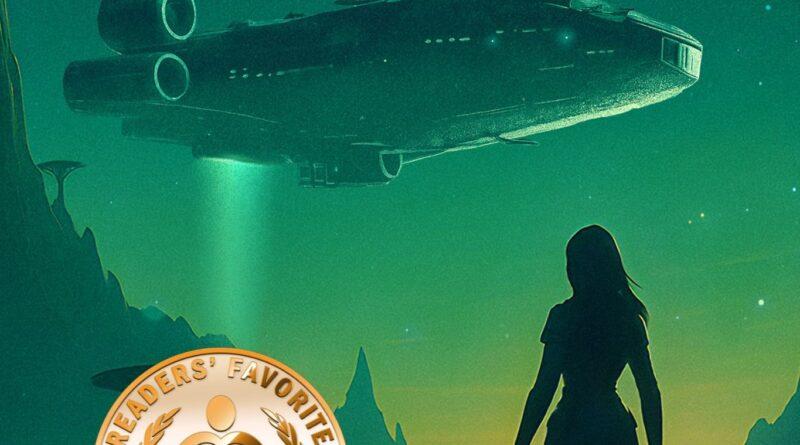
Reframing Space Opera: Inside Christian Hurst’s Character-Driven Sci-Fi
Science fiction has long been celebrated as the ultimate escape, a genre where readers can leave Earth behind and explore distant galaxies. As the modern world becomes more complex, readers are seeking more than just intergalactic battles and fast-paced action. They want stories that tackle real human struggles: issues of identity, memory, isolation, and the deep desire to belong. The challenge for modern authors is to balance the spectacular scale of a classic space opera with the quiet, emotional resonance of a coming-of-age journey.
Enter Christian Hurst, a Pennsylvania-based author and creative director who is redefining the genre with his acclaimed debut, Lily Starling and the Voyage of the Salamander. With over fifteen years of experience in visual storytelling and branding, Hurst brings a unique emotional nuance to his writing. He crafts inclusive, character-driven narratives that recently earned him three top honors at The BookFest. In this interview, we sit down with Hurst to discuss his creative process, the importance of found family in fiction, and how he uses the cosmos to explore what it truly means to be human.
Q: You have mentioned that your background in advertising and branding heavily influences your storytelling. How does that professional experience help you build such immersive and emotionally resonant fictional galaxies?
Christian Hurst:
My background in advertising really taught me to focus on connection first. You’re not just putting something out into the world—you’re trying to make someone feel something, and you have to do it clearly enough that it lands right away.
That carries over into how I build stories. I’m not just thinking about the scale of a world or how it works. I’m thinking about what it feels like to be there—how the characters experience it, and how the reader connects to that on an emotional level. If that part isn’t working, the rest doesn’t really matter.
The other thing my creative career taught me is that you have to be willing to put your work out there. It’s never going to feel completely finished. At some point, you have to release it and let it live, and then learn from it and keep going.
That mindset has been important with Lily Starling. Each book builds on the last one. You get a little better, a little clearer, a little more confident in what you’re trying to say. And over time, that’s what allows the world to feel more real and more connected.
Q: Lily Starling and the Voyage of the Salamander recently earned three top honors at The BookFest. Why do you think Lily’s story of amnesia and displacement is resonating so deeply with today’s young adult readers?
Christian Hurst:
It was really important to me that the reader experiences this world through her perspective. You’re not being asked to immediately jump into the mind of someone from the future. You start on page one in exactly the same place as Lily, not knowing what’s going to happen.
From there, the story opens up alongside her. As she learns about who she is inside and how that manifests in this new reality she has found herself in.
A lot of young people are figuring that out in real time. They’re trying to understand themselves while navigating expectations and systems that don’t always feel like they were built for them. I know firsthand that feeling like you are on the outside looking in can be incredibly lonely.
There’s also something about starting from nothing that’s strangely empowering. If you don’t have a past defining you, then you get to decide who you are. That idea—that identity is something you can build, not just something you inherit—has always been important to me.
But it all comes back to connection. Even though Lily starts out alone, she finds people. She builds relationships. That’s really the core message. That connection happens.
Q: Your work is often praised for its diverse, queer-inclusive characters and its focus on “found family.” What draws you to these themes, and why is it vital to represent them in the space opera genre?
Christian Hurst:
I think a lot of that comes from my own experience growing up feeling a bit like I was on the outside looking in. I had a strong sense of who I was internally, but that didn’t always line up neatly with the spaces around me. That perspective stuck with me.
When you feel that way, you start paying attention to people. You notice how they connect, where they struggle, where they find belonging—or don’t. That naturally carries over into the kind of stories I’m drawn to tell.
Space opera is actually a perfect place for that, because it’s already about people coming from very different backgrounds and being thrown together. Where do I fit, and who do I choose to stand with?
It’s very important to me that queer identity is a part of this world. Not something that needs to be explained or set apart. They’re there because they exist, and because they reflect reality.
Once again, it’s about connection. These stories aren’t just about starships, they’re about finding your place in the universe.
Q: Balancing cosmic scale with quiet, intimate character moments can be difficult. How do you ensure that the massive stakes of your universe do not overshadow the personal journeys of characters like Lily, Alrek, and Xynn?
Christian Hurst:
Whenever I write, I always start with two things—theme, and character.
The larger world, the politics, the conflict, the scale of it, that’s all there to create pressure. It gives the story stakes, but it’s not the point of the story. The point is how the characters respond to it.
So when I’m writing, I’m not really thinking about the galaxy as an abstract thing. I’m thinking about what this moment means to Lily and Xynn’s relationship. Or Alrek growing up. How does it affect them? What are they choosing at that moment? What does it cost them?
If those pieces are working, the larger scale tends to fall into place naturally. The big moments feel big because they matter to the characters, not just because they’re visually or conceptually large.
I also try to give the story space to breathe. Not everything has to be forward momentum all the time. Those quieter moments, the conversations, the small decisions, the pauses, are where you actually understand who these people are.
If you lose that, the scale stops meaning anything.
So it’s really about keeping the focus grounded. The galaxy might be at stake, but the story is always about the people moving through it.
Q: You have spoken about how the best science fiction isn’t just an escape pod, but a starship that carries us home with something new. What is the core message you hope readers take away from the Lily Starling series?
Christian Hurst:
Science fiction gives you that distance—you can step outside of your own life for a while—but the best stories bring something back with you. They give you a different way of looking at things that still applies when you return to your own world.
I also tend to think of space opera less as a setting and more as a lens. I always say a good space opera doesn’t even have to be in space. You could tell a space opera story at the bottom of the ocean, or on the head of a flower—Horton Hears a Who is basically a great space opera. The scale is flexible. What matters is the sense of perspective and the emotional stakes.
With Lily Starling, the core idea is that connection happens—and continues to happen. Even when you feel like you’re on the outside looking in, even when things feel uncertain or a little lonely, that’s not a permanent state.
Lily’s journey isn’t about having all the answers. It’s about continuing to show up, to keep moving forward, and to stay open to the people around her. The relationships she builds don’t solve everything, but they give her something real to stand on.
I think that’s what I hope readers take with them. Not a perfect resolution, but a sense that you’re not stuck where you are—that things can change, and that connection is something you can find again, even if it doesn’t look the way you expected.
Q: With the release of Lily Starling and the Death Machine and the upcoming audiobook of Voyage of the Salamander, what can fans expect next from this universe as the overarching conflict continues to unfold?
Christian Hurst:
With Death Machine, the story starts to shift in a pretty meaningful way. The first two books were about Lily finding her place and then facing something that felt overwhelming. This one moves into a different space—more investigative, more layered. The conflict isn’t just something happening out there anymore. It’s something that has structure behind it, and Lily is starting to see that.
Because of that, the choices become more complicated. It’s less about reacting and more about deciding what to do when there isn’t a clear right answer. That’s where the second half of the series really begins to take shape.
Looking ahead, Book Four leans more into time travel again, but in a very specific way. Lily has reached a point where she understands herself much more clearly, and the question becomes what happens when that stability is challenged—when who you are can be used against you. The stakes become more personal, even as the world continues to expand.
The audiobook is also a big part of this next phase. Hearing the story performed brings a different perspective to it. It’s the same story, but experienced in a new way, which has been really rewarding to see come together.
So we’re moving into the back half of the series now. The scope is growing, the questions are getting more difficult, and everything that’s been building is starting to connect.
Our conversation with Christian Hurst highlights exactly why his work is striking such a profound chord within the literary community. By anchoring massive sci-fi concepts in relatable human emotions, he proves that the best adventures are those that explore the depths of the human heart. His focus on inclusive worldbuilding and chosen families offers a comforting reminder that even in the vast, unpredictable expanse of space, no one has to be truly alone.
As the Lily Starling series continues to expand, Hurst’s innovative approach to the space opera genre is setting a new standard for young adult science fiction. For readers seeking thrilling cosmic escapades laced with genuine soul, his books offer a welcoming sanctuary. The literary world can certainly look forward to more groundbreaking narratives from this talented author in the years to come.
To learn more, visit
https://lilystarlingbook.com/
https://www.amazon.com/stores/Christian-Hurst/author/B0DWVCQKGW