Marco Lafiandra: Designing Around Real Life
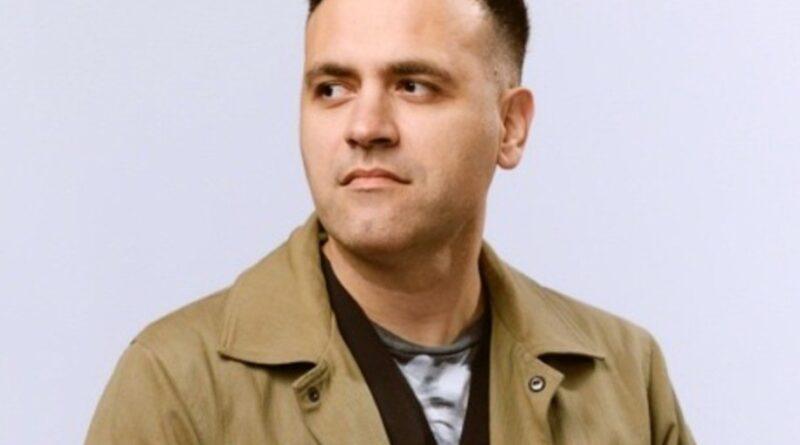
Marco Lafiandra – Image | LinkedIn
There is a difference between a space that looks good and one that feels right.
Some interiors perform well in photographs, then fall apart in daily life. Others are quieter, but everything settles once you enter. The proportions hold. The light works. Movement feels natural.
That is where Marco Lafiandra places his attention. Across residential interiors, retail spaces, and material research, his work returns to one central question: how will people actually live with what is being designed?
From early influences in Italy to projects developed across the United States, that question has remained constant. The settings may change, but the focus does not: spaces that are not only composed well, but truly inhabited well.
Early Influences, Family Craftsmanship, and Design Education
Lafiandra’s relationship with design began early, through the memory of his grandfather’s woodworking workshop in Bari. Furniture was made by hand, close to daily life, and shaped by the idea that objects could quietly become part of routines, family moments, and shared experience. Even after the workshop closed, that influence remained.
He later studied Industrial Design at La Sapienza in Rome, where he completed both his Bachelor’s and Master’s degrees. His education was further expanded through a scholarship period in Valencia and a course at Politecnico di Milano. Together, these experiences gave him a strong foundation and helped shape a practice that moves naturally between objects, interiors, and spatial thinking.
Building His Foundation in New York’s Design and Architecture Scene
A large part of Lafiandra’s early professional development took place in New York, where architecture, design brands, private clients, and cultural platforms often intersected. During those years, he worked across both residential and retail projects, including collaborations connected to firms such as Richard Meier & Partners, Renzo Piano Building Workshop, and ODA.
He was also involved in work tied to major design brands and to the broader worlds of figures such as Rodolfo Dordoni, Paola Navone, and Palomba Serafini Associati. These experiences shaped his understanding of how identity can be translated into space, not as decoration, but as atmosphere, proportion, and material language.
Retail played an important role in that formation. Each brand carried a distinct voice, and the challenge was never simply to display products, but to create environments that could express character without falling into repetition.
Another lasting influence came through his proximity to Gaetano Pesce, including visits to his studio and collaborations around two events. Being in that environment left a deep impression. Objects, prototypes, drawings, and artworks existed together without rigid boundaries, showing that function, experimentation, and narrative could all coexist within the same creative language.
The Shift From Retail and Brand Spaces to Residential Interiors
Over time, Lafiandra’s work moved more deeply into residential design. A key moment in that shift was the penthouse at 150 Rivington in New York, a project that required a more intimate and tailored approach. While retail spaces often begin with a defined identity, residential design depends on understanding how someone will actually live in a space.
The focus became less about presentation and more about daily habits, comfort, movement, and the quieter details that shape everyday life. It also demanded a greater level of customization, from material decisions to built-in elements and spatial refinement.
From there, he continued developing residential projects across the United States, including California, Texas, Tennessee, and Washington State. These experiences deepened his attention to tailored interiors and reinforced a design approach centered on how people inhabit space over time.
Designing Across Different U.S. Cities, Regions, and Client Contexts
Working across different regions added another layer to his process. Each place carries its own habits, expectations, and relationship to space. What feels natural in one city does not necessarily work in another. Because of this, observation became essential. Understanding how people live in a specific context helps guide more precise design decisions.
At the same time, he remained involved in retail environments for brands such as Poliform, Molteni&C, Rimadesio, and Antoniolupi. These projects required a careful balance between brand identity and local context, translating established design languages into spaces that still felt relevant to where they were being experienced.
His Current Role at Luminaire and the Ongoing Work of Form of Intent
Today, Lafiandra is a Lead Project Designer at Luminaire in the San Francisco Bay Area. He leads high-end residential and retail projects from early concept to execution, working with clients, architects, materials, and custom systems.
Alongside this, he continues to develop his independent practice, Form of Intent. Through it, he explores interiors, objects, lighting, and material research more freely, allowing ideas to evolve alongside his professional work. His ceramic practice is a central part of this process. Working with clay introduced a more direct way of thinking about form, balance, and surface, which continues to influence how he approaches both objects and spaces.
He has also started using AI based tools in the early phases of design to compare ideas, test atmospheres, and build clearer presentations. These tools support the process, while the final decisions remain grounded in design judgment and human experience.
His Design Approach: Clarity, Identity, and Everyday Use
Lafiandra’s approach is clear and grounded in use. He believes a space works best when all of its parts support the same overall idea, from materials and light to proportion and layout. When one element feels unresolved, the whole space can lose balance.
He also pays close attention to identity. Every project carries something it needs to express, whether that comes from a client, a brand, or the surrounding context. The goal is to make that visible with clarity, without adding unnecessary complexity.
At the center of his work is everyday life. He thinks about how people move through space, how they spend time in it, and how interiors and objects quietly become part of daily routines. That point of view continues to shape the work at every scale.
Future Direction Across Interiors, Objects, and Material Exploration
Looking ahead, Lafiandra plans to continue developing work across interiors and objects, with a strong focus on projects that connect closely to how people actually live rather than relying only on surface decisions.
He also intends to expand his independent work through ceramics, furniture, and objects, with Form of Intent continuing as the platform for that exploration. Technology will remain part of the process, especially in the early stages where ideas are tested, compared, and refined.
Across all of this, the direction remains consistent: to create spaces and objects that feel natural to use, human in experience, and meaningful over time.