The Science of Indoor Spores: Why Surface Cleaning Isn’t Enough
Finding a patch of dark spots under the bathroom sink or along the basement baseboards usually prompts an immediate reaction. Most homeowners reach for a sponge, a bucket of water, and strong household chemicals, hoping to scrub the problem away. The visible stains might disappear, but the underlying issue remains completely untouched.
Mold is a highly adaptive organism that has perfected the art of survival over millions of years. It does not simply sit on the surface of your drywall or wood framing. Instead, it roots itself deeply into porous materials, waiting for the right conditions to spread further. This biological resilience makes superficial cleaning methods completely ineffective.
Understanding the microscopic behavior of these spores reveals exactly why specialized intervention is necessary. When you wipe down a contaminated area, you are often just removing the top layer of the fungus while inadvertently spreading microscopic spores into the air. This biological reality highlights the critical need for professional mold removal services to properly address the root of the contamination.
Understanding the Anatomy of a Mold Outbreak
Fungi reproduce by releasing tiny spores that float continuously through indoor and outdoor air. When these spores land on a damp spot inside your home, they begin growing. They digest whatever they land on to survive, gradually destroying the building materials in the process.
The Visible vs. Invisible Threat
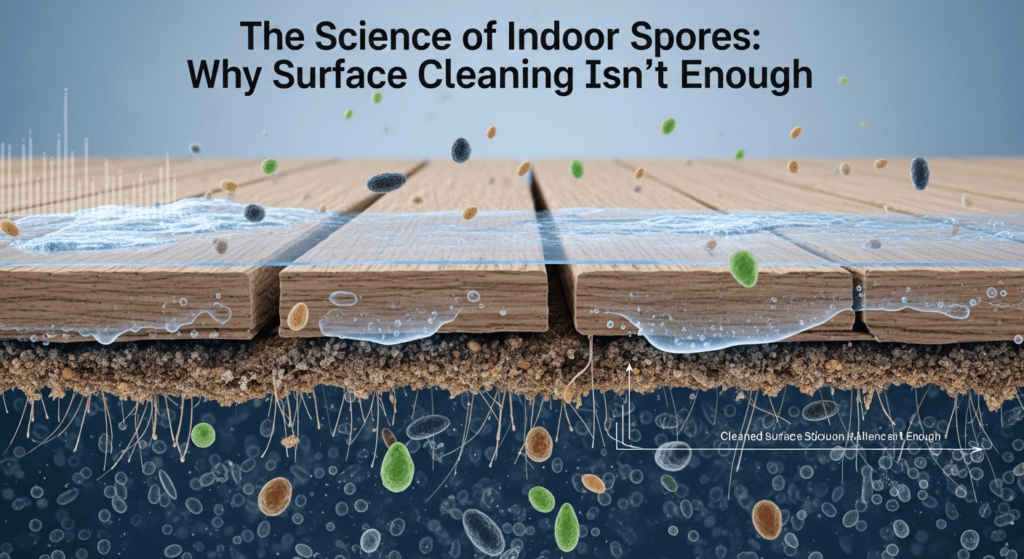
What you see on the wall is only the fruiting body of the organism. Beneath the surface, an intricate network of thread-like roots called hyphae extends deep into the drywall, wood, or insulation. Surface scrubbing only removes the top portion, leaving the hyphae entirely intact. Within a few days or weeks, the spots will inevitably return.
Furthermore, disturbing a colony with a sponge or brush agitates the organism. This causes a massive release of airborne spores, which can travel through your HVAC system and colonize previously clean areas of the house.
How Moisture Fuels the Fire
Fungi cannot survive without a steady supply of moisture. High indoor humidity, leaky plumbing, condensation on windows, and poor ventilation all create the perfect microclimate for an outbreak. Any successful remediation strategy must identify and eliminate the water source. Without fixing the moisture problem, the organism will continue to bounce back, regardless of how thoroughly the area was cleaned.
The Limits of Household Cleaners
Many property owners mistakenly believe that strong chemicals will eradicate the issue. This misconception often leads to frustration and repeated outbreaks.
Bleach: A Temporary Illusion
The most common mistake homeowners make is attacking the stain with bleach. Bleach is highly effective at killing viruses and bacteria on non-porous surfaces like glass or tile. However, when applied to porous building materials like wood or drywall, its chemical structure prevents it from penetrating deep into the material.
The water in the bleach solution soaks into the wood, feeding the hyphae, while the active chemical component remains on the surface. This bleaches the color out of the visible fungus, creating the illusion of a clean surface. In reality, you have just provided the hidden roots with a fresh supply of water.
How Professional Mold Removal Services Operate
True remediation requires a scientific approach to containment, removal, and prevention. This is where teams like ARG Restoration and Construction step in. Experts utilize specialized equipment and established protocols to ensure the organism is safely and permanently removed from the environment.
Containment and Air Filtration
Before any contaminated materials are disturbed, professionals establish strict containment zones. They use heavy-duty plastic sheeting and negative air pressure machines equipped with HEPA filters. This setup ensures that when the walls or floorboards are opened, the billions of agitated spores cannot escape into the rest of the building. The HEPA filters scrub the air continuously, capturing microscopic particles that are completely invisible to the naked eye.
Deep Remediation Techniques
Instead of wiping surfaces, technicians focus on entirely removing compromised porous materials. Heavily infested drywall, carpets, and insulation are carefully bagged and discarded. For structural elements like wooden framing that cannot be easily removed, professionals use advanced techniques such as dry ice blasting or specialized antimicrobial treatments that actually penetrate the wood grain. This destroys the root system completely.
Organizations like ARG Restoration and Construction understand that thorough remediation also includes addressing the environmental factors that allowed the outbreak to occur in the first place. By stabilizing the indoor humidity and ensuring all structures are thoroughly dried with commercial dehumidifiers, the environment becomes completely inhospitable to future growth.
Protecting Your Home’s Air Quality
Mold removal services require far more than a simple surface-level cleanup, as effectively eliminating an indoor fungal outbreak demands expertise in moisture control, building science, and microbial behavior. Relying on basic cleaning methods often leaves the root system intact, allowing mold to continue spreading behind walls and beneath surfaces while silently degrading your property and compromising indoor air quality over time.
By recognizing the biological complexity of the problem, you can make informed decisions about your property’s maintenance. Reaching out to professional mold removal services ensures that the contamination is handled safely, thoroughly, and permanently, protecting both your home’s structural integrity and your family’s respiratory health.