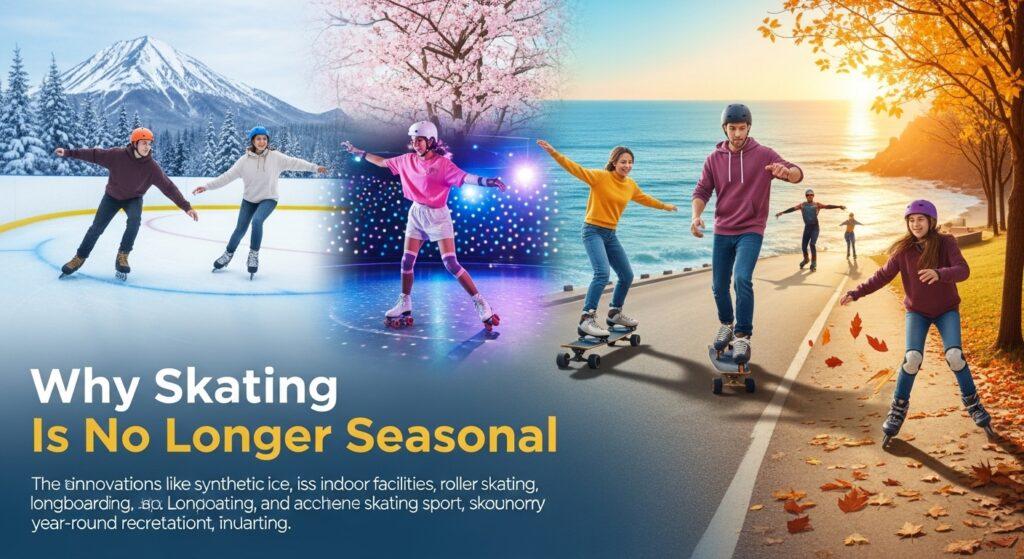
Why Skating Is No Longer Seasonal
For years, skating was treated as a winter habit, something tied to rinks, cold weather, and a short burst of activity before spring took over. That idea no longer reflects how people move, train, socialize, and spend time in cities and suburbs. Skating now fits into a year-round pattern shaped by recreation, fitness, youth sports, commuter culture, and changing ideas about leisure.
The shift matters because it changes how skating is understood. It is not limited to one setting or one age group. It crosses indoor and outdoor spaces, competitive and casual use, and childhood and adulthood. A person may start on the ice, move into inline training in warmer months, and later return to skating as part of a wellness routine or family activity. What once looked seasonal now behaves more like a flexible lifestyle category.
The Calendar Changed Before the Culture Did
The biggest change is practicality. Indoor facilities extend skating beyond winter, while paved trails, public parks, and community programs keep motion-based recreation active in warmer months. Families no longer wait for a narrow weather window. Organized training runs throughout the year. Recreational users also have more options than they did in the past, which makes skating easier to keep in rotation.
This has influenced habits in subtle ways. Instead of being an occasional event, skating is more often folded into weekly life. Some people treat it as cross-training. Some use it for social connections. Others see it as a structured activity that feels less repetitive than a gym routine. The result is a wider audience with different reasons for showing up.
That broader appeal helps explain why skating remains visible even outside the coldest months. It has moved from being a weather-based activity to being a schedule-based one.
Skates Now Sit at the Center of Everyday Performance
Equipment has also changed the conversation. Skates are no longer viewed only as tools for elite athletes or highly specialized players. They are part of a larger discussion about fit, movement efficiency, comfort, and long-term use. Parents weigh durability against growth. Adults think about support, confidence, and consistency. Competitive users focus on responsiveness and control.
In the middle of that decision-making process, brand skates become less about labels and more about function. The question is not simply what looks like current. The question is what type of skating a person is doing, how often they do it, and what kind of movement the equipment needs to support.
That distinction has made skating more approachable. Once people understand that different forms of skating demand different features, the activity feels less intimidating. It becomes easier to enter, easier to continue, and easier to adapt over time.
A Rare Mix of Sport, Mobility, and Leisure
Few activities move as easily between categories as skating does. It can be a sport, a workout, a mode of movement, or a social pastime. That range gives it unusual staying power. Activities that survive across generations usually do so because they serve more than one purpose, and skating fits that pattern.
A child may begin skating through a team program. A teenager may stick with it for competition. An adult may return for exercise, stress relief, or time with family. In each case, the activity changes without losing its core appeal. It still offers motion, balance, rhythm, and a sense of progress that people can feel almost immediately.
This versatility also helps skating stay culturally relevant. It belongs to structured spaces like arenas and training sessions, but it also belongs to public life, weekend recreation, and personal routine. That dual identity keeps it from being boxed into one season or one type of participant.
The Business of Skating Follows the Lifestyle
Whenever an activity becomes year-round, the surrounding economy changes with it. Services, training, maintenance, accessories, and replacement cycles all become more consistent. Instead of peaking for a brief season and fading, interest carries forward in waves tied to school schedules, recreational planning, and athletic development.
That does not mean skating is driven only by commerce. It means steady participation creates a more durable ecosystem around it. Community programs are growing. Skill development becomes more continuous. Families plan activities that can last longer than a few winter months. The pattern is familiar in modern lifestyle markets. What becomes
useful across more of the year becomes easier to justify, easier to maintain, and more likely to stick.
In that sense, skating reflects a broader cultural shift. People increasingly choose activities that can serve several purposes at once. They want movement that is engaging, practical, social, and sustainable over time. Skating answers that demand unusually well.
What the New Skating Culture Really Means
The new reality is simple. Skating is no longer confined to a season, a stereotype, or a single kind of user. It has become a flexible part of contemporary life, one that can support competition, recreation, fitness, and everyday routine without being reduced to only one of them.
That is why skating continues to hold attention. It offers speed without hurry, discipline without monotony, and enjoyment without needing a special occasion. As more people look for activities that feel both purposeful and enjoyable, skating keeps expanding its place in the calendar.
Not because winter disappeared, but because the activity outgrew it.