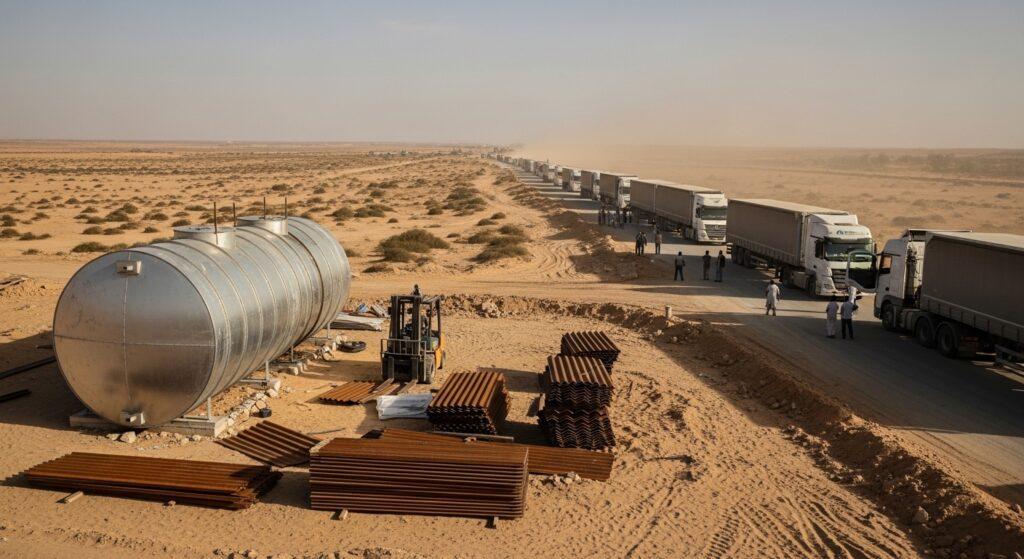
Water Tank Material Shortages in the Middle East: How Blockades Are Disrupting Supply Chains
When Trade Stops, Water Storage Feels It First
Water tanks may appear to be simple products, but behind every tank lies a complex network of raw materials, logistics, and manufacturing processes. In the Middle East, recent blockades and regional trade restrictions have begun to disrupt this system, leading to noticeable material shortages. These disruptions are not just affecting manufacturers; they are directly influencing availability, pricing, and delivery timelines for customers across residential, agricultural, and commercial sectors.
The Backbone of Water Tanks: Materials Under Pressure
Most water tanks in the region are manufactured using polyethylene or GRP, both of which depend heavily on petrochemical industries and stable global supply chains. When blockades occur, the movement of these raw materials becomes restricted. Imports slow down, availability tightens, and manufacturers are forced to work with limited supply. Even a short interruption can have a lasting impact, as production cycles rely on consistent material flow to maintain output levels.
How Blockades Disrupt the Supply Chain
Blockades do not just affect borders; they interfere with the entire journey of a product from raw material to final delivery. Shipping routes may be restricted, ports can experience delays, and transportation costs often increase due to higher risk and insurance charges. Manufacturers face slower production timelines, while suppliers struggle to maintain stock levels. For buyers, this translates into longer waiting periods and unpredictable product availability.
Rising Costs: The Immediate Impact
As material shortages intensify, prices naturally begin to rise. Manufacturers must deal with higher costs for raw materials and logistics, and these increases are gradually passed on to the end user. Smaller tanks may see moderate price changes, but larger capacity tanks often experience more noticeable fluctuations due to higher material requirements and transport costs. For contractors and project planners, these price shifts can affect budgeting and procurement strategies.
Demand vs Supply: A Growing Gap
While supply is being restricted, demand for water tanks continues to grow steadily across the Middle East. Urban development projects, agricultural expansion, and increased awareness of water storage are all contributing to higher demand. This imbalance between supply and demand creates visible shortages in the market. Customers may find that certain sizes are temporarily unavailable, and delivery timelines can extend beyond normal expectations.
Impact on Key Sectors
The effects of material shortages are being felt across multiple sectors. In construction, water tanks are essential for daily operations, and any delay in supply can slow down project progress. Agricultural operations depend heavily on reliable water storage for irrigation and livestock, making tank availability critical for productivity. Residential users, particularly villa owners, may experience delays in installation or limited options when selecting tank sizes. These challenges highlight how important water storage infrastructure has become in the region.
Quality Concerns: A Hidden Risk
One of the less visible impacts of material shortages is the risk of declining product quality. When supply is tight, some manufacturers may attempt to cut costs by using lower-grade materials or reducing thickness. This can lead to tanks that are less durable and more prone to damage over time. For buyers, this makes it essential to focus on trusted suppliers and verified product standards rather than choosing purely based on price.
How Manufacturers Are Adapting
Despite these challenges, many manufacturers are taking proactive steps to adapt. Some are sourcing materials from alternative regions, while others are investing in local production capabilities to reduce dependency on imports. Inventory management has become more strategic, with companies maintaining higher stock levels where possible. These adjustments help stabilize production and ensure continued supply, even in uncertain conditions.
The UAE Advantage: Relative Stability in a Volatile Region
Within the Middle East, the UAE stands out for its ability to manage these disruptions more effectively. Strong logistics infrastructure, diversified sourcing strategies, and established local manufacturing capabilities allow the UAE to maintain a relatively stable supply of water tanks. While minor price fluctuations and delays may still occur, the market remains more resilient compared to other regions facing stricter blockades.
Professional Insight: Planning Ahead Is Key
For contractors and businesses, the current situation highlights the importance of planning ahead. Securing materials early, working with reliable suppliers, and allowing flexibility in project timelines can help minimize the impact of shortages. Rather than reacting to sudden changes, proactive planning ensures smoother operations and reduces the risk of delays.
Homeowner Perspective: Stay Calm and Informed
For residential buyers, the situation does not require panic. While availability may fluctuate, the market is still functioning, and reliable suppliers continue to provide solutions. The key is to make informed decisions, choose quality products, and plan purchases in advance when possible. This approach helps avoid unnecessary stress and ensures long-term satisfaction.
Future Outlook: Adjustment and Recovery
Material shortages caused by blockades are often temporary, although their effects can be significant in the short term. Over time, supply chains adapt, alternative sourcing becomes more established, and production stabilizes. The water tank industry is expected to recover gradually, with improved resilience against future disruptions.
A Resilient Industry Facing Real Challenges
The water tank manufacturing industry in the Middle East is currently navigating a complex situation shaped by material shortages and supply chain disruptions. Despite these challenges, the industry continues to adapt and serve a critical need. For buyers, the most important takeaway is to stay informed, plan ahead, and prioritize quality. In a region where water storage is essential, making the right decision today ensures reliability for years to come.