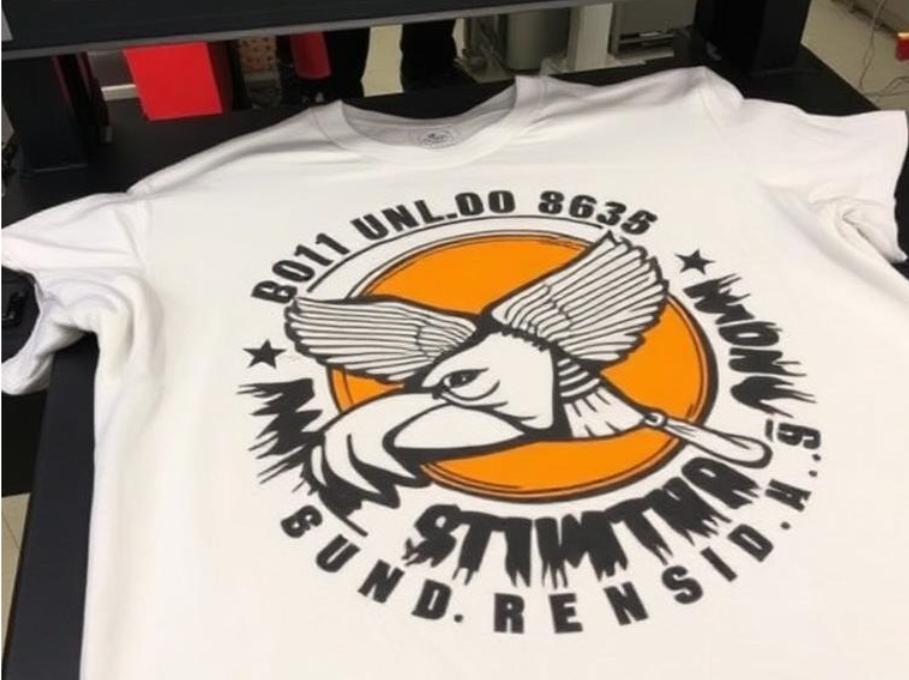
In 2026, Is Screen Printing Still the Best Apparel Printing Technique?
It’s a fair question to ask. The apparel printing industry has changed dramatically over the past decade, with digital printing technologies advancing at a pace that would have seemed implausible in the early days of garment decoration. Direct-to-film transfers, direct-to-garment printing, sublimation, and hybrid techniques have all staked their claim in the market. Yet despite every new challenger, screen printing remains the most widely used apparel decoration method in the world. In Singapore, it continues to anchor the production workflows of the most experienced printers in the business. The real question isn’t whether screen printing is dead — it clearly isn’t — but whether it’s still the right technique for your specific project in 2026.
To answer that honestly, it helps to understand what makes screen printing exceptional and where its limitations genuinely matter. The process involves creating a stencil — called a screen — for each color in a design, then pushing ink through the mesh onto the fabric beneath. The result is a print with a richness, opacity, and tactile quality that digital methods still struggle to fully replicate. Plastisol inks, the most commonly used in screen printing, sit on top of the fabric and cure to a durable, vibrant finish that resists fading through dozens of washes. Water-based inks, which are increasingly preferred for their softer hand-feel and lower environmental impact, penetrate the fabric fibers and produce a more breathable, vintage-inspired finish. Neither digital printing nor direct-to-film transfers can consistently match the color saturation and ink deposit that a well-executed screen-printed garment delivers.
Where screen printing earns its enduring reputation most clearly is in bulk production. The economics are straightforward: setup costs — which include film output, screen coating, and exposure — are fixed regardless of the print run size. Once those screens are prepared, the cost per unit drops significantly as quantity increases. For orders of 50 pieces and above with a design using a limited number of solid colors, no other technique comes close to the cost efficiency and output consistency of silkscreen printing. Corporate event merchandise, school uniforms, marathon race tees, and branded staff apparel are all categories where the method continues to be the default choice for experienced buyers.
That said, 2026 has introduced meaningful nuances that a thoughtful buyer should understand. The rise of direct-to-film (DTF) printing has genuinely disrupted the low-quantity segment of the market. DTF requires no minimum order, handles full-color photographic designs with ease, and can be applied to virtually any fabric type. For orders under 30 pieces, complex multi-color designs, or projects requiring individual name personalization across a run, DTF has become a genuinely superior option. Pretending otherwise would be doing buyers a disservice.
Embroidery has similarly reclaimed ground in the premium segment — particularly for polo shirts, outerwear, and corporate uniforms where a raised, woven logo signals quality in a way that no print technique can replicate. And sublimation printing continues to dominate performance sportswear, where all-over design coverage on polyester fabrics is a requirement that neither screen printing nor digital methods can match as effectively.
What this means in practice is that the question of “which technique is best” has become less useful than the question of “which technique is best for this specific job.” A seasoned printer in Singapore will assess your design, your fabric choice, your quantity, your budget, and your intended use before making a recommendation — and if screen printing is the right answer, they’ll tell you so with confidence, because the technique has earned that confidence through decades of consistent, high-quality output.
For the Singapore market specifically, silkscreen printing retains a particularly strong foothold because of the volume-driven nature of much of the local demand. Corporate orders, National Day merchandise, school events, and large-scale charity runs generate the kinds of quantities where screen printing’s economics are unbeatable. Local printers who have invested in quality presses, proper exposure units, and skilled operators continue to produce work that stands apart from what cheaper digital alternatives deliver.
So is screen printing still the best apparel printing technique in 2026? For the right project — yes, unequivocally. The technique’s longevity isn’t sentimentality. It’s a reflection of a process that, when matched to the right brief, continues to outperform every alternative on quality, durability, and value.