Why a Reliable Portable Generator Is One of the Smartest Investments You Can Make
Power is one of those things most people take for granted until it suddenly disappears. Whether you are deep in the Australian outback with a caravan full of gear, managing a worksite far from the nearest power line, or sitting at home during a prolonged blackout, the moment reliable electricity stops flowing is the moment a portable generator moves from a nice-to-have to an absolute necessity.
The demand for quality portable generators has grown steadily across Australia as more people embrace off-grid camping and caravanning, and as the awareness of household power vulnerability increases following severe weather events.
Choosing the right generator from the outset is the kind of decision that pays off every time you plug something in.
What Makes a Generator Worth Buying
Not all portable generators are created equal, and the difference between a quality unit and a cheap alternative becomes very apparent under real-world conditions.
A generator that struggles to start in cold weather, runs noisily enough to disturb a campsite, or delivers inconsistent power that damages sensitive electronics is not just inconvenient but a genuine liability.
Wattage output is the first specification most buyers look at, and for good reason, as it determines what you can actually run.
A unit producing around 2,500 watts suits lighter loads such as phone and device charging, lighting, a small fridge, and a portable fan, while larger units in the 4,500 to 7,500-watt range can power air conditioning, larger appliances, and multiple devices simultaneously without breaking a sweat.
The distinction between a conventional generator and an inverter generator is one that every buyer should understand before making a decision.
Conventional generators produce raw AC power at a fixed engine speed, whereas inverter generators produce cleaner power by electronically regulating voltage and frequency, making them safe for use with laptops, smartphones, medical equipment, and any other device with sensitive electronics.
Fuel efficiency is another area where quality generators separate themselves from budget alternatives.
An engine that burns through fuel rapidly is expensive to run on extended trips and creates a logistical challenge when you are hundreds of kilometres from the nearest servo, making the fuel consumption figures listed in a generator’s specifications worth studying carefully before purchase.
Noise output is a factor that matters enormously in certain contexts, particularly camping in areas where noise restrictions apply or where the whole point of being outdoors is to enjoy natural quiet.
Inverter generators are significantly quieter than open-frame conventional generators, and the best models on the market operate at sound levels that make normal conversation at close range perfectly comfortable.
Build quality and brand reputation are the final filters through which any serious generator purchase should pass.
A generator is a piece of mechanical equipment that needs to start reliably in all conditions, handle sustained load without overheating, and survive transport across rough terrain without rattling itself to pieces, which is exactly the standard that separates trusted brands from the rest of the field.
For Australians who want that combination of quiet operation, clean power output, fuel efficiency, and proven durability, it is worth taking the time to find Briggs and Stratton generators across the P2500, P3500, P4500, and P7500 inverter range, each model designed to handle the specific power demands of camping, caravanning, and home backup situations.
Briggs and Stratton brings decades of engine engineering expertise to their inverter generator range, producing units that are built specifically to perform in demanding Australian conditions across a wide range of applications.
The combination of their reputation for reliable engine technology and the clean inverter power output makes them a particularly strong choice for buyers who need confidence in their equipment.
Using a Generator for Camping and Caravanning
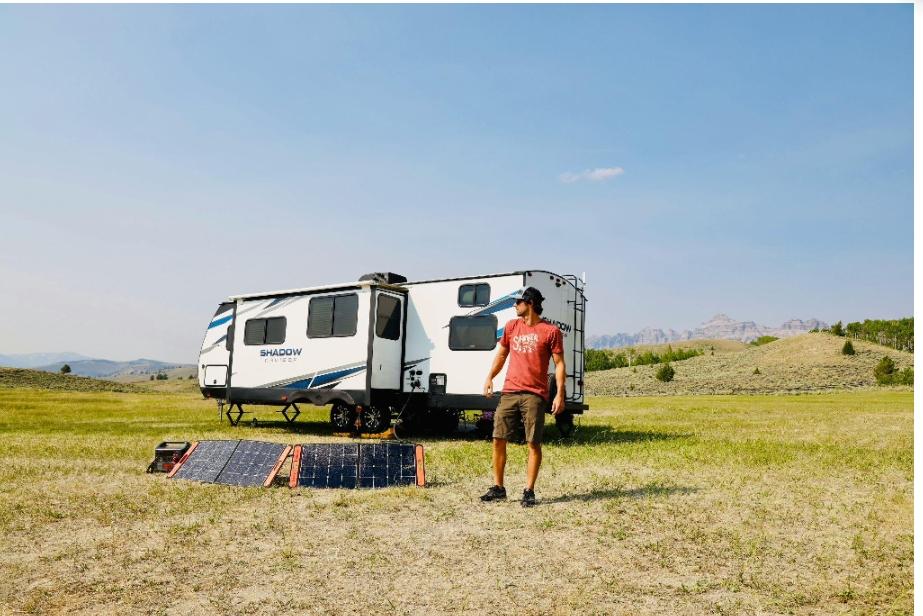
The Australian camping and caravanning scene has evolved significantly over the past decade, with travellers increasingly choosing setups that allow them to camp in genuine comfort rather than roughing it.
A quality portable generator plays a central role in making that comfort possible, handling the power demands that solar alone cannot always meet, particularly during overcast periods or in the depths of winter when daylight hours are shorter.
Camping fridges are one of the most common reasons campers invest in a generator, as keeping food and beverages properly cold over extended trips requires a consistent power supply that lithium batteries charged from solar panels can struggle to maintain in poor weather.
A generator provides the insurance that ensures your fridge never runs dry of power, regardless of what the sky is doing.
Air conditioning is another application where a portable generator proves its value in Australian camping conditions.
Summer temperatures across much of the country make sleeping in a tent or van without some form of cooling a genuinely unpleasant experience, and a generator with sufficient wattage output can run a portable air conditioning unit effectively through the hottest nights.
For caravanners who travel with all the comforts of home, including televisions, microwaves, hair dryers, coffee machines, and entertainment systems, the wattage requirements add up quickly.
Choosing a generator with enough rated output to handle peak loads across multiple devices simultaneously, rather than buying the smallest unit that covers just the basics, pays dividends in flexibility and convenience throughout a trip.
Parallel capability is a feature worth seeking out in an inverter generator if your power requirements are likely to grow over time.
Two compatible inverter generators can be connected in parallel to effectively double the available output, which means your initial purchase can be scaled up with a second matching unit rather than replaced entirely when your power needs increase.
Proper care and maintenance of a portable generator significantly extends its working life and ensures it starts reliably every time.
Running the engine periodically during storage, keeping the fuel fresh, cleaning the air filter regularly, and checking oil levels before each use are simple habits that collectively make a major difference to long-term reliability.
Home Backup Power: Being Prepared Before the Grid Fails
Beyond camping and caravanning, portable generators serve a critical role in household emergency preparedness, a use case that has become increasingly relevant across Australia as extreme weather events become more frequent and grid outages more prolonged.
A home without backup power during a multi-day blackout faces real challenges around food spoilage, medical equipment dependency, communication, and basic comfort.
Having a generator on hand and in good working condition before a weather event strikes is what separates prepared households from those scrambling to find a unit at the hardware store when everyone else has had the same idea.
The time to buy and test a generator is well before it is urgently needed, not in the middle of a storm warning.
Running a generator safely during a home blackout requires attention to placement, as generators produce carbon monoxide and must always be operated outdoors in a well-ventilated area, well away from windows and doors.
Using a heavy-duty outdoor extension cord to bring power into the home, rather than running the generator in a garage or enclosed space, is a safety rule that must never be compromised.
Selecting the right wattage for home backup use involves identifying the appliances you would prioritise during an outage and calculating their combined running wattage.
A refrigerator, a few lights, a phone and device charging, and a fan or heating unit represent a realistic baseline load that most mid-range inverter generators can handle with capacity to spare.
Portable generators represent one of the most practical and versatile pieces of equipment any Australian household, camper, or caravanner can own.
When that investment is made in a quality, well-engineered unit from a brand with a proven track record, the result is a source of reliable power that is ready whenever and wherever it is needed, year after year.