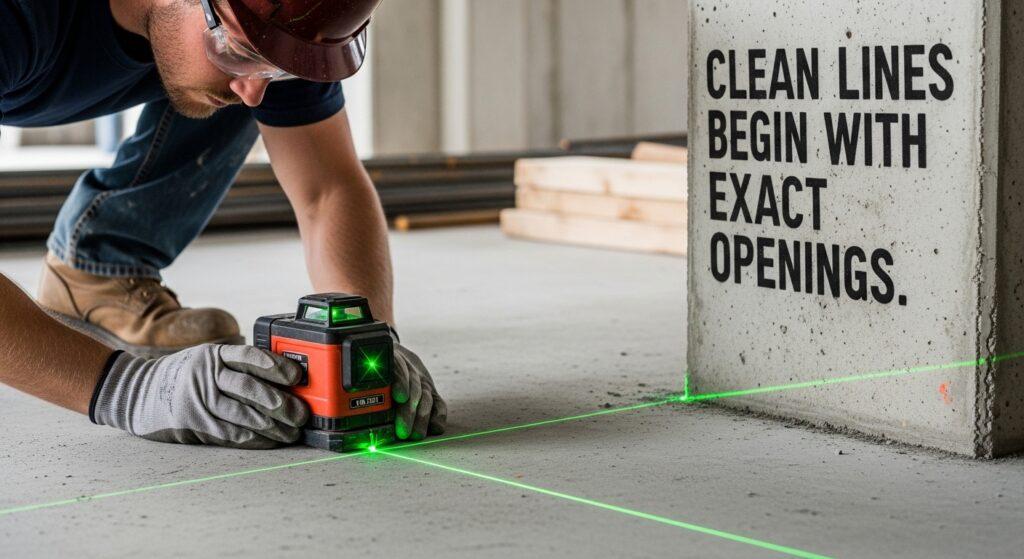
Clean Lines Begin with Exact Openings
The Detail That Changes the Finish
Metal often enters a space quietly. It frames a stair, holds a screen in place, supports a lighting feature, or sharpens the outline of a facade. Most people notice the surface first, then the color, then the way light moves across it. What they rarely notice is the small field of openings that made the piece functional in the first place.
That hidden layer matters more than it appears to. A misplaced opening can throw off alignment, weaken symmetry, interrupt fastening, and complicate installation. In design-driven projects, those mistakes do not stay hidden for long. They show up as uneven joints, visible strain, loose hardware, or a finish that never looks fully resolved.
For that reason, drilling is not a secondary step. It is part of how metal earns its final appearance. The process influences fit, repeatability, and the ease with which a fabricated piece moves from drawing to installation. When openings are carefully positioned, the result is a cleaner assembly and a calmer visual effect.
Why Precision Shows Up in the Final Look
Well-made metalwork has a kind of visual control. Edges sit where they should. Fasteners do not compete with the design. Panels line up. Guards, screens, brackets, and trims feel intentional rather than adjusted on site.
That outcome begins long before finishing. Exact openings allow parts to meet correctly, especially when several components must work together across a wall, ceiling, exterior screen, railing, or built-in feature. One small error may force field modifications, and field modifications often leave traces. They can distort spacing, affect coatings, and create a look that feels patched rather than planned.
In highly visible settings, small inconsistencies carry weight. A luxury entry, a restaurant partition, a sculptural screen, or a custom stair detail depends on restraint. The eye responds to rhythm even when viewers cannot name the source. Repetition, spacing, and balance produce that effect, and hole placement is part of that structure.
Function Is Not Separate From Style
There is a tendency to treat engineering and aesthetics as separate lanes. In metalwork, they overlap constantly. Drainage, ventilation, fastening, maintenance access, and structural support all rely on decisions that shape the final surface.
This is where sheet metal drilling becomes more than a technical line item. It affects how a piece performs over time and how confidently it can be integrated into a larger design.
Openings may be needed for mounting systems, anchor points, hardware, airflow, or coordinated assembly with glass, wood, stone, or lighting components. Each one must serve a purpose without disrupting the piece’s visual order.
That balance is especially important in contemporary interiors and exteriors, where clean geometry is often the point. The sharper the design language, the less room there is for visible correction. Precision supports restraint, and restraint is often what gives metal its elegance.
The Role of Material Behavior
Not all sheet metal responds the same way. Thickness, hardness, coating, and intended use all shape how a part should be prepared. A detail designed for exterior exposure has different requirements than one used in a controlled environment. A perforated decorative screen does not behave like a load-bearing bracket. A brushed panel meant to remain visible calls for different handling than a concealed support.
As a result, drilling decisions are tied to the material’s broader behavior. Spacing must account for strength and stability. Placement must respect bends, edges, and future assembly points. The process has to protect the finish as much as the geometry.
These are practical choices, but they also influence design outcomes. A panel that installs smoothly is less likely to be forced into place. Support that aligns correctly helps adjoining materials sit cleanly. A well-prepared component reduces the chance of improvised fixes that interrupt the intended look.
Where It Matters Most in Modern Spaces
The importance of drilled openings becomes clearer in the kinds of spaces where metal is now used with greater visibility. It appears in lobby screens, elevator surrounds, custom
shelving, stair enclosures, canopies, facade systems, and architectural details meant to read as precise rather than industrial.
In these settings, metal is rarely asked to disappear completely. It is asked to look disciplined. That requires more than a good finish. It requires consistency from one part to the next, especially when repetition is part of the design language.
Openings also matter in renovation work, where old structures and new components must meet with a limited tolerance for error. Retrofitted facades, updated storefronts, and interior upgrades often demand accurate coordination because conditions on site are less forgiving than on paper. The better the preparation, the less disruption during installation.
Small Decisions, Long-Term Results
The appeal of sheet metal in design comes from its clarity. It can look light, sharp, and controlled, even when serving a demanding structural or functional role. That clarity, however, depends on many small decisions that are easy to overlook.
Drilling is one of them. It helps determine whether a component can be assembled efficiently, whether it will sit properly in relation to surrounding materials, and whether the finished work will preserve the discipline of the original design. In high-visibility environments, those outcomes matter.
People may never stop studying the openings behind a metal detail. They will still register the result. They will notice whether the work feels exact, whether the lines hold, and whether the installation looks settled rather than strained. Precision at that scale does not call attention to itself. It simply allows the larger design to read clearly.