The Critical Ground-Level Decisions That Determine Civil Project Success
In civil construction and infrastructure development, the decisions made at ground level shape the safety, timeline, cost, and long-term performance of every project from the earliest site preparation stages through to decades of operational life.
Whether the project is a bridge, a road embankment, a dam, a mine site, or a large-scale residential or commercial development, the quality of the foundational and site protection work carried out in the early stages determines how reliably and economically the finished asset performs over its intended design life.
Why Foundation Preparation Sets the Tone for Everything Above
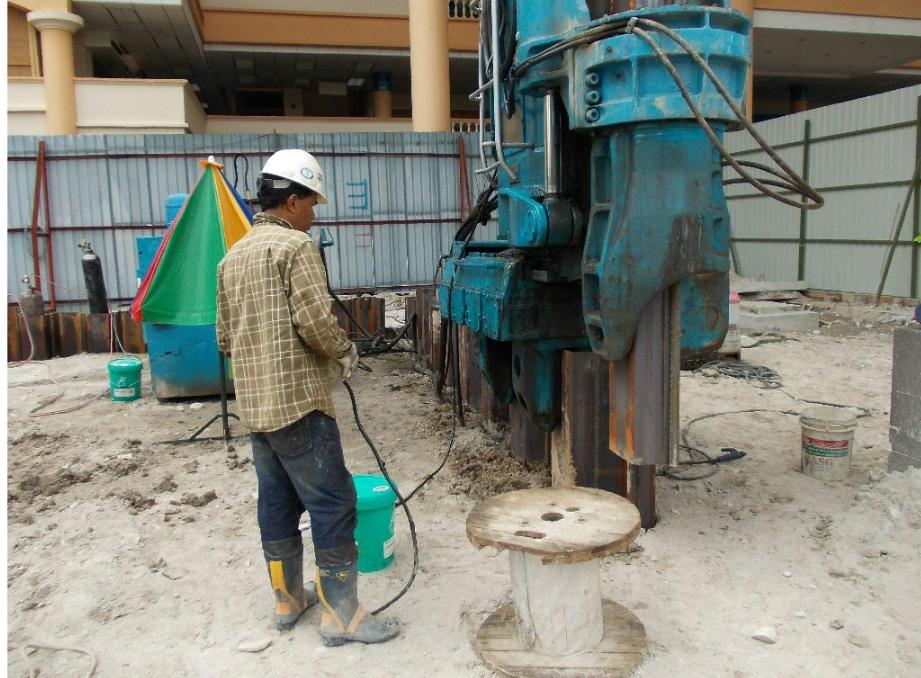
Every structural element of a constructed asset depends on the integrity of the foundation system beneath it, and the accuracy with which concrete piles are trimmed to their correct cut-off level is one of the most consequential quality control steps in any piled foundation project.
When piles are installed by drilling or driving, the tops inevitably extend beyond the intended cut-off elevation and must be removed to the precise level required by the structural engineer before pile caps, ground beams, or slabs can be formed and poured.
Historically, this trimming process was carried out using jackhammers, angle grinders, and manual breaking methods that were slow, noisy, dusty, and physically demanding for the workers involved, with a high risk of introducing micro-fractures below the cut-off level that compromised the structural integrity of the pile itself.
The development of hydraulic pile cropper technology has transformed this process, making it faster, safer, and more precise than any manual method while significantly reducing the occupational health risks associated with sustained vibration tool use.
How Modern Pile Cutting Technology Changes the Productivity Equation
A hydraulic pile cropper attaches to the existing hydraulic lines of an excavator and works by applying controlled crushing pressure around the circumference of a concrete pile, forming a clean break at precisely the right level without the impact trauma that damages reinforcement or introduces cracks below the cut-off.
The process is mechanised and repeatable, with experienced operators capable of trimming well over 100 piles per day, a rate that would be impossible to sustain with manual methods regardless of crew size.
For civil contractors, project managers, and consulting engineers specifying pile trimming solutions on Australian construction sites, accessing professional pile cutter services through Mr Cropper provides nationwide coverage with square and circular pile cropper hire, specialist pile trimming contractor services, and expert technical advice on debonding, preparation methodology, and equipment selection for contiguous piles, secant piles, CFA piles, precast piles, and augered pile systems.
Their equipment meets NATA-certified lifting certification standards, undergoes NDT testing and hydraulic proof testing annually, and comes with full on-hire and off-hire maintenance reporting that satisfies the documentation requirements of major civil contractors and site safety regimes.
The Relationship Between Foundation Work and Site Hydrology
The completion of foundation and substructure work on a civil project brings the project into a phase where the management of water movement across the site becomes one of the most critical ongoing responsibilities.
Earthworks, embankment formation, drainage channel construction, culvert installation, and bridge abutment preparation all create exposed soil surfaces that are highly vulnerable to erosion from rainfall, surface runoff, and the water velocities that develop in drainage infrastructure during significant weather events.
Erosion at these locations is not merely a cosmetic problem. When drainage channels, embankment batters, spillways, and abutments are not adequately protected, the resulting soil displacement undermines the structural stability of the earthworks, contributes sediment to waterways, and creates maintenance costs that compound over the operational life of the asset.
The selection and installation of appropriate erosion control systems is therefore an engineering decision with genuine long-term consequences rather than a peripheral environmental management obligation.
Concrete Erosion Control Matting as a High-Performance Alternative to Traditional Methods
Traditional erosion control approaches for high-flow and high-velocity applications have relied primarily on rock beaching and rip rap, which offer reliable performance but come with significant drawbacks in terms of carbon footprint, material transport logistics, installation time, and the separate laying of geotextile underlay that must precede the rock placement.
In environments where flow velocities exceed the capacity of vegetative cover or biodegradable erosion control products, a more robust engineered solution is required.
Flexible articulated concrete matting provides that solution by combining precast 50MPa concrete blocks with UV-stabilised geogrid to create a mat system that can withstand flow velocities in excess of 5.79 metres per second while distributing hydraulic pressure across the mat surface and anchoring progressively into the substrate under loading.
Infrastructure project teams and consulting engineers specifying erosion protection for drainage channels, embankment batters, spillways, culvert outlets, bridge abutments, floodways, and dam faces should explore the erosion control blanket solutions available from EarthLok, whose articulated concrete mat products have been approved and repeatedly specified by major state road authorities, water authorities, mining companies, and local government bodies across Australia.
The Practical Advantages That Drive Specification on Major Projects
EarthLok’s concrete mat system eliminates the need for on-site water for hydration because all blocks are supplied as hardened precast concrete, removing the water logistics that complicate many remote and regional project sites.
Installation rates of up to 1000 square metres per day per crew are achievable, and the integrated underlay system means no separate geotextile laying step is required, reducing both installation time and the number of separate material deliveries and handling operations needed on site.
Both biodegradable and non-biodegradable underlay options are available to suit different site and environmental objectives.
The biodegradable option allows vegetation to establish through and around the matting over time, progressively supplementing the concrete system’s protection with a living root network that further stabilises the substrate, while the non-biodegradable option delivers permanent protection in applications where vegetation establishment is not desired or not achievable.
Why Both Disciplines Matter to the Same Project Teams
Civil contractors and project managers working on bridge construction, road embankment projects, dam rehabilitation, mine site infrastructure, and major drainage upgrades routinely deal with both pile trimming requirements during the substructure phase and erosion control requirements during and after the earthworks phase of the same project.
The quality of the outcomes in both areas has a direct bearing on program compliance, structural performance, regulatory approval, and long-term maintenance costs.
Treating each of these elements as separate, unrelated procurement decisions managed without reference to each other misses the opportunity to plan both activities into a coherent project schedule that minimises the time between pile trimming completion and erosion protection installation.
Exposed earthworks and drainage infrastructure left unprotected while other project activities are completed accumulate erosion damage that is expensive to remediate, so early engagement with suppliers and contractors for both disciplines is a straightforward project management step that consistently delivers cost and schedule benefits.
Building Infrastructure That Lasts
The civil construction industry’s increasing focus on lifecycle cost rather than capital cost alone is driving better specification decisions at both the foundation and the site protection stages of major projects.
Pile trimming equipment that produces clean, undamaged cut-off levels reduces the risk of structural remediation later in the project life, and concrete erosion matting systems that are correctly specified for the hydraulic conditions of the site protect drainage and embankment assets for decades without the ongoing maintenance demand that inadequately protected earthworks generate.
Both decisions, the choice of pile cropping method and the specification of erosion control protection, are straightforward to get right when the right specialist knowledge and products are engaged from the planning stage of the project, rather than resolved reactively under schedule pressure in the field.