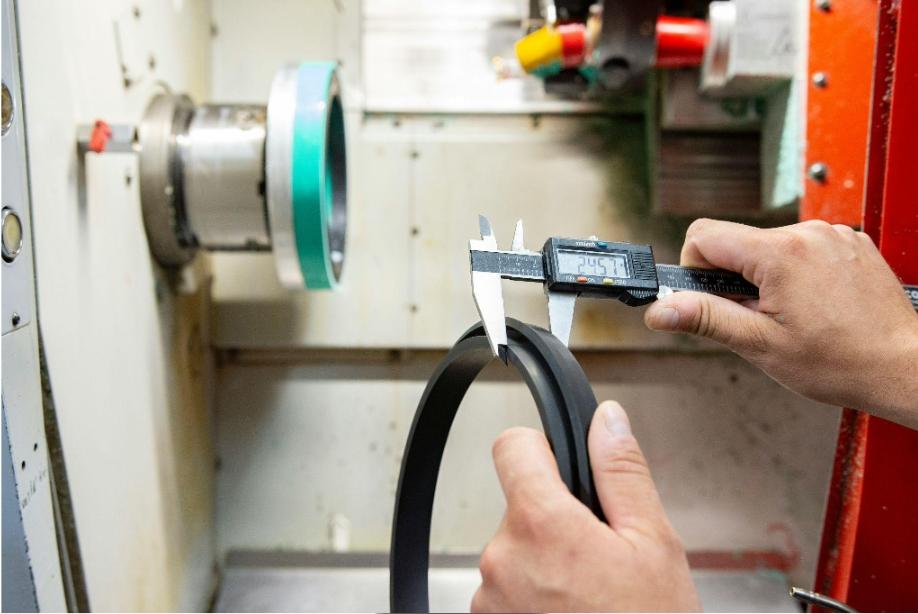
Getting Industrial Fluid Systems Right: Couplings, Seals, and Why Specification Matters
Every industrial process that moves liquid, gas, or dry bulk material through pipes and hoses depends on two things above all else: reliable connections that can be made and broken quickly without leaks, and sealing components that prevent those connections from allowing fluid to escape under pressure, temperature, and chemical exposure.
Choosing the wrong components for either function can result in process downtime, contamination, safety incidents, and costly replacement of damaged equipment downstream.
The Scale of the Problem When Components Are Underspecified
In industries including agriculture, chemical processing, food and beverage, manufacturing, mining, and pharmaceutical production, the selection of fluid handling components is rarely treated with the seriousness it deserves until something goes wrong.
A coupling that fails at a joint between a transfer hose and a pipe can result in anything from a minor spill to a significant hazardous materials incident, depending on the substance being transferred, and a gasket that degrades under the chemical or thermal conditions of the application will allow leakage that undermines both operational efficiency and workplace safety.
The cost of downtime in most industrial processes far exceeds the cost of specifying the right component in the first place, which makes the initial investment in understanding what each connection point in a system needs from its fitting and sealing components one of the highest-return decisions an operations or maintenance team can make.
Getting it right from the outset is always significantly less expensive than replacing failed components, cleaning up process spills, or halting production while emergency replacement parts are sourced.
Camlock Couplings as the Standard for Rapid Fluid Transfer
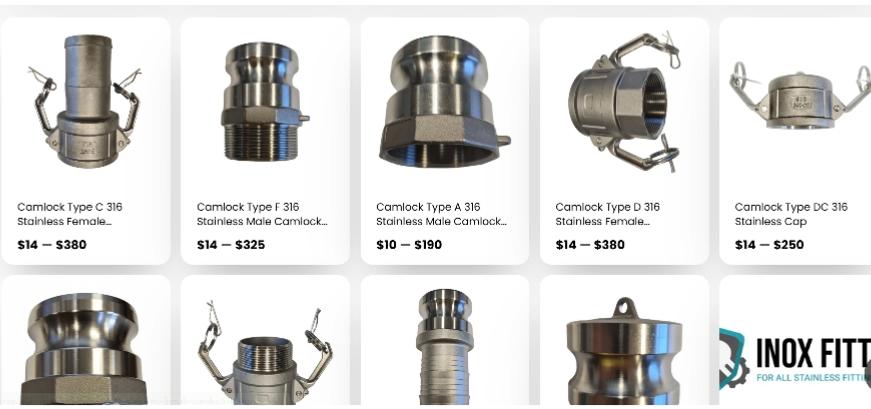
Camlock couplings, also known as cam and groove fittings, have become the dominant quick-connect solution across Australian industrial applications for a straightforward set of reasons that address the practical realities of operations where hoses need to be connected and disconnected frequently.
The design consists of a male adapter with cam arms and a female coupler with grooves that engage when the arms are pressed and released, creating a secure connection without any tools and in a matter of seconds.
For procurement teams, maintenance engineers, and operations managers sourcing connections for their fluid transfer systems, the ability to shop camlock coupling online through Inox Fittings provides access to a range spanning half-inch to six-inch sizing across Types A, B, C, D, DC, DP, E, and F configurations, in 316 stainless steel, aluminium, polypropylene, and nylon materials.
This breadth of material and configuration options matters because the right camlock for a given application is determined not just by the size of the hose or pipe it is connecting but by the chemical compatibility of the fitting material with the process fluid and the temperature conditions the coupling must withstand in service.
Choosing the Right Material for Camlock Applications
Stainless steel 316 camlocks are the preferred specification for applications involving corrosive chemicals, food-grade process streams, seawater, or any environment where long service life and resistance to degradation are priorities.
The 316 grade offers superior corrosion resistance compared to standard 304 stainless, making it the appropriate choice for chemical processing plants, coastal installations, dairy and beverage facilities, and any application where chloride exposure or aggressive cleaning agents are involved.
Aluminium camlocks provide a cost-effective and lightweight alternative for lower-aggression applications such as water, irrigation, fuel, and general liquid transfer where corrosion resistance requirements are moderate, and weight is a factor.
Polypropylene and nylon options suit applications involving certain acids and caustic substances where metallic components would corrode, and they are commonly specified in chemical dosing systems, agricultural spray operations, and laboratory environments where the process fluid is incompatible with metal fittings.
Why Gasket Selection Is as Critical as the Fitting Itself
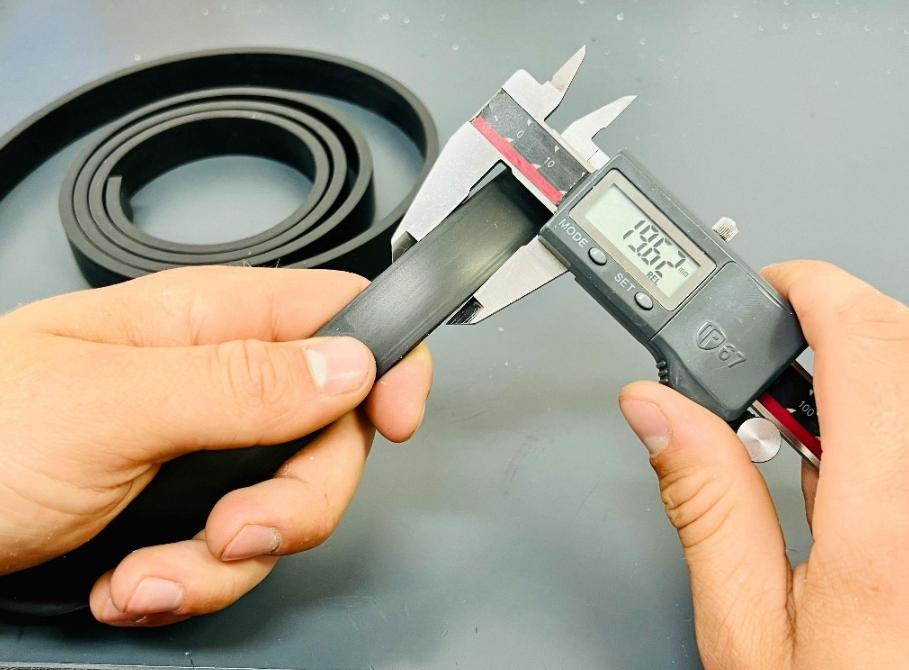
Every flanged connection, valve face, heat exchanger, pump housing, and pipe joint in an industrial system requires a gasket to seal the interface between two mating surfaces and prevent fluid from escaping under the operating conditions of the system.
A camlock coupling creates the mechanical connection between hoses and pipes, but the gaskets fitted throughout the rest of the piping and equipment network perform the equally important function of maintaining sealing integrity at every static joint across the system’s operational life.
Standard gaskets in fixed sizes serve many common applications effectively, but industrial systems frequently include non-standard flange dimensions, unique bolt patterns, irregular face geometries, or operating conditions involving extreme temperatures, pressures, or chemical exposures that standard catalogue products are not designed to handle.
This is where precision custom gasket manufacturing becomes essential, and procurement teams seeking Australian-manufactured solutions with fast turnaround should shop custom gaskets online through Industrial Experts, whose Melbourne facility produces CNC-cut gaskets in over 50 materials to tolerances of plus or minus 0.1mm, with a standard lead time of one to two business days and no minimum order quantity, making single-unit prototypes and emergency replacements equally accessible.
Material Selection for Gaskets Across Industrial Applications
The material used in a custom gasket determines its performance under the chemical, thermal, and pressure conditions it will face in service, and selecting the wrong material is as problematic as selecting the wrong size.
Nitrile rubber suits applications involving oils, fuels, and hydraulic fluids with operating temperatures up to 120 degrees Celsius, while EPDM is the appropriate choice for water, steam, and mild acid service in HVAC and process water systems. Silicone gaskets handle temperatures from minus 60 to plus 230 degrees Celsius and are FDA-compliant for food contact applications.
For highly aggressive chemical environments, PTFE and its expanded and modified variants offer near-universal chemical resistance from minus 200 to plus 260 degrees Celsius, making them the specification of choice for acid, caustic, and solvent service in pharmaceutical and chemical processing facilities.
Graphite gaskets extend the temperature range further, handling up to 450 degrees Celsius in oxidising environments and 650 degrees Celsius in steam service, while compressed non-asbestos fibre products such as the Garlock range cover the broad middle ground of general industrial applications requiring reliable sealing across wide temperature and pressure ranges.
The Procurement Case for Sourcing Both Online
Industrial procurement has shifted substantially toward online sourcing over the past decade, driven by the convenience of comparing specifications, confirming availability, and placing orders without the delays inherent in traditional distributor-based procurement cycles.
For components like camlock couplings and custom gaskets, where the specific material, type, size, and quantity required can vary significantly from one application to the next, online suppliers with well-organised product ranges and clear technical specifications reduce the time from identification of requirement to order placement considerably.
Both components are also frequent candidates for emergency procurement when unexpected failures occur in the operating plant, and having reliable online suppliers for both that can ship same-day or within one to two business days reduces the duration of unplanned process downtime from hours or days of searching to a matter of minutes spent navigating a product catalogue and placing an order.
Building Systems That Perform Under Real Operating Conditions
The difference between a fluid handling system that performs reliably across its design life and one that generates recurring maintenance issues, leaks, and component replacements almost always traces back to specification decisions made at the procurement stage.
Camlock couplings specified for the correct material and configuration for the process fluid, and gaskets manufactured to precise dimensions from materials matched to the operating temperature, pressure, and chemical environment of each joint, produce systems that work as intended from commissioning through years of service.
Treating these components as interchangeable commodities where the lowest available price determines the selection is a false economy that consistently generates higher total costs across the operational life of the system than the savings made at the procurement stage.
Investing the modest additional effort required to specify correctly and source from suppliers with genuine product expertise is the most reliable path to fluid systems that do what they are designed to do without interruption.