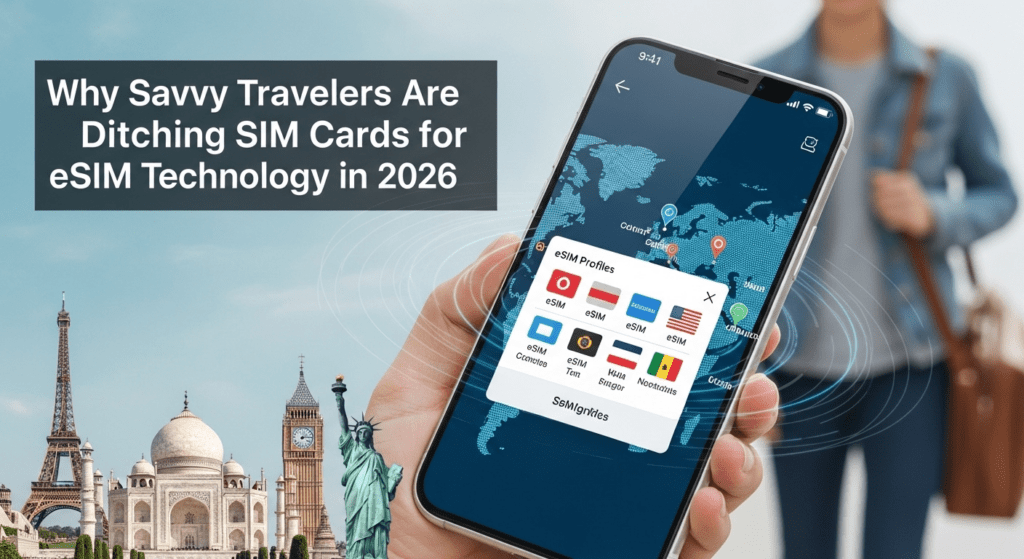
Why Savvy Travelers Are Ditching SIM Cards for eSIM Technology in 2026
International travel has changed dramatically over the past few years, and one of the quietest revolutions has been in how we stay connected abroad. Gone are the days of hunting for a local SIM card at the airport, fumbling with tiny trays and pins, or returning home to a shocking roaming bill. The solution? eSIM technology — and it’s quickly becoming the go-to choice for modern travelers.
The Problem With Traditional SIM Cards
Anyone who has traveled internationally knows the drill. You land in a new country, find a mobile shop or airport kiosk, wait in line, hand over your passport, and hope the plan you’re buying actually works. If you’re visiting multiple countries on one trip, you might need to repeat this process several times. It’s time-consuming, frustrating, and surprisingly expensive.
Traditional roaming through your home carrier is even worse. Data roaming charges can reach $10–15 per megabyte in some regions, turning a simple Google Maps search into a costly mistake.
What Is an eSIM and How Does It Work?
An eSIM — short for “embedded SIM” — is a small chip built directly into modern smartphones, tablets, and smartwatches. Instead of inserting a physical card, you simply scan a QR code or download a data plan through an app, and your device connects to a local network within minutes.
The technology has been supported by Apple since the iPhone XS in 2018, and today virtually every flagship device from Samsung, Google, and other manufacturers includes eSIM capability. In fact, the iPhone 14 and later models sold in the United States don’t even have a physical SIM tray anymore.
Why Travelers Love eSIMs
The appeal is straightforward. You can purchase a data plan before you even board your flight, activate it the moment you land, and enjoy local data speeds without the local SIM card hassle. Plans typically cost a fraction of what carriers charge for international roaming — often between $5 and $15 for a week of data, depending on the destination.
For multi-country trips across Europe or Southeast Asia, regional eSIM plans cover dozens of countries under a single plan. No swapping cards at every border crossing, no separate purchases in each country.
The Rise of eSIM Marketplaces
A growing number of platforms now specialize in selling travel eSIM plans, making the process as simple as booking a hotel. One such platform is Roambit eSIM, which offers prepaid data plans for 200+ destinations worldwide. Platforms like these have made it possible to compare plans by data volume, validity period, and price — all from your phone before departure.
What sets the newer eSIM providers apart is user experience. Setup guides, 24/7 customer support, and transparent pricing have removed most of the friction that early adopters once faced. Many plans now activate instantly, and unused data can often be carried over or extended.
Is eSIM Right for Every Traveler?
Almost. The main requirement is a compatible device, and the list grows with every product cycle. Travelers with older phones may still need physical SIM cards, but for anyone with a device manufactured after 2020, eSIM compatibility is likely built in.
Business travelers, digital nomads, and frequent flyers benefit the most, but even casual vacationers are discovering how much simpler travel becomes when connectivity is one less thing to worry about.
The Bottom Line
Travel technology tends to evolve quietly until suddenly everyone is using it. eSIM is following the same trajectory as mobile boarding passes and contactless payments — once you try it, there’s no going back. With prices dropping and coverage expanding every month, 2026 might be the year the physical SIM card finally becomes a relic of a less connected era.