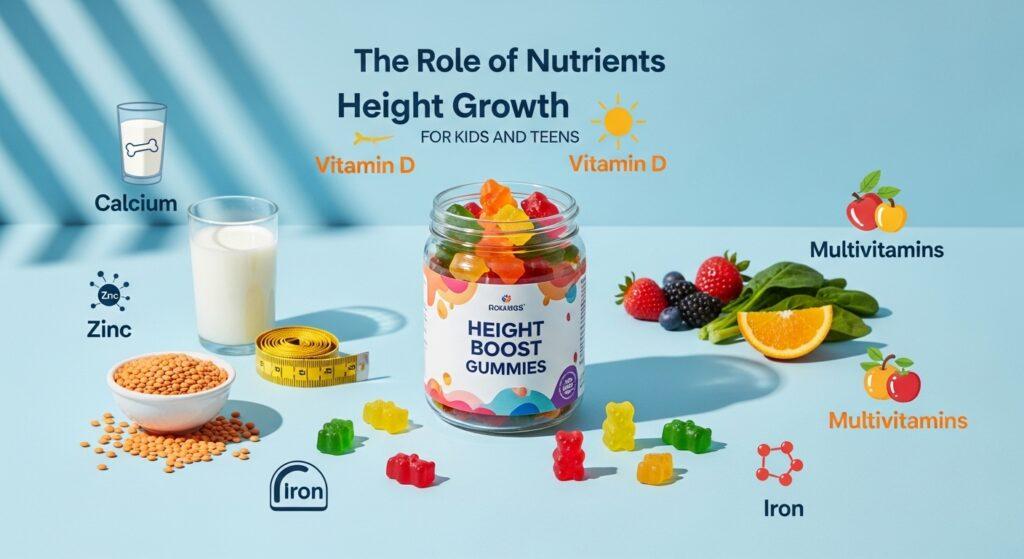
The Role of Nutrients in Height Growth Gummies for Kids and Teens
A lot of parents end up in the same late-night search spiral: better sleep, more protein, stronger bones, maybe one gummy that somehow makes the whole growth puzzle easier. That is usually where height growth gummies enter the picture. They look simple. They taste easy. And the promise around them can sound bigger than the bottle.
In the United States, height growth gummies are marketed as a convenient way to support growth years in children, pre-teens, and teenagers. The real story is less flashy and more useful. These gummies do not create height out of nowhere. They provide nutrients that may support bone development, normal growth, and overall health, especially when a child’s diet is falling short.
What Are Height Growth Gummies?
Height growth gummies are dietary supplements sold in chewable form and promoted for growing kids and teens. In the U.S. supplement market, they sit somewhere between a standard multivitamin and a niche “growth support” product. The difference is mostly in positioning.
A regular children’s multivitamin usually covers broad nutritional basics. A height growth gummy typically emphasizes nutrients linked with bone health and growth, such as vitamin D, calcium, zinc, and sometimes vitamin K2 or magnesium. That marketing angle matters because it speaks directly to worried parents on the Amazon US marketplace and other online stores.
Under the Dietary Supplement Health and Education Act, or DSHEA, supplements are regulated differently from prescription drugs. The U.S. Food and Drug Administration (FDA) does not approve dietary supplements for effectiveness before they reach the market. The American Academy of Pediatrics (AAP) and the National Institutes of Health (NIH) have long stressed a simple point: supplements can help fill gaps, but they are not substitutes for balanced eating and medical care.
How Height Growth Works: The Biology Behind It
Height growth looks simple from the outside. Kids get taller. Then they stop. Inside the body, though, the process is tightly controlled.
Bones lengthen at growth plates, also called epiphyseal plates. These are areas of cartilage near the ends of long bones. During childhood and adolescence, growth hormone helps stimulate the liver and other tissues to produce Insulin-like Growth Factor 1 (IGF-1). That signal helps drive bone growth through the endocrine system.
Genetics remains the primary factor. That part disappoints plenty of families because nutrition matters, yes, but genes still do most of the heavy lifting. Puberty adds another layer. Growth spurts usually arrive earlier in girls than in boys, and height gain slows once growth plates close. In general, girls often finish most linear growth around ages 14 to 15, while boys often continue into ages 16 to 18, though timing varies. The CDC uses growth charts to track those patterns, and a pediatric endocrinologist may step in when growth seems unusually slow or unusually fast.
Key Nutrients in Height Growth Gummies
The nutrients in these gummies matter most when they solve a real need.
Vitamin D3 helps the body absorb calcium. Without enough vitamin D, even a calcium-rich diet does not work as efficiently as people assume. Calcium supports bone mineral density, which matters during the years when bones are building mass quickly. Many gummies use forms such as calcium carbonate because it is common and cost-effective.
Zinc supports cell division and growth. Vitamin C helps collagen formation, and collagen gives structure to bones, cartilage, skin, and connective tissue. Vitamin K2 is often included because it plays a role in bone metabolism, while magnesium supports skeletal structure and several enzyme functions tied to growth.
What tends to stand out in practice:
● Vitamin D and calcium make the most sense when dairy intake is low or blood vitamin D runs low.
● Zinc gets talked about less, but it matters during periods of rapid growth.
● Magnesium and vitamin K2 often look impressive on labels, though the dose can be modest.
● A gummy format can improve consistency because kids actually take it. That part is not small.
Protein, Amino Acids, and Collagen Support
This is where a lot of marketing gets slippery.
Protein is essential for childhood development because bones, muscles, hormones, and tissues all rely on amino acids. Nutrients like arginine and lysine are sometimes mentioned in growth formulas because they are involved in normal body functions tied to tissue building. Collagen peptides also show up in some products because collagen is a structural protein.
But gummies rarely contain meaningful amounts of protein. That is the catch. A gummy can carry vitamins and minerals pretty well. It is a weak vehicle for substantial protein support. So when a label leans heavily on amino acids or collagen, the actual amount matters more than the front-of-package promise.
Compared with whole foods, gummies are usually outmatched fast. Milk gives protein, calcium, and often fortified vitamin D. Eggs provide protein and important micronutrients. Lean meat offers protein, zinc, and iron. The USDA Dietary Guidelines for Americans still point families back to food first for a reason.
Are Height Growth Gummies Effective?
They can be helpful, but only in a narrower way than the ads suggest.
Height growth gummies may support normal growth if a child has a nutrient gap. They do not override genetics. They do not reopen closed growth plates. They do not function like a shortcut around poor sleep, low calorie intake, or underlying medical issues.
Large randomized controlled trials on “height gummies” as a category are limited. Most evidence comes from broader nutrition science, peer-reviewed studies on deficiency correction, and established pediatric growth research rather than brand-specific miracle results. PubMed is full of data on vitamin D, calcium, zinc, and growth-related physiology. It is not full of blockbuster proof that a gummy alone makes healthy, well-fed children dramatically taller.
That gap between marketing and evidence matters. Some parents report satisfaction, and part of that may come from improved routine, better nutrient coverage, or even placebo effect. Among branded options, NuBest Tall Gummies are often viewed positively because the product is easy to use, kid-friendly, and aligned with the kind of nutrients parents already recognize from bone-health conversations. Still, the useful part is nutritional support, not magic.
Common Ingredients in US Height Growth Gummies
A U.S. label often tells a more honest story than the product name.
Common ingredients include vitamin D3, calcium, zinc gluconate, vitamin C, magnesium, sweeteners, flavors, and a gelling base such as gelatin or pectin. Pectin appeals to families looking for vegan options. Gelatin is still common because it is inexpensive and gives a familiar chew.
Sugar content deserves attention. Some products contain several grams per serving, and that adds up quickly when the serving size is two or more gummies a day. Parents also run into terms like non-GMO, natural flavors, or third-party standards such as NSF International certification.
| Feature | Height Growth Gummies | Balanced Food Sources |
| Main strength | Convenient, portable, easy for picky kids | Broader nutrition, protein, fiber, healthy fats |
| Nutrient density | Focused on selected vitamins and minerals | Naturally layered nutrients working together |
| Sugar risk | Can be moderate to high | Usually lower when built around whole foods |
| Protein content | Usually very low | Often substantial from milk, eggs, yogurt, fish, lean meat |
| Cost | Often $20 to $40+ per bottle in the U.S. | Varies, but food supports the whole diet |
That difference is where many families pause. Gummies are easier. Food does more.
Height Growth Gummies vs a Balanced American Diet
The typical American diet leaves some common gaps, especially in calcium, vitamin D, fiber, and sometimes magnesium. Fortified milk, fortified cereals, whole grains, and lean protein still cover far more ground than a supplement alone. MyPlate exists for that reason, even if real family schedules do not always cooperate.
School lunches can help, though nutritional quality varies. Sports participation can also influence overall health by supporting bone loading, appetite, sleep quality, and routine. Still, a very active teen who eats too little may not get enough total energy for growth. That part gets missed a lot.
Safety, Regulation, and Parental Considerations
Supplements are not FDA-approved like drugs. That single fact changes the buying process.
Fat-soluble vitamins such as vitamin D can become a problem at excessive doses. The Tolerable Upper Intake Level, or UL, exists because more is not automatically better. Vitamin toxicity is uncommon when products are used correctly, but stacking multiple supplements can create trouble. Gummies also may interact with medications or duplicate what is already in a multivitamin.
A few practical things usually matter most:
● Check the Supplement Facts label, not just the marketing claims.
● Watch total sugar per serving.
● Compare the dose with age needs, not adult needs.
● Bring a pediatrician into the conversation when growth seems off-pattern.
Choosing the Right Height Growth Gummies in the US Market
The better products usually look boring on paper. That is not a bad sign.
A clean Supplement Facts label, sensible doses, third-party testing, and manufacturing in a GMP-certified facility tend to matter more than dramatic claims. Certifications such as the USP Verified mark or testing groups like ConsumerLab can add confidence, though not every decent product carries them. The Federal Trade Commission (FTC) also watches deceptive advertising, but flashy wording still slips through.
Online reviews can help with taste, texture, and delivery issues. They are much less reliable for judging whether a gummy “worked” for height. Growth is slow. Puberty timing varies. A single review can sound convincing and still prove almost nothing. See more tips to grow taller fast at HeightGrowth.net
Setting a Clearer View of Height Growth
Most height outcomes are still written heavily by genetics. Nutrition supports that blueprint. Sleep supports it too, especially deep and REM sleep, when normal hormone patterns do some of their work. Physical activity helps build stronger bones and a healthier growth environment. The CDC growth standards and physical activity guidelines for Americans both point toward the same bigger picture: growth is not one nutrient, one bottle, or one season.
Height growth gummies can play a supporting role, particularly when diet quality is uneven and compliance with tablets is a battle. They fit best as one small piece of a much larger routine. That is also why products such as NuBest Tall Gummies get positive attention in the U.S. market: they make nutritional support easier for families who want something practical. Easier, though, is not the same as limitless.
And that is really where the topic lands. Not in hype. In the slower, less glamorous truth that bones grow through time, food, sleep, hormones, movement, and only then, maybe, a gummy that fills the gaps.