How Are Manufactured Homes Anchored for Storm Safety?
When storm season rolls through, especially in areas prone to high winds and sudden weather shifts, one of the biggest concerns for homeowners is structural stability. For manufactured homeowners, that concern often leads to an important question: how exactly is the home secured to the ground? The answer lies in manufactured home anchoring systems, which are specifically designed to keep homes stable, grounded, and protected when the weather takes a turn.
Unlike traditional site-built homes that rely on permanent foundations, manufactured homes use engineered anchoring systems that are both flexible and incredibly strong when installed correctly. These systems are not just a recommendation. They are a critical component of storm preparedness, helping reduce movement, prevent overturning, and protect both the structure and the people inside. In this guide, we will walk through how these systems work, the different types available, and what you should know to ensure your home meets safety standards while offering long-term peace of mind.
Manufactured Home Anchoring Systems Explained
How Manufactured Home Anchoring Systems Work
At their core, manufactured home anchoring systems are designed to secure a home firmly to the ground, resisting forces like wind uplift, sliding, and overturning. During a storm, strong winds can create upward pressure beneath a home, almost like a lifting effect. Without proper anchoring, this force can shift or even flip a structure.
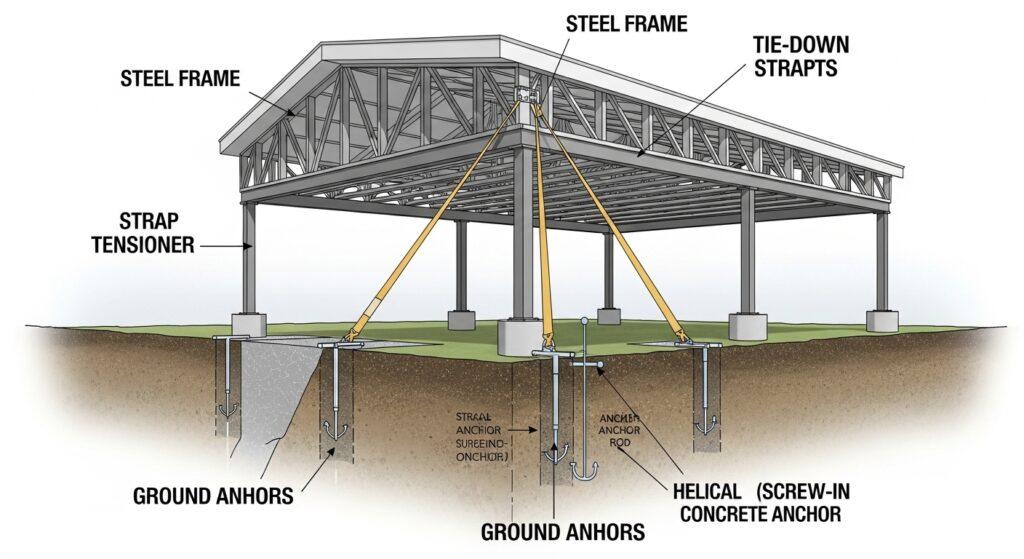
To prevent this, anchors are installed into the ground and connected to the home’s frame using heavy-duty steel straps or cables. These straps are tightened to create tension, holding the home securely in place. The system distributes wind forces evenly, reducing stress on any one point and improving overall stability.
There are typically two types of stabilization at play:
- Vertical anchoring, which prevents uplift caused by wind
- Diagonal anchoring, which resists sliding and lateral movement
Together, these elements form a comprehensive system that keeps the home grounded even under intense weather conditions. When properly installed, these systems can withstand significant wind speeds and meet strict safety standards set by federal and local regulations.
Types of Anchors and Installation Methods
Ground Anchors vs Concrete Footings
Not all anchoring setups are created equal, and the type of system used often depends on the soil conditions, climate, and local building codes. The two most common approaches are ground anchors and concrete-based systems.
Ground anchors are the most widely used option for manufactured homes. These are typically long metal rods or auger-style anchors that are driven or screwed deep into the soil. Once installed, they provide a strong hold by gripping the surrounding earth. Ground anchors are ideal for areas with stable soil and are often more cost-effective and quicker to install.
On the other hand, concrete footings or slabs offer an alternative approach. In this setup, anchors are embedded directly into poured concrete, creating an extremely stable base. This method is often used in areas with loose or sandy soil where traditional ground anchors may not provide enough resistance. Concrete systems can also be part of a more permanent foundation, offering additional structural support.
Each method has its advantages:
- Ground anchors:
- Faster installation
- Lower upfront cost
- Flexible for various terrains
- Concrete footings:
- Increased long-term stability
- Better performance in poor soil conditions
- Often required in high-wind zones
Choosing the right option depends on a combination of environmental factors and regulatory requirements. A professional installer will assess soil type, moisture levels, and wind exposure to determine the best solution.
Storm Safety and Code Compliance
One of the most important aspects of manufactured home anchoring systems is compliance with safety codes. These regulations are not arbitrary. They are based on decades of research into how structures perform under extreme weather conditions.
In the United States, the Department of Housing and Urban Development (HUD) sets national standards for manufactured home installation, including anchoring requirements. These guidelines specify everything from the number of anchors needed to the spacing and tension of straps.
Local jurisdictions may also have additional requirements, especially in areas prone to hurricanes or severe storms. For example, homes in high-wind zones may require:
- Additional anchors per side
- Reinforced straps with higher tension ratings
- Deeper anchor installation
- Specific spacing to distribute load more effectively
Following these codes is not just about passing inspections. It directly impacts the safety of the home. Properly installed systems can significantly reduce the risk of damage during storms, protecting both property and occupants.
Another key factor is regular inspection and maintenance. Over time, soil can shift, straps can loosen, and anchors can experience wear. Periodic checks ensure that everything remains secure and functioning as intended.
Common Anchoring Mistakes to Avoid
Even with the best equipment, improper installation or oversight can compromise the effectiveness of an anchoring system. Understanding common mistakes can help homeowners avoid costly and dangerous issues.
One of the most frequent problems is incorrect anchor depth. If anchors are not driven deep enough into the ground, they may not provide sufficient resistance against wind forces. This is especially critical in softer soils where deeper installation is necessary for stability.
Another common issue is improper strap tension. Straps that are too loose will not hold the home securely, while over-tightened straps can cause unnecessary stress on the frame. Achieving the right balance is essential for optimal performance.
Spacing errors also play a role. Anchors must be installed at specific intervals to distribute forces evenly. Too few anchors or uneven spacing can create weak points, increasing the risk of movement during a storm.
Additional mistakes include:
- Using the wrong type of anchor for the soil conditions
- Failing to account for local wind zone requirements
- Skipping professional installation or inspection
- Neglecting maintenance over time
Avoiding these pitfalls starts with working with experienced installers who understand both the technical and regulatory aspects of manufactured home anchoring systems.
Bringing It All Together for Long-Term Protection
Storm safety is not something to leave to chance, and when it comes to manufactured homes, anchoring plays a central role in overall stability. A well-designed and properly installed system does more than just meet code requirements. It provides real protection when it matters most, helping your home stay secure through high winds, heavy rain, and unpredictable weather patterns.
By understanding how manufactured home anchoring systems work, the different types available, and the importance of proper installation, homeowners can make informed decisions that support both safety and longevity. Whether you are setting up a new home or evaluating an existing system, taking the time to ensure everything is up to standard can make a significant difference.
As weather patterns continue to shift and storm intensity becomes less predictable, investing in a reliable anchoring system is one of the smartest steps you can take. It is not just about securing a structure. It is about creating a stable, dependable space where you can feel confident no matter what the forecast brings.