Wildlife Volunteering in Tanzania: A Complete Guide to Conservation Opportunities
Wildlife volunteering in Tanzania is one of the most meaningful ways to travel while making a real impact on conservation. Known for its incredible biodiversity, vast national parks, and iconic African wildlife, Tanzania offers volunteers hands-on opportunities to support endangered species, environmental sustainability, and local communities.
Whether you are a student, professional, or passionate traveler, participating in wildlife conservation projects in Tanzania can be a life-changing experience that combines purpose, adventure, and personal growth.
Why Choose Wildlife Volunteering in Tanzania
Tanzania is home to some of the world’s most famous ecosystems and wildlife reserves. From expansive savannahs to coastal marine environments, the country offers diverse conservation opportunities for volunteers. However, challenges such as poaching, habitat destruction, and climate change continue to threaten wildlife populations.
Volunteering allows individuals to contribute directly to conservation efforts while gaining a deeper understanding of environmental issues. It also provides a chance to experience African wildlife in its natural habitat and engage with local cultures in a responsible and sustainable way.
Types of Wildlife Volunteering Programs in Tanzania
Wildlife volunteering programs in Tanzania are designed to match different skills, interests, and experience levels. Volunteers can choose from various project types depending on their goals.
National Park Conservation Projects
Many volunteers work in or near national parks where they assist conservation teams in protecting wildlife habitats. Activities may include trail maintenance, habitat restoration, or supporting park operations. These projects help ensure that ecosystems remain healthy and sustainable for future generations.
Wildlife Monitoring and Research
Research-focused volunteering programs provide opportunities to support scientists and conservationists. Volunteers may help track animal movements, collect environmental data, or observe wildlife behavior. This information plays an important role in developing conservation strategies and protecting endangered species.
Anti-Poaching and Awareness Initiatives
Some programs focus on wildlife protection and community awareness. Volunteers may assist in educational campaigns that teach local communities about conservation and sustainable practices. While volunteers typically do not engage in direct enforcement activities, they contribute to reducing poaching risks through support and advocacy.
Marine and Coastal Conservation
Tanzania’s coastline and islands offer marine conservation opportunities. Volunteers can participate in projects that focus on protecting coral reefs, sea turtles, and marine biodiversity. Activities may include beach cleanups, environmental surveys, and awareness programs about ocean conservation.
Key Responsibilities of Wildlife Volunteers
Wildlife volunteering roles can be varied and physically engaging. Volunteers are often involved in both fieldwork and community initiatives.
Typical responsibilities may include:
- Observing and recording wildlife sightings
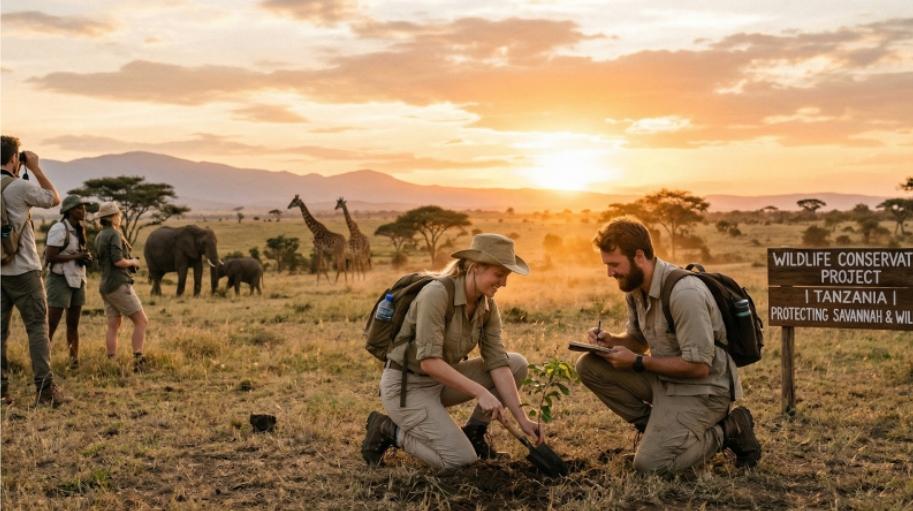
- Supporting habitat restoration efforts, such as tree planting
- Assisting with conservation education programs
- Participating in environmental clean-up activities
- Helping with basic research or data entry tasks
While tasks differ between programs, volunteers are expected to show enthusiasm, flexibility, and a willingness to learn.
Benefits of Wildlife Volunteering in Tanzania
Wildlife volunteering offers more than just travel experiences. It helps individuals grow personally and professionally while contributing to meaningful causes.
Practical Conservation Experience
Volunteers gain hands-on experience in environmental work, which is valuable for careers in ecology, biology, sustainability, and tourism. Exposure to real-world conservation challenges helps build critical thinking and problem-solving skills.
Cultural Exchange and Personal Growth
Living and working alongside local communities allows volunteers to experience Tanzanian traditions, food, and daily life. This cultural immersion often leads to greater global awareness, empathy, and confidence.
Adventure and Exploration
Wildlife volunteering placements are often located near breathtaking natural landscapes. Volunteers may have opportunities to explore national parks, go on guided safaris, or visit nearby villages and markets during their free time.
Making a Positive Impact
Perhaps the most rewarding benefit is knowing that your efforts support wildlife protection and environmental sustainability. Even small contributions can make a long-term difference in conservation initiatives.
Cost of Wildlife Volunteering in Tanzania
The cost of wildlife volunteering programs varies depending on the organization, duration, and services included. Short-term programs may be relatively affordable, while specialized research placements can be more expensive.
Common expenses include program fees covering accommodation and meals, international travel costs, visa fees, vaccinations, insurance, and personal spending. It is important to budget carefully and understand what is included before committing to a program.
Some organizations also offer fundraising support or scholarships to help volunteers manage costs.
Requirements for Wildlife Volunteers
Most wildlife volunteering opportunities in Tanzania are open to individuals without extensive qualifications. However, certain qualities can help volunteers succeed in the field.
Volunteers should typically have:
- A genuine interest in wildlife and conservation
- Good physical fitness and adaptability
- Patience and attention to detail
- Teamwork and communication skills
- Respect for local cultures and environments
Research-oriented programs may prefer applicants with academic backgrounds in environmental science, biology, or related fields, but beginners are often welcome in many placements.
Ethical Wildlife Volunteering: What to Consider
As volunteer tourism becomes more popular, it is essential to choose programs that prioritize ethical conservation practices. Some projects may unintentionally harm wildlife by promoting unnecessary human interaction or focusing more on tourism than impact.
Before applying, volunteers should research organizations thoroughly and ensure that their work supports long-term conservation goals.
Important factors to consider include:
- Transparency about how volunteer fees are used
- Partnerships with local communities and authorities
- Limited direct handling of wild animals
- Evidence of measurable conservation outcomes
Responsible volunteering helps protect ecosystems while supporting sustainable development.
How to Apply for Wildlife Volunteering in Tanzania
Applying for a wildlife volunteering program usually involves several simple steps.
First, research different organizations and compare program focuses, locations, and durations. Next, submit an application and prepare necessary travel documents such as passports and visas. Once accepted, volunteers typically receive orientation materials and pre-departure guidance.
Upon arrival, local coordinators help volunteers settle in and begin their conservation activities. Proper preparation ensures a smoother and more rewarding volunteering experience.
Conclusion
Wildlife volunteering in Tanzania offers an unforgettable opportunity to combine travel with purpose. By contributing to conservation projects, supporting community initiatives, and learning from experienced professionals, volunteers can make a meaningful impact on the environment while gaining valuable life skills.
From monitoring wildlife populations to protecting marine ecosystems, the experience allows individuals to connect deeply with nature and understand the importance of sustainable conservation.
If you are passionate about wildlife, adventure, and global impact, volunteering in Tanzania can be a truly transformative journey that benefits both you and the natural world.
Volunteer in Tanzania with Hostel Hoff
Ready to experience wildlife volunteering in Tanzania with real local impact?
Hostel Hoff connects volunteers with ethical conservation and community projects while offering affordable stays near Mount Kilimanjaro.
Start your meaningful adventure today!