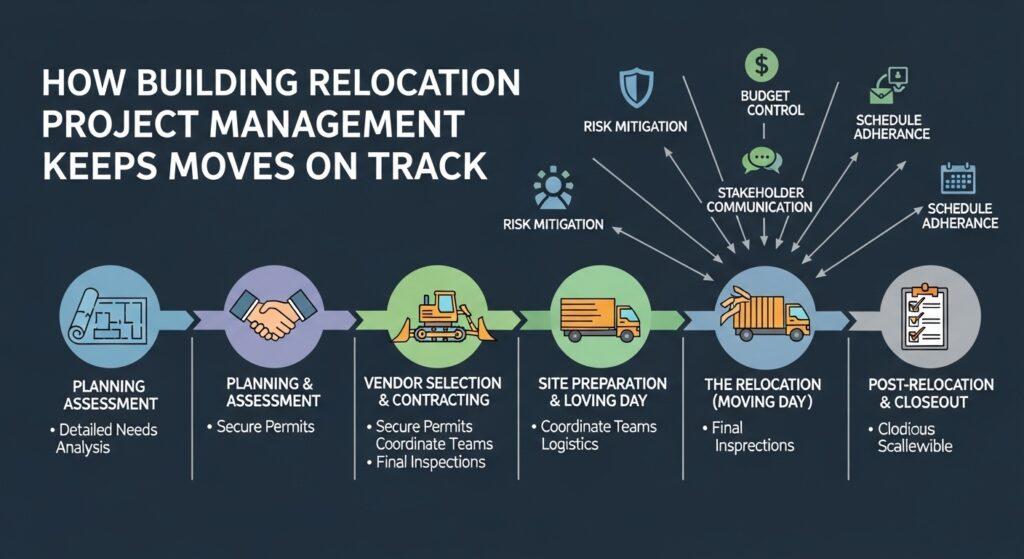
How Building Relocation Project Management Keeps Moves on Track
Relocating a building is a complex undertaking that involves far more than physically moving a structure from one place to another. It requires careful coordination, strategic planning, and ongoing oversight to ensure every detail is executed correctly. This is where building relocation project management plays a critical role. By organizing each phase of the move and aligning all stakeholders, project management ensures the relocation stays on schedule, within budget, and free from avoidable risks.
From initial planning to final placement, effective management provides structure and clarity throughout the entire process. Without it, even the most straightforward relocation can quickly become disorganized and costly.
Understanding Building Relocation Project Management
Building relocation project management is the process of planning, coordinating, and overseeing all aspects of a structure move. It involves managing timelines, budgets, resources, and communication between multiple parties, including engineers, contractors, utility providers, and local authorities.
Unlike traditional construction projects, relocation introduces unique challenges such as transporting large structures, navigating public infrastructure, and maintaining structural integrity during movement. Project management ensures that all these elements are handled in a systematic and efficient way.
The goal is not only to complete the move but to do so safely, efficiently, and with minimal disruption.
Establishing Clear Project Goals
Every successful relocation begins with clearly defined objectives. Building relocation project management starts by identifying the purpose of the move and the desired outcomes. This could include preserving a historic structure, making way for new development, or relocating a building to a more suitable location.
Defining goals helps guide decision-making throughout the project. It ensures that all stakeholders understand what success looks like and what priorities must be maintained.
Clear goals also make it easier to measure progress and evaluate whether the project is staying on track.
Creating a Detailed Project Plan
A comprehensive project plan is the backbone of effective building relocation project management. This plan outlines every step of the process from initial assessments to final placement.
Key components of the plan include timelines, task assignments, resource allocation, and milestones. Each phase of the project is carefully mapped out to ensure that all activities are completed in the correct order.
The plan also identifies dependencies between tasks. For example, utility disconnections must occur before lifting the structure, and the new foundation must be ready before placement.
Having a detailed plan helps prevent confusion and keeps the project moving forward smoothly.
Coordinating Multiple Stakeholders
Building relocation involves a wide range of professionals, each with their own responsibilities and expertise. Coordinating these stakeholders is a central function of building relocation project management.
This includes structural engineers who assess the building, contractors who handle lifting and transport, utility companies that manage service disconnections, and government agencies that issue permits.
Effective communication ensures that everyone is aligned and working toward the same objectives. Regular meetings, updates, and clear documentation help keep all parties informed.
Strong coordination reduces the risk of delays and ensures that each phase of the project transitions seamlessly into the next.
Managing Budgets and Costs
Cost control is a major concern in any relocation project. Building relocation project management involves creating a realistic budget and monitoring expenses throughout the process.
Costs can include engineering assessments, equipment rental, labor, permits, route preparation, and foundation construction. Unexpected issues can also arise, making contingency planning essential.
Project managers track spending and compare it to the budget to ensure that the project remains financially viable. If costs begin to exceed expectations, adjustments can be made to keep the project on track.
Effective financial oversight helps prevent budget overruns and ensures that resources are used efficiently.
Scheduling and Timeline Management
Timing is critical in building relocation. Delays in one phase can impact the entire project, leading to increased costs and logistical complications.
Building relocation project management focuses on creating and maintaining a realistic schedule. This includes setting deadlines for each task and ensuring that all activities are completed on time.
Project managers monitor progress and make adjustments as needed to address delays or unforeseen challenges. This may involve rescheduling tasks, reallocating resources, or coordinating with stakeholders to resolve issues.
A well-managed timeline keeps the project moving forward and minimizes disruptions.
Navigating Permits and Regulations
Relocating a building requires compliance with a variety of regulations. Building relocation project management ensures that all necessary permits and approvals are obtained before work begins.
This may include transportation permits, zoning approvals, environmental clearances, and building code compliance. Each jurisdiction may have its own requirements, making this process complex.
Project managers work with local authorities to ensure that all regulations are met. They also keep track of deadlines and documentation to avoid delays.
Proper management of permits and regulations helps ensure a smooth and legally compliant relocation process.
Overseeing Risk Management
Every building relocation project carries risks, and managing those risks is a key responsibility of project management. These risks can include structural damage, equipment failure, weather disruptions, and logistical challenges.
Building relocation project management involves identifying potential risks early and developing strategies to mitigate them. This may include reinforcing the structure, planning alternative routes, or scheduling the move during favorable weather conditions.
Continuous monitoring allows project managers to respond quickly if issues arise. By addressing risks proactively, they help ensure the safety and success of the project.
Ensuring Safety Standards Are Followed
Safety is a top priority in any structure relocation. Building relocation project management ensures that all safety protocols are followed at every stage of the project.
This includes proper use of equipment, worker training, and adherence to industry standards. Safety measures are implemented during lifting, transport, and placement to protect both the structure and the people involved.
Regular inspections and safety briefings help maintain a safe working environment. Project managers play a key role in enforcing these standards and addressing any concerns.
Maintaining a strong focus on safety reduces the likelihood of accidents and ensures a successful outcome.
Monitoring Progress and Performance
Tracking progress is essential for keeping a relocation project on track. Building relocation project management involves regularly reviewing performance against the project plan.
This includes monitoring timelines, budgets, and task completion. Project managers use this information to identify any deviations and take corrective action.
Performance tracking also provides valuable insights that can be used to improve future projects. It helps ensure that lessons are learned and best practices are applied.
Consistent monitoring keeps the project aligned with its goals and ensures that any issues are addressed promptly.
Managing Communication and Documentation
Clear communication is critical in a complex project like building relocation. Building relocation project management ensures that information is shared effectively among all stakeholders.
This includes maintaining detailed documentation such as project plans, permits, contracts, and progress reports. Having accurate records helps prevent misunderstandings and provides a clear reference for decision-making.
Communication also involves keeping homeowners, business owners, or other stakeholders informed about the status of the project. Transparency builds trust and helps manage expectations.
Effective communication ensures that everyone involved is on the same page throughout the relocation process.
Adapting to Challenges and Changes
No relocation project goes exactly as planned. Unexpected challenges can arise, requiring flexibility and quick decision-making.
Building relocation project management involves adapting to these changes while keeping the project on track. This may include adjusting timelines, reallocating resources, or revising plans to address new conditions.
The ability to respond effectively to challenges is a key factor in the success of a relocation project. It ensures that obstacles are managed without compromising the overall outcome.
Final Placement and Project Completion
The final stage of a building relocation project involves placing the structure onto its new foundation and completing any remaining work. Building relocation project management ensures that this process is carried out with precision and care.
This includes aligning the structure, reconnecting utilities, and conducting final inspections. Any remaining tasks are completed to ensure that the building is ready for use.
Project managers also review the entire project to ensure that all objectives have been met. This final evaluation helps confirm that the relocation was successful.
Final Thoughts
Building relocation is a highly complex process that requires careful coordination and expert oversight. Building relocation project management provides the structure and organization needed to navigate this complexity successfully.
By managing timelines, budgets, risks, and communication, project managers ensure that every aspect of the move is handled efficiently. Their role is essential in keeping projects on track and delivering successful outcomes.
With the right approach to project management, building relocation can be a smooth and well-executed process that meets both practical and strategic goals.