Why Fabric Banners Outperform Vinyl in Windy Australian Conditions
You don’t really think about wind until it becomes a problem. It’s 7:30 in the morning. The market stall is half set up. Coffee in one hand, cable ties in the other. Then a gust hits. The vinyl banner snaps tight like a sail and suddenly you’re wrestling your own signage in front of strangers.
If you’ve done outdoor events in Australia, you’ve lived this. And this is exactly where fabric banner printing starts to make more sense than many businesses expect.
Not because it looks nicer. Not because it’s trendy. But because physics is involved. Let’s talk about that.
Wind Load Is Not Just a Technical Term
Wind load sounds like something engineers worry about. But if you’re setting up signage outdoors, it’s your problem too.
Vinyl banners are essentially solid sheets. When wind hits them, the air has nowhere to go. Pressure builds. The banner strains against its mounting points. Over time, eyelets stretch. Corners tear. Frames bend slightly out of shape.
With fabric banner printing, the material structure is different. Woven polyester allows minimal airflow to pass through. Not enough to affect the design, but enough to reduce pressure build-up.
That tiny difference changes everything in windy conditions. Fabric flexes. Vinyl fights. And when something fights wind long enough, it usually loses.
Tension Systems Work Better With Fabric
Most modern display systems use tension frames. You stretch the banner over an aluminium frame, zip it closed or slot it into silicone edging, and the material pulls tight like a drum.
This setup pairs beautifully with fabric banner printing because the elasticity of the textile keeps tension even across the surface. When wind pushes against it, the fabric absorbs the force and redistributes it.
Vinyl doesn’t stretch the same way. It pulls at fixed points. That’s where stress fractures start. It’s not dramatic on day one. But after a few outdoor events, you’ll notice subtle distortions. Fabric tends to bounce back.
Noise Is an Underrated Factor
Here’s something people don’t consider until they experience it. Vinyl flaps. Loudly. At outdoor expos or sports events, that constant snapping sound can become distracting. It doesn’t exactly scream professionalism.
With fabric banner printing, movement is softer. The material shifts quietly. Less noise. Less visual aggression.
It sounds minor. But ambience matters at events. Especially if you’re trying to have conversations with customers. No one wants to shout over their own signage.
UV and Wind Combined
Australia brings a particular combination of challenges. Strong sun. Sudden gusts. Coastal air in some regions. Dry heat inland.
Vinyl exposed to UV becomes brittle over time. Add repeated wind stress to that brittleness and cracks appear faster.
High-quality fabric banner printing, especially using dye-sublimation methods, bonds ink into the fibres rather than layering it on top. The print moves with the fabric instead of separating from it.
That flexibility extends lifespan in fluctuating conditions. It’s not invincible. Nothing is. But it’s more forgiving.
Portability Changes the Game
Outdoor businesses rarely set up once and leave banners untouched for a year. Markets rotate. Trade shows move cities. Pop-up activations travel. That means packing, folding, transporting, unpacking. Over and over.
This is where fabric banner printing has a practical advantage. Fabric folds without cracking. It weighs less than vinyl. It fits into compact carry bags. Vinyl often needs rolling to avoid creases. And even then, visible lines can develop.
If you’re constantly on the move, lighter and more flexible materials simply make life easier. And sometimes that’s reason enough.
Structural Integrity at Mounting Points
Let’s talk about eyelets and hems. With vinyl banners, mounting points carry concentrated stress. The material doesn’t distribute tension evenly, especially under wind pressure.
In fabric banner printing, reinforced stitching combined with stretch properties allows force to spread more naturally across the surface.
Professional finishing matters here. Double-stitched hems. Quality silicone edging. Proper reinforcement at corners.
When done correctly, the banner becomes part of a balanced system rather than a rigid sheet under strain. It’s subtle engineering. But noticeable over time.
Aesthetic Perception in Motion
Wind doesn’t just test durability. It affects how your brand looks. A vinyl banner straining aggressively in the breeze can appear harsh. Distracting. Slightly chaotic.
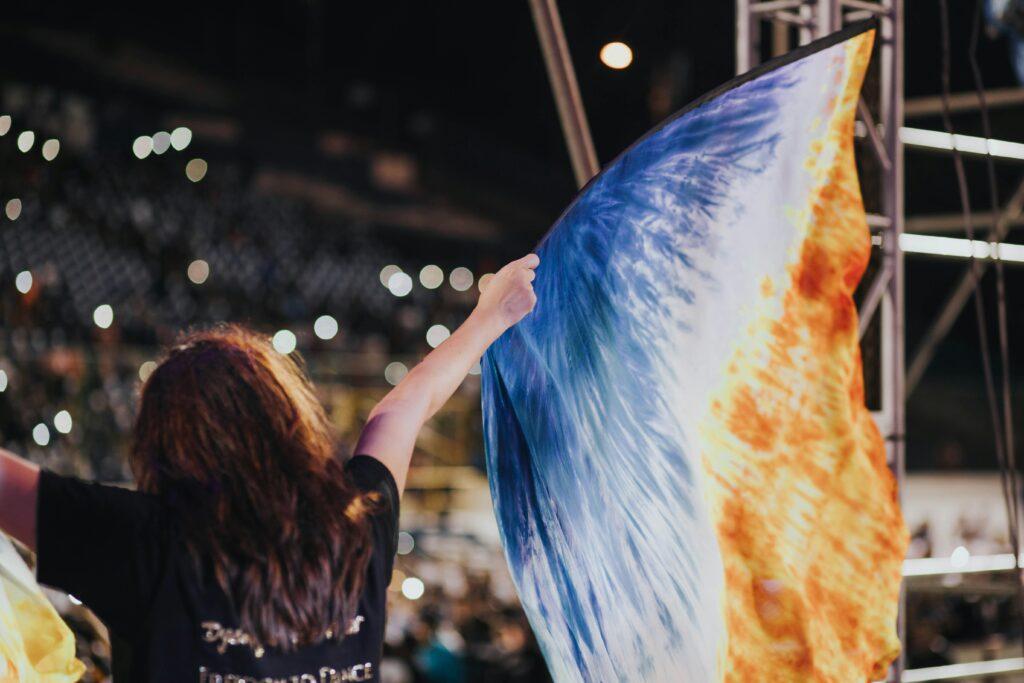
Fabric moves differently. It ripples instead of snapping. The design remains readable. The visual impression feels softer and more refined.
In high-traffic outdoor environments, that calm movement can actually draw attention rather than repel it. It’s one of those things you don’t predict. You just observe it happening.
Cost Versus Replacement Frequency
Vinyl banners can be cheaper upfront. That’s often the initial draw. But when factoring in replacement frequency due to tearing, fading, or stress damage, fabric banner printing can offer better long-term value.
Especially for businesses that attend multiple outdoor events per year. Durability doesn’t always show up in price comparisons. It shows up six months later when one banner still looks sharp and the other needs reordering.
And reordering takes time. Design adjustments. Shipping coordination. Installation again. Sometimes paying slightly more at the beginning reduces repeated hassle.
Climate Variation Across Australia
It’s easy to generalise about “Australian conditions,” but the reality varies. Coastal regions deal with salt air and humidity. Inland areas face dry heat and dust. Southern states experience sudden weather shifts.
Fabric banner printing adapts well across these environments because of its breathable structure and flexible composition.
Vinyl can handle certain climates effectively, especially for permanent installations. But for portable, frequently moved signage, fabric often handles variability more gracefully. It’s about matching material to usage pattern.
The Human Factor
Let’s step away from technical details for a moment. Setting up for an event is already busy. You’re organising stock, arranging tables, briefing staff. The last thing you want is to wrestle with signage in strong wind.
Fabric banner printing reduces that friction. Lighter materials. Easier tensioning. Less aggressive movement.
That ease translates into smoother setups and fewer last-minute adjustments. And honestly, when your setup process feels calmer, your entire presentation improves.
Final Thoughts
There’s no universal winner in signage materials. Every option has its place. But in windy Australian conditions, the flexibility, reduced wind load, and portability advantages of fabric banner printing from Selbys become hard to ignore.
It’s not just about appearance. It’s about physics. Durability. Practical handling. Long-term performance. Because at the end of the day, your banner shouldn’t be the thing fighting against you.
It should quietly support your brand, hold its shape in the breeze, and let you focus on the conversations that actually matter.