What Full Compensation Can Include After a Life-Changing Injury
A life-changing injury doesn’t just interrupt your life—it rewrites it. What once felt routine can suddenly become difficult, uncertain, or even impossible. From physical limitations to financial instability, the aftermath often unfolds in layers, revealing challenges that go far beyond the initial accident.
Because of this, compensation in serious injury cases must be approached differently. It is not about covering a few bills—it is about rebuilding a life. Working with a Salt Lake City law firm handling personal injury can help ensure that every consequence—both visible and hidden—is accounted for in a meaningful and forward-looking way.
The Cost of Survival Is Only the Beginning
Emergency care is often the first and most urgent expense after a serious injury. Ambulance transport, surgeries, intensive care, and hospital stays can generate overwhelming bills in a matter of days. But these initial costs only scratch the surface.
What follows is often a long-term medical journey. Follow-up care, specialized treatments, and ongoing monitoring can continue indefinitely. Compensation must reflect not just the cost of survival, but the cost of sustained recovery and long-term health management.
When Earning a Living Is No Longer Certain
One of the most destabilizing effects of a life-changing injury is the loss of financial independence. Even temporary inability to work can create immediate pressure, but permanent or long-term limitations can reshape an entire career path.
Some individuals may need to change professions, reduce working hours, or stop working altogether. Compensation must consider not only lost income, but also the loss of opportunity—promotions, career growth, and future earning potential that may no longer be attainable.
Recovery Often Requires More Than Medicine
Healing from a serious injury is rarely limited to medical treatment alone. Rehabilitation becomes a central part of the process, helping individuals relearn movements, regain strength, or adapt to new physical realities.
This may involve months or years of physical therapy, occupational therapy, or specialized care programs. In more severe cases, ongoing assistance may be required just to manage daily activities. These needs are not temporary—they can become part of everyday life, and compensation must reflect that permanence.
Living With Pain That Doesn’t Go Away
Some injuries leave behind more than scars—they leave chronic pain that becomes part of daily existence. This kind of pain can affect sleep, mobility, and overall quality of life, making even simple tasks exhausting.
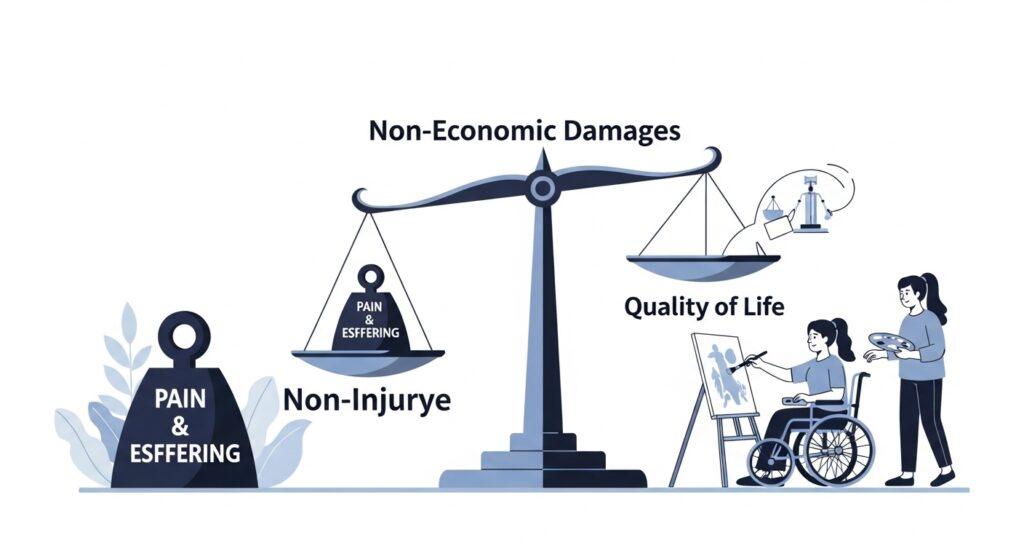
Compensation for pain and suffering acknowledges that not all damage can be measured in receipts. It recognizes the ongoing physical and emotional toll of living with an injury that doesn’t fully heal.
The Emotional Weight of a New Reality
Life after a serious injury often involves emotional losses that are just as real as the physical ones. Recovery may include adjusting to pain, reduced independence, and major changes to daily life.
- Frustration and Loss: Difficulty coping with new limitations or disrupted plans.
- Anxiety and Uncertainty: Worry about recovery, finances, and the future.
- Reduced Independence: Emotional strain from needing more help than before.
- Need for Mental Health Support: Therapy, counseling, and related care may become an important part of recovery.
Compensation should account for both the cost of treatment and the emotional impact of adapting to a very different life.
Homes and Environments May Need to Change
For many individuals, returning home after a serious injury means facing a space that no longer fits their needs. Stairs, narrow doorways, or standard bathrooms can become obstacles rather than conveniences.
Adapting a home may involve structural changes such as ramps, modified layouts, or accessibility upgrades. These changes are not luxuries—they are necessities that allow individuals to live safely and with dignity.
Losing More Than Just Physical Ability
A life-changing injury can take away more than physical function—it can take away experiences. Activities that once brought joy, whether recreational, social, or personal, may no longer be possible.
This loss of enjoyment is deeply personal but incredibly important. Compensation seeks to recognize that a fulfilling life includes more than basic survival—it includes the ability to participate, connect, and experience happiness.
The Ripple Effect on Family and Support Systems
A serious injury often affects the entire household, not just the person who was hurt. Families frequently absorb the practical, emotional, and financial consequences in ways that can be both immediate and long-lasting.
- Caregiving Responsibilities: Family members may take on transportation, medical support, and daily care tasks.
- Schedule Disruptions: Work, school, and household routines often change to accommodate recovery needs.
- Financial Pressure: Lost income, added expenses, and reduced availability can strain the family as a whole.
- Emotional Stress: Loved ones may experience anxiety, exhaustion, and the weight of ongoing uncertainty.
- Relationship Changes: Roles within the family may shift as responsibilities increase and routines change.
These effects can extend well beyond the injured person, which is why compensation may also reflect the broader impact on the family and support system.
Planning for an Uncertain Future
Unlike minor injuries, life-changing conditions often come with uncertainty. Future medical needs, potential complications, and evolving limitations can make it difficult to predict what lies ahead.
A strong claim anticipates these unknowns. It considers not only what is happening now, but what could happen in the years to come. This forward-thinking approach helps protect against future financial hardship.
Compensation as a Foundation for Stability
At its core, full compensation is about restoring a sense of stability in a life that has been disrupted. It provides the resources needed to access care, maintain independence, and adapt to new circumstances.
Without a comprehensive approach, individuals may find themselves facing ongoing challenges without adequate support. Proper compensation creates a foundation that allows for rebuilding—not just surviving.
Looking at the Whole Picture, Not Just the Injury
It is easy to focus on the visible aspects of an injury—the hospital visits, the medical bills, the physical damage. But the true impact runs deeper, affecting every part of daily life and every plan for the future.
A complete claim looks beyond the surface. It captures the full story of how the injury has changed a person’s life and what is needed to move forward. Only then can compensation truly reflect the depth of the loss—and the path toward rebuilding what comes next.