The 5 Best Dim Sum Spots Compared
The 5 Best Dim Sum Spots Compared
What Is Dim Sum? A Quick Guide to the Ultimate Cantonese Brunch
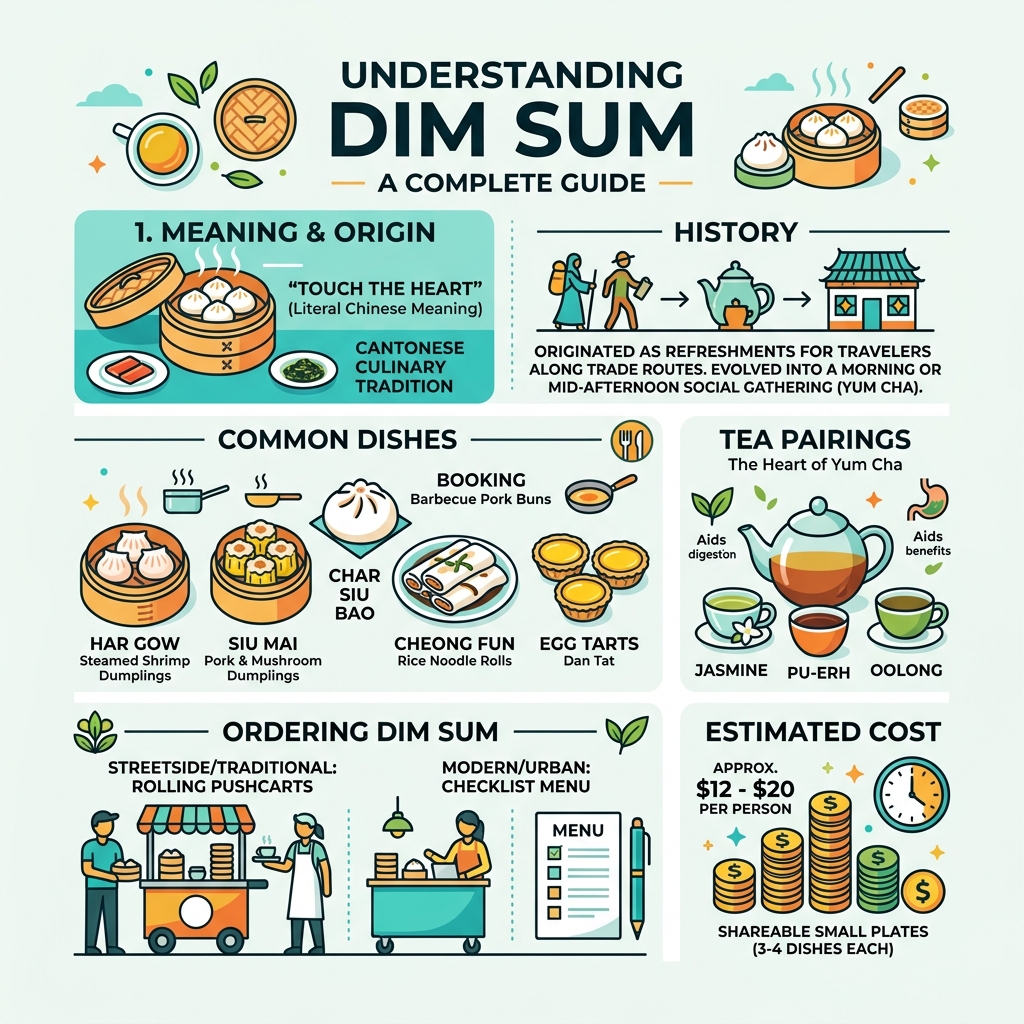
Dim sum is a Cantonese tradition of small, shared dishes — dumplings, buns, rolls, and more — enjoyed alongside tea during a leisurely brunch. The name literally means “touch the heart” in Chinese.
Quick answers:
- What is it? Small plates of steamed, fried, and baked dishes, served family-style
- When is it eaten? Typically morning through mid-afternoon
- What do you drink with it? Tea — always tea (jasmine, pu-erh, and oolong are classics)
- How much does it cost? Around $12–$20 per person, with 2–3 dishes each
- How do you order? From rolling pushcarts or a checklist menu, depending on the restaurant
- How many dishes exist? Over 2,000 varieties across China, though only 40–50 are common outside of it
Whether you’re a seasoned dim sum lover or about to experience it for the first time, finding the right restaurant makes all the difference. Not every spot delivers the same quality, atmosphere, or authenticity.
For city dwellers who appreciate craft and culture — the kind of person who notices the difference between a har gow with 12 pleats and one with six — the dim sum restaurant you choose says something about you.
We compared five of the best dim sum spots so you don’t have to guess.
Glossary for dim sum:
The History and Cultural Significance of dim sum

To truly appreciate dim sum, we must look back over a thousand years. While the dim sum origin and meaning are often debated, most historians trace its roots to the Song Dynasty (960–1279). However, the vibrant culture we recognize today blossomed in the teahouses of Guangdong Province and Guangzhou.
Originally, these teahouses (known as cha lau) were humble stops for weary farmers and travelers along the famous Silk Road. Because tea was known to aid digestion, it was the perfect accompaniment for small, savory snacks. This gave birth to the tradition of yum cha, which literally translates to “drinking tea.”
In the early days, the practice followed the “one cup, two pieces” (yat chung leung gin) rule—one cup of tea paired with two small snacks. Over time, these snacks evolved from simple, starchier dumplings meant to sustain day laborers into the intricate, delicate culinary art form we enjoy today. As commercial travel increased in the 10th century, Guangzhou teahouses began offering more variety to cater to a diverse clientele.
As the Cantonese diaspora spread, so did the tradition. By the 1920s, dim sum had established a foothold in the United States, particularly in the bustling Chinatowns of New York and San Francisco. Today, it remains a cornerstone of Cantonese identity, representing a communal lifestyle where the meal is as much about the conversation and the tea as it is about the food.
A Comprehensive Guide to Popular Dishes
When you sit down for dim sum, the sheer volume of choices can be overwhelming. There are over 1,000 varieties originating from Guangdong alone, but most menus focus on a refined selection of favorites. According to this guide to traditional dishes, the preparation is an art form requiring six basic kitchen stations, ranging from rice noodle rolls to delicate dumpling wrapping.
| Category | Popular Dishes | Texture/Flavor |
|---|---|---|
| Steamed | Har Gow, Siu Mai, Char Siu Bao | Delicate, light, savory |
| Fried/Baked | Spring Rolls, Turnip Cakes, Char Siu Sou | Crispy, golden, rich |
| Rice/Noodle | Cheong Fun, Lo Mai Gai | Silky, chewy, hearty |
| Dessert | Egg Tarts, Sesame Balls | Sweet, flaky, indulgent |
The hallmark of a great restaurant is the quality of its bamboo steamers. These steamers allow moisture to circulate, keeping the skins of the dumplings translucent and the fillings succulent. Beyond the dumplings, you’ll find classics like Lo Mai Gai (sticky rice wrapped in lotus leaves), which offers a fragrant, earthy aroma, and Lo Bak Go (pan-fried turnip cakes), known for their crispy exterior and soft, savory interior.
Must-Try dim sum Dishes for Beginners
If you are new to dim sum, we recommend starting with the “Big Four.” These dishes represent the core flavor profiles of the cuisine:
- Har Gow (Shrimp Dumplings): These are the true test of a chef’s skill. The skin should be translucent yet sturdy, with at least 12 pleats.
- Siu Mai (Pork and Shrimp Dumplings): Open-topped “cup” dumplings usually garnished with a dot of crab roe or carrot.
- Char Siu Bao (BBQ Pork Buns): These come in two styles—steamed (pillowy white) or baked (golden with a sweet glaze).
- Cheong Fun (Rice Noodle Rolls): Silky sheets of rice noodles wrapped around shrimp, beef, or BBQ pork, drizzled with sweet soy sauce.
Modern Variations and Innovations
The culinary world never stands still, and dim sum is no exception. Modern chefs are pushing boundaries by incorporating high-end ingredients like truffle, wagyu beef, and even foie gras into traditional recipes.
In places like Hong Kong and New York, “cute” dim sum has become a social media sensation. Think buns shaped like little pigs or hedgehogs filled with custard or chocolate. We also see a rise in inclusivity, with more restaurants offering vegetarian-friendly options and halal versions (replacing pork with chicken or seafood), which have become particularly popular in Southeast Asia.
Mastering the Art of Yum Cha
In dim sum, the food is actually secondary to the tea. The phrase yum cha places the emphasis squarely on the beverage. Tea isn’t just a drink; it’s a palate cleanser that cuts through the richness of fried dishes and aids in digestion. There are significant health benefits of tea pairing, as many traditional teas are packed with antioxidants.
Common varieties include:
- Jasmine (Heung Pin): A fragrant green tea that is a favorite for beginners.
- Pu-erh (Bo Lay): An earthy, fermented black tea known for its medicinal properties and ability to balance greasy foods.
- Oolong (Wu Lung): A semi-fermented tea with a complex, nutty flavor profile.
- Chrysanthemum (Guk Fa): A floral, caffeine-free herbal tea that is naturally cooling.
Traditional Etiquette for Eating dim sum
To eat like a pro, you must understand the “silent language” of the dim sum table. This etiquette is rooted in respect and community.
- The Finger Tap: If someone pours tea for you, tap your index and middle fingers twice on the table. This is a gesture of thanks. Legend has it that an emperor traveling incognito used this to allow his servants to “kowtow” without revealing his identity.
- The Lid Flip: When your teapot is empty, don’t flag down a waiter. Simply flip the lid over or leave it slightly offset. This is the universal signal for a refill.
- The Lazy Susan: Always use the rotating tray to move dishes. Never reach across someone else’s space.
- Pouring Order: Always fill your guests’ cups before your own, starting with the eldest person at the table.
- Pushcarts vs. Menus: While traditional spots use rolling carts where you point at what you want, many modern NYC establishments use checklist menus to ensure the food is made-to-order and fresh.
Comparing the 5 Best Dim Sum Spots
For those of us living in New York or Richmond, the search for the perfect bite is a serious endeavor. We’ve looked at the landscape to find spots that cater to both the traditionalist and the modern urbanite.
1. Din Tai Fung (New York, NY)
While technically a global powerhouse, the arrival of Din Tai Fung in New York has changed the landscape for soup dumpling lovers. Known for their surgical precision, their Xiao Long Bao are world-renowned.
- Specialty: Soup dumplings with exactly 18 pleats.
- Vibe: Modern, sleek, and highly efficient. It lacks the “old world” chaos of a teahouse but offers unmatched consistency.
2. Dim Sum Palace (Multiple Locations, NY)
For those who want a blend of convenience and quality, Dim Sum Palace is a staple. With several locations across Manhattan, it’s a go-to for both quick lunches and late-night cravings.
- Specialty: Their Siu Mai and Har Gow are consistently fresh.
- Vibe: A bit more upscale than your average Chinatown basement, making it perfect for a business brunch or a weekend outing with friends.
3. Ping’s (Chinatown, NY)
Located in the heart of Chinatown, Ping’s is where you go for the authentic, bustling experience. It has long been a favorite for those who appreciate traditional Cantonese seafood.
- Specialty: Seafood-heavy dim sum and authentic braised chicken feet.
- Vibe: Vibrant, loud, and classic. This is the place to go if you want to feel the energy of the city.
4. Dim Sum Box (Katy Asia Town / Richmond Area)
For our readers in the Richmond/Katy area, Dim Sum Box offers a “dumpling culture” that is both serious and delicious. They emphasize fresh ingredients and a more modern, order-as-you-go style.
- Specialty: Pan-fried pork dumplings and custard buns.
- Vibe: Casual and approachable, with a focus on quality over the spectacle of carts. It’s a great spot for families who want high-quality food without the trek to a central Chinatown.
5. Tim Ho Wan (New York, NY)
Once dubbed the “world’s cheapest Michelin-starred restaurant,” Tim Ho Wan brought its Hong Kong roots to NYC with great fanfare.
- Specialty: Baked BBQ Pork Buns with a crumbly, sweet crust.
- Vibe: Fast-casual but high-quality. It’s perfect for those who want Michelin-level flavors without the white tablecloth formality.
Historic Charm and Traditional Service
If you are looking for a trip back in time, the historic parlors of Chinatown are your best bet. These spots often retain the pushcart tradition, where servers weave through the tables with stacked steamers. The atmosphere is chaotic, the tea is hot, and the stamps on your bill card are the only way to track your progress. It’s an authentic sensory experience that connects us to the 19th-century teahouses of Guangzhou.
Modern Elegance and Fusion Flavors
For a more refined afternoon, the modern bistros of Midtown and the upscale spots in Richmond offer a different kind of sophistication. Here, you’ll find cocktail pairings—think a lychee martini paired with spicy wontons—and innovative plating that turns a simple dumpling into a work of art. This is dim sum for the modern urban living enthusiast who values both tradition and innovation.
Frequently Asked Questions about Dim Sum
What is the best time to go for dim sum?
Traditionally, dim sum is a brunch meal. Most restaurants start serving as early as 10:00 AM and finish by 3:00 PM. On weekends, we recommend arriving before 11:30 AM to avoid long waits and ensure the kitchen hasn’t run out of popular items like Cheong Fun.
How many dishes should I order per person?
A good rule of thumb is 2 to 3 dishes per person. Because dim sum is served family-style, the more people you have, the more variety you get to try. If you’re a group of four, ordering 10–12 different dishes will give you a fantastic spread.
Is dim sum always served with tea?
In a traditional setting, yes. The meal is called yum cha (drinking tea) for a reason. While modern spots might offer soda or cocktails, tea remains the essential companion for the meal to balance the flavors and aid digestion.
Conclusion
At PARK Ave Magazine LLC, we believe that urban living is defined by these rich cultural experiences. Whether you are exploring the historic streets of Chinatown or enjoying a sleek fusion meal in Midtown, dim sum offers a unique window into Cantonese heritage and culinary excellence. It is a meal that demands you slow down, pour a cup of tea for a friend, and savor the “heart-touching” flavors of a thousand-year-old tradition. Next time you’re looking for city sophistication with a side of comfort, gather your favorite people and head out for yum cha. Your heart (and your stomach) will thank you.