The Best Low Calorie Meals for Beginners
The Best Low Calorie Meals for Beginners
Why Low Calorie Meals Are the Smartest Place to Start Eating Healthier
Low calorie meals are complete, satisfying dishes that typically come in under 500 calories per serving — without skimping on portion size or flavor.
Here are the best beginner-friendly low calorie meals to know about:
| Meal | Calories | Protein |
|---|---|---|
| Chicken and Rice Bowl | 239 cal | 19g |
| Pan Seared Tofu Bowl | 340 cal | 21.5g |
| Chicken Egg Roll Bowl | 442 cal | 36.5g |
| Vegetable Lo Mein | 354 cal | 13.5g |
| Brown Rice Bowl with Turkey and Kale | 500 cal | 28g |
| Grilled Salmon Fillet | 193 cal | 20g |
Most people assume low calorie eating means tiny portions or bland food. It doesn’t.
The truth is, the right ingredients — lean proteins, fiber-rich vegetables, and bold seasonings — can make a meal feel generous and deeply satisfying, all while staying well under 500 calories.
Whether you’re navigating a busy city schedule or simply want to eat smarter without giving up pleasure at the table, this guide breaks down exactly where to start.
Low calorie meals terms to know:
What Defines Low Calorie Meals for Weight Management?
When we talk about low calorie meals, we aren’t suggesting you survive on celery sticks and air. For most adults looking to manage their weight effectively, a “low-calorie” meal is generally defined as one that falls between 300 and 500 calories. This range is the “sweet spot” because it provides enough energy to fuel your brain and body for several hours while maintaining a caloric deficit or balance.
The goal is nutrient density. This means we want to maximize the vitamins, minerals, and protein we get for every calorie consumed. A 500-calorie burger might leave you hungry an hour later, but a 500-calorie bowl filled with lean turkey, kale, and brown rice offers sustained energy. Research shows that complete low calorie meals can easily stay under the 500-calorie mark while maintaining generous portion sizes. In fact, many delicious dinner recipes are ready in 30 minutes or less and contain no more than 350 calories per serving.
Flavor is the most important factor in long-term success. If your food tastes like cardboard, you won’t stick with it. We recommend using bold aromatics—think ginger, garlic, chili oil, and fresh citrus—to create high-impact flavor without adding the heavy calories found in creamy sauces or deep-frying. For those just starting out, you can Try today 300 calorie meal recipes to see how satisfying a lighter plate can actually be.
Essential Protein and Fiber Sources for Satiety
The secret to not feeling “hangry” (hungry and angry) is the combination of protein and fiber. Protein is the most satiating macronutrient, meaning it keeps you full longer by suppressing hunger hormones. Fiber adds physical volume to your stomach, slowing down digestion.
The Best Lean Proteins
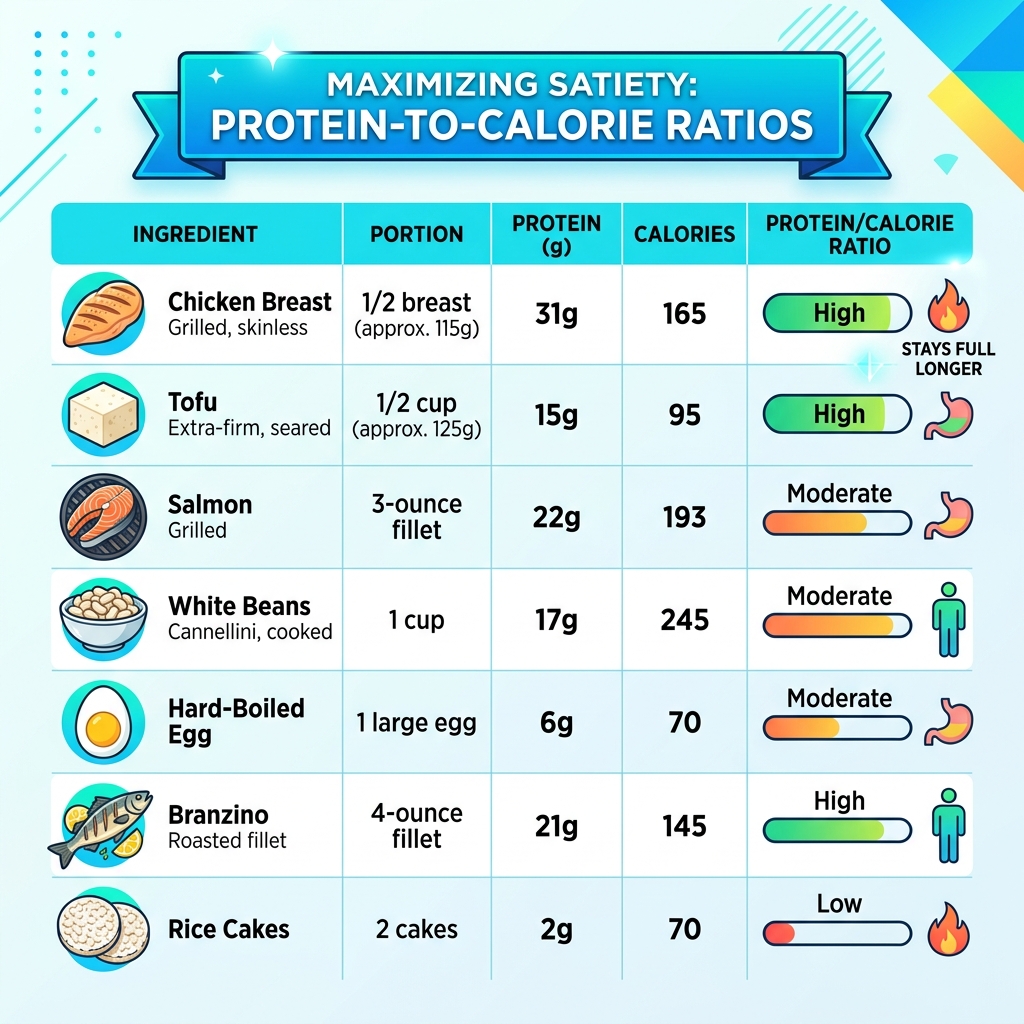
For low calorie meals, we want proteins that have a high protein-to-calorie ratio. Here are our top picks based on nutritional data:
- Chicken Breast: A lime-grilled chicken breast half contains about 127 calories but packs 23g of protein. It’s the gold standard for lean fuel.
- Salmon: A 3-ounce grilled salmon fillet is approximately 193 calories. While it has more fat than chicken (11g), these are heart-healthy omega-3s that contribute to satiety.
- Tofu: Extra-firm tofu is a vegetarian powerhouse. A seared tofu bowl can provide over 21g of protein for just 340 calories.
- White Beans: Cannellini beans are excellent for those trying to eat more plant-based meals. They offer roughly 14.5g of protein and 8g of fiber per serving, making them a “double threat” for fullness.
One of the simplest ways to add protein to any meal is with a hard-boiled egg. It’s a portable, 70-calorie snack or salad topper that provides high-quality protein. If you struggle with getting the texture right, check out our guide on the easiest way to boil eggs perfectly.
Filling Up on Fiber
Vegetables are the “volume” in volume eating. By filling half your plate with non-starchy vegetables like broccoli, snow peas, or kale, you can eat a massive portion of food for very few calories. For instance, replacing traditional white rice with cauliflower rice can save you nearly 150 calories per cup, allowing you to eat a much larger serving of the main dish.
Quick and Flavorful Recipes for Urban Living
Living in a environment like New York or Richmond means time is often our scarcest resource. We don’t always have two hours to simmer a sauce. Fortunately, some of the best low calorie meals are designed for the 30-minute window.
One of our favorite “speedy” meals is the Brown Rice Bowl with Turkey, Toasted Garlic, and Kale. This recipe is a masterclass in efficiency. By using frozen brown rice, you cut down the cooking time significantly. The flavor comes from thinly slicing garlic and gently toasting it in olive oil until it becomes crispy “chips.” You then cook ground turkey in that infused oil with smoked paprika and kale. At exactly 500 calories, it provides 28g of protein and a whopping 8g of fiber.
For those who observe specific dietary traditions, keeping things light doesn’t mean sacrificing heritage. You can find more info about kosher meal options that fit perfectly into a health-conscious lifestyle, especially during holidays where meals tend to be heavier.
Popular Asian-Inspired Low Calorie Meals
Asian-inspired cuisines are naturally suited for low calorie meals because they often emphasize stir-frying, steaming, and bold aromatics over heavy fats.
- Chicken Egg Roll Bowl: This is a “deconstructed” egg roll. By skipping the fried wrapper and the deep-fryer, you save hundreds of calories. We use ground chicken, shredded cabbage (coleslaw mix is a great time-saver), ginger, and soy sauce. A 1.5-cup serving is about 442 calories and offers a massive 36.5g of protein. You can find the full Chicken Egg Roll Bowl recipe to try it this week.
- Vegetable Lo Mein: Traditional takeout lo mein is often swimming in oil. Our version uses whole-wheat spaghetti (which has more fiber) and a mountain of broccoli, snow peas, and carrots. By using a reduced-sodium soy sauce and just a touch of toasted sesame oil, you get that classic taste for only 354 calories.
- Kimchi Cauliflower Fried Rice: For an even lighter option, use cauliflower rice sautéed with spicy kimchi and a fried egg. It’s high in probiotics and incredibly low in calories.
How to Meal Prep Low Calorie Meals for a Busy NYC Lifestyle
Meal prepping is the only way to ensure you don’t end up ordering a 1,200-calorie takeout container on a Tuesday night. The key to successful low-calorie prep is choosing recipes that actually taste good when reheated.
- Pan Seared Tofu Bowls: These are perfect for prep. The tofu stays firm, and the edamame rice holds up well. We recommend storing these in glass containers, which keep the food fresher and are safer for microwave reheating. These bowls are about 340 calories and can be kept in the fridge for up to four days. You can see the step-by-step for these Pan Seared Tofu Bowls here.
- Salad Jars: To keep a White Bean Salad or a Mediterranean salad crisp, layer the dressing at the very bottom of a mason jar, followed by the beans and hard-boiled eggs, and put the leafy greens at the very top. When you’re ready to eat, just shake it into a bowl.
- Batch Cooking: Grill four or five chicken breasts at once using a lime and herb marinade. These can be sliced and added to zucchini linguine, salads, or quick wraps throughout the week.
Smart Cooking Methods to Minimize Calories
How you cook is just as important as what you cook. You can take a healthy piece of fish and double its calories by frying it in butter. To keep your low calorie meals truly lean, we suggest these four methods:
- Air Frying: The air fryer is a game-changer for beginners. It uses hot air circulation to create a “fried” texture with only a fraction of the oil. It’s perfect for making crispy tofu, “roasted” broccoli, or even low-cal chicken wings.
- Sheet Pan Roasting: This is the ultimate “set it and forget it” method. Toss your protein (like salmon or shrimp) and your veggies (like asparagus or bell peppers) in a tiny bit of olive oil and spices, then bake. It minimizes cleanup and keeps calories low because the food roasts in its own juices.
- Grilling: Grilling allows fat to drip away from the meat while adding a smoky charred flavor that you can’t get from a stove.
- Steaming in Parchment: Also known as en papillote, this involves wrapping fish and vegetables in parchment paper with herbs and a splash of citrus. The food steams in its own moisture, requiring zero added fat.
Frequently Asked Questions about Low Calorie Meals
Can low calorie meals still be satisfying?
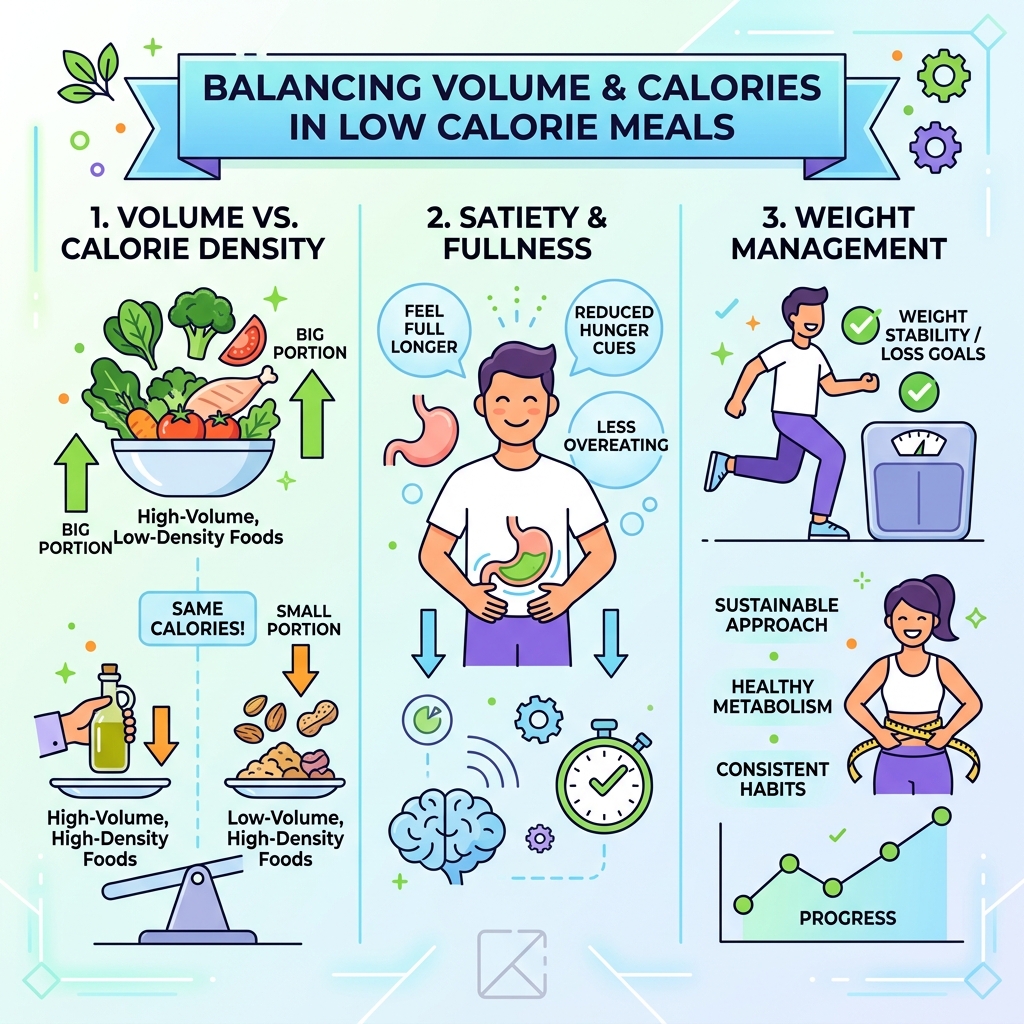
Absolutely. The trick is “volume eating.” This involves choosing foods that have low energy density but high physical volume. For example, two cups of spinach have only 14 calories. By adding massive amounts of leafy greens, cucumbers, and cruciferous vegetables to your meals, you can physically fill your stomach, which triggers the stretch receptors that tell your brain you’re full. When you pair that volume with lean protein and a small amount of healthy fat (like avocado), you create a meal that is chemically and physically satisfying.
What are the best vegetarian substitutions for low calorie recipes?
If you want to skip the meat, you have excellent options:
- Extra-firm tofu: Press it well to remove water, then sear it for a meaty texture.
- Tempeh: A fermented soy product that is very high in protein and fiber.
- Beans and Lentils: A White Bean Salad is a fantastic high-fiber, high-protein meal that is naturally vegetarian.
- Nutritional Yeast: This provides a cheesy, umami flavor for very few calories and adds a boost of B vitamins.
How do I balance macros in a 500-calorie bowl?
A balanced 500-calorie bowl should ideally follow a simple ratio:
- 50% Vegetables: Fill half the bowl with greens, broccoli, peppers, or cauliflower rice.
- 25% Lean Protein: This should be about 4-6 ounces of chicken, fish, tofu, or turkey.
- 25% Complex Carbs: Use a controlled portion (about 1/2 to 1 cup) of brown rice, quinoa, or sweet potato.
- Healthy Fats: Add a small “accent” of fat, like a tablespoon of feta, a few slices of avocado, or a teaspoon of olive oil. This ensures you absorb fat-soluble vitamins and keeps you satisfied until your next meal.
Conclusion
Transitioning to a lifestyle centered around low calorie meals doesn’t have to feel like a sacrifice. In a city like New York, where culinary excellence is around every corner, we believe that healthy living should be just as sophisticated and flavorful as a night out at a five-star bistro. By focusing on high-quality proteins, fiber-rich vegetables, and smart cooking techniques, you can enjoy generous portions that fuel your urban lifestyle without the heavy caloric load.
At PARK Ave Magazine LLC, we are committed to bringing you the best of NYC living—from the finest art galleries to the smartest ways to maintain your health in the concrete jungle. Embracing these beginner-friendly recipes is the first step toward a more vibrant, energetic you.
Ready to see what else the city has to offer? Explore NYC Dining Guides for more culinary inspiration and the best spots to find healthy, sophisticated fare in the city.