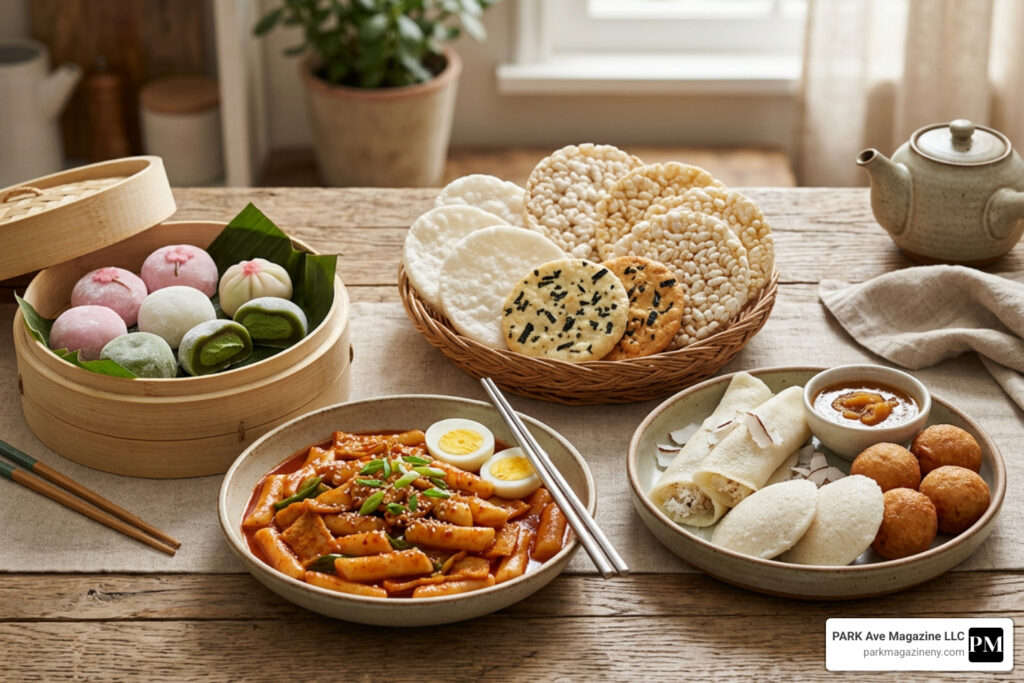
Beginner’s Guide to Rice Cakes
What Are Rice Cakes? A Quick Answer Before We Dive In
Rice cakes are foods made from rice that has been shaped, pressed, or processed into a single edible form. They range from the light, puffed discs you find in grocery store snack aisles to the chewy, hand-pounded Korean tteok served at New Year celebrations.
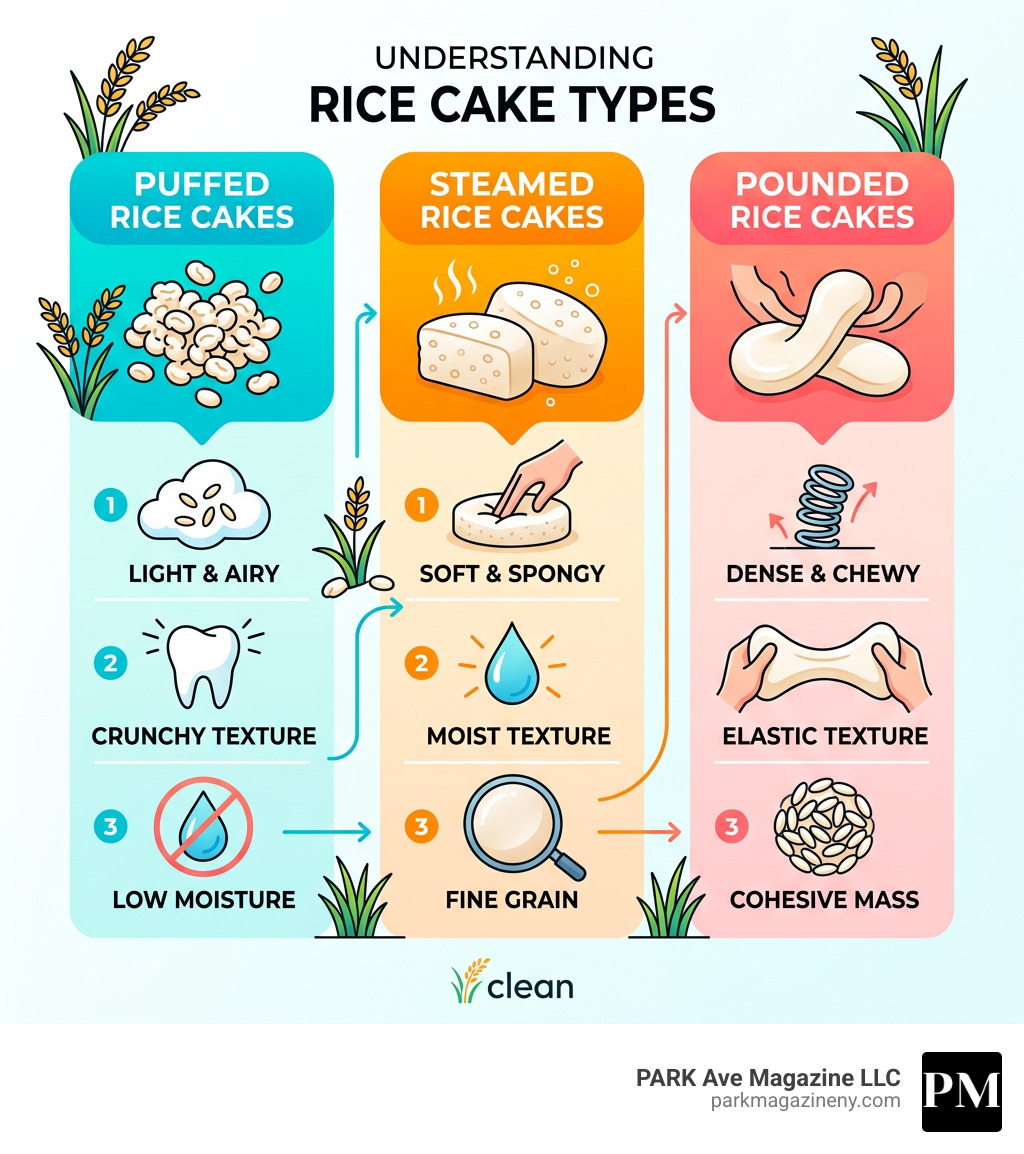
Here is a quick overview of the main types:
| Type | Description | Common Examples |
|---|---|---|
| Puffed | Rice kernels expanded under high heat and pressure | Quaker, Lundberg rice cakes |
| Steamed | Rice flour mixed with water and steamed | Korean Baekseolgi, Indian Idli |
| Pounded | Cooked rice beaten into a dense, chewy mass | Japanese Mochi, Korean Garaetteok |
| Boiled or fried | Rice formed and cooked in liquid or oil | Indonesian Lontong, Filipino Puto |
Whether you are looking for a low-calorie snack, a base for creative toppings, or an ingredient in a traditional dish, there is a rice cake for you.
Rice cakes have been a staple food across Asia for thousands of years. In Korea, steamed rice cake was once the primary everyday food before sticky rice became common. In the West, puffed rice cakes became popular during the low-fat diet trend of the 1980s and 1990s as a lighter substitute for bread or crackers.
Today, rice cakes sit at an interesting crossroads — ancient culinary tradition meets modern health-conscious snacking. That dual identity is exactly what makes them worth understanding fully.
Rice cakes further reading:
Defining Rice Cakes: From Puffed Snacks to Traditional Staples
When we talk about rice cakes, we are describing a massive category of food that spans continents and centuries. At its most basic, a rice cake is any food item made from rice that has been shaped, condensed, or otherwise combined into a single object. This can involve using whole grains, ground rice, or specialized rice flour.
The puffed rice cakes many of us recognize from the snack aisle are created through a fascinating process. Manufacturers heat rice kernels under high pressure with steam. When the pressure is suddenly released, the moisture inside the grain expands, “puffing” the rice into a light, airy structure that is then pressed into a circular or square mold.
Traditional varieties, however, rely on different binding agents and textures. Many Asian styles use glutinous rice (often called “sticky rice”) which, despite its name, is naturally gluten-free. The high starch content provides a natural stickiness that holds the cake together without the need for added glues or fats.
Commercial Puffed Varieties
In the modern Western pantry, rice cakes are often viewed as a low-calorie bread substitute. Brands like Quaker and Lundberg Family Farms have turned these simple discs into a canvas for a wide array of flavor profiles. You can find everything from salt-free and lightly salted versions to indulgent options like caramel chocolate chip or white cheddar.
According to the latest research on rice cake nutrition, these snacks are popular because they offer a satisfying crunch with very few calories—typically around 35 to 60 calories per cake. While they are low in fat and sugar (in their plain forms), they are also relatively low in fiber and protein, which is why we often recommend pairing them with nutrient-dense toppings.
Traditional Pounded and Steamed Forms
Moving away from the airy “pop” of commercial snacks, traditional rice cakes are often dense, chewy, and deeply satisfying. These are frequently made from wet-milled rice flour, which involves soaking the rice before grinding it to retain moisture.
- Steamed Forms: These are often light and spongy. In China and Korea, rice flour is mixed with water and steamed to create cakes that can be sweet or savory.
- Pounded Forms: This is where the famous elasticity comes in. By pounding cooked glutinous rice with heavy mallets (a process called mochitsuki in Japan), the starches break down into a stretchy, dough-like mass.
- Fermentation: Some traditional styles, like the Filipino puto, use fermented rice batter to achieve a unique tang and airy texture.
Global Varieties and Cultural Significance
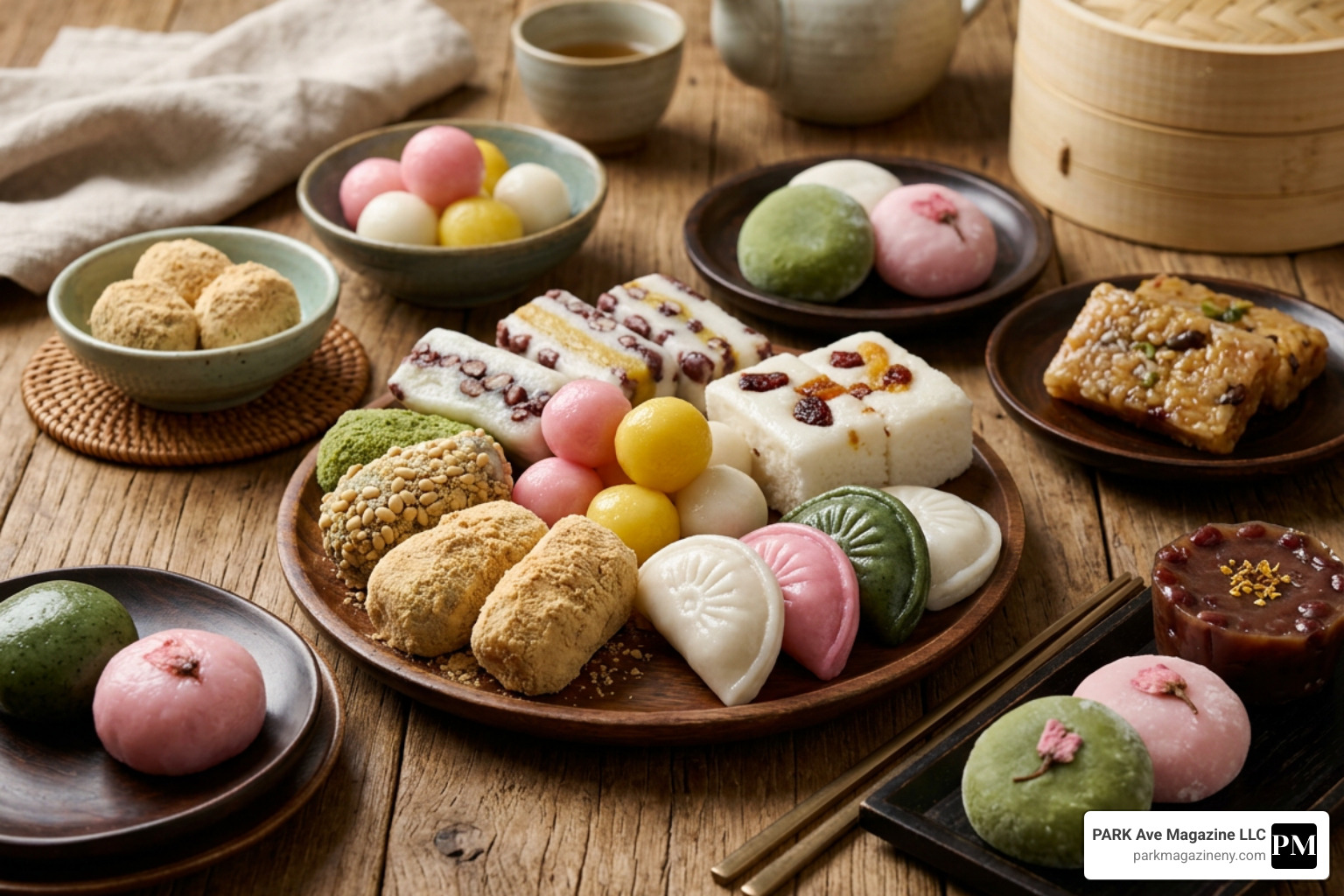
Rice cakes are far more than just food; they are symbols of longevity, prosperity, and community. From the Lunar New Year in East Asia to festive celebrations in the Philippines, these dishes mark the most important days on the calendar.
East Asian Traditions
In Korea, rice cakes are known as tteok. One of the most iconic forms is Garaetteok, a long, cylinder-shaped white rice cake. During the Korean New Year (Seollal), these are sliced into thin ovals to make Tteokguk, a traditional soup. Eating the white, long cakes symbolizes a clean start and a long life.
Another beautiful variation is Mujigae-tteok, or “rainbow rice cake,” which features colorful layers created using natural ingredients like mugwort or dried fruit powders. For those interested in the deep linguistic roots of these foods, you can explore the Dictionary of Korean rice cakes to see how many hundreds of varieties actually exist.
In Japan, Mochi and Dango are the stars. Whether they are filled with sweet red bean paste or grilled on a skewer with a savory soy glaze, they are essential to seasonal festivals and tea ceremonies.
Southeast Asian and Indian Varieties
The Philippines has a rich culture of kakanin (rice-based sweets). Bibingka is a famous charred rice cake topped with salted egg and cheese, traditionally eaten during the Christmas season. You can find many traditional Filipino rice cake recipes that highlight the use of coconut milk and banana leaves for steaming.
Another striking Filipino variety is Puto Bumbong, which is characteristically deep purple. Contrary to popular belief, this color doesn’t usually come from ube, but from a specific heirloom rice variety called pirurutong.
In Indonesia and Malaysia, rice is often compressed into cakes like Lontong or Ketupat (woven palm leaf pouches). These serve as a dense, neutral base for spicy curries and satays. Meanwhile, in South India, Idli—a fermented, steamed rice and lentil cake—is a staple breakfast served with sambar and chutney.
Even in Vietnam, Bánh tổ plays a major role in the New Year, representing the desire for a “higher” or more prosperous year ahead.
Nutritional Profile and Health Benefits of Rice Cakes
For the health-conscious urbanite in NYC, rice cakes are a frequent go-to. But are they actually “healthy”? The answer depends largely on which type you choose and how you eat them.
Generally, a single plain brown rice cake contains:
- Calories: 35
- Carbohydrates: 7-9g
- Protein: 1g
- Fiber: 0.5-1g
- Micronutrients: Small amounts of Manganese (about 15% DV), Niacin, and Selenium.
According to research on rice cake health, opting for brown rice over white rice is a smarter choice. Brown rice cakes retain the bran and germ layers, providing more antioxidants and minerals.
Dietary Considerations
One of the greatest strengths of rice cakes is their accessibility for various diets:
- Gluten-Free: Since they are made purely of rice, they are a safe haven for those with celiac disease or gluten sensitivities.
- Vegan: Most plain and many savory varieties are 100% plant-based.
- Low-Calorie: At 35 calories a pop, they are excellent for volume eating.
- Keto/Low-Carb: While rice is a carb, thin-popped varieties (like “Magic Pop”) are so light that they can sometimes fit into a flexible low-carb lifestyle as a bread replacement.
Managing Blood Sugar and Satiety
The main critique of rice cakes is their high Glycemic Index (GI). Because the rice is puffed or finely ground, the body digests the carbohydrates very quickly, which can lead to a spike in blood sugar.
To solve this, follow the dietitian’s guide to healthy snacking and always pair your rice cake with a protein or healthy fat. Adding avocado, almond butter, or smoked salmon slows down the absorption of sugar, keeping you full for much longer.
Culinary Guide: Making and Using Rice Cakes in Recipes
Whether you are working with store-bought puffed cakes or traditional chewy sticks, there are endless ways to bring rice cakes into your kitchen.
Savory and Sweet Ways to Use Rice Cakes
The most famous savory use for traditional rice cakes is Tteokbokki. This Korean street food involves simmering chewy rice cake sticks in a spicy, sweet sauce made from gochujang (red chili paste).
For the puffed Western variety, think of them as a “blank canvas.” Here are some of our favorite sophisticated pairings:
- The NYC Special: Smoked salmon, a thin layer of cream cheese, capers, and fresh dill.
- The Energy Booster: Almond butter, sliced bananas, and a drizzle of local honey.
- The Savory Crunch: Hummus, sliced cucumbers, and a sprinkle of “everything bagel” seasoning.
- The Mediterranean: Smashed avocado, cherry tomatoes, and a balsamic glaze.
How to Store and Preserve Rice Cakes
Proper storage is key to maintaining that perfect texture—whether it’s the crunch of a puffed cake or the chew of a fresh tteok.
- Puffed Rice Cakes: These are highly sensitive to moisture. Once opened, store them in an airtight container or a tightly sealed Ziploc bag. If they get soft, you can actually “revive” them by popping them in a toaster oven for 30-60 seconds to restore the crunch.
- Fresh Traditional Rice Cakes: Fresh tteok or mochi will harden quickly at room temperature. If you aren’t eating them the same day, we recommend freezing them immediately.
- Freezing and Thawing: To use frozen rice cakes, soak them in cold water for 15-30 minutes before cooking. This prevents them from cracking.
- Mold Prevention: Because fresh rice cakes have high moisture content, they can mold within 2-3 days if left on the counter. Always check for condensation in the package and move them to the freezer for long-term storage.
For those who want to try their hand at making them from scratch, you can follow this step-by-step Garaetteok guide which explains how to use a microwave or steamer to turn rice flour into chewy sticks in minutes.
Frequently Asked Questions about Rice Cakes
Are rice cakes actually healthy for weight loss?
Yes, they can be a very effective tool for weight loss because they allow you to eat a larger volume of food for very few calories. However, they aren’t “magic.” If you eat five chocolate-covered rice cakes, the calories add up. The secret is using one or two cakes as a vehicle for high-protein toppings that keep you satisfied.
Can you make rice cakes at home without special equipment?
Absolutely! You can make “10-minute rice cakes” using leftover cooked rice. Simply mix 1/2 cup of cooked rice with an egg and your favorite spices, then pan-fry the mixture in a little butter or oil until crispy on both sides. It’s a fantastic way to reduce food waste.
How do you prevent fresh rice cakes from getting hard?
The hardening of rice cakes is a process called starch retrogradation. To prevent this, keep them away from the refrigerator (which actually speeds up the hardening). Either keep them airtight at room temperature for 24 hours or freeze them. To soften hard rice cakes, steam them or simmer them in a sauce; the heat and moisture will return them to their original chewy state.
Conclusion
At PARK Ave Magazine LLC, we believe that urban living is defined by a curiosity for the world’s finest flavors. Rice cakes perfectly embody this—offering a simple, healthy snack for a busy day in New York while connecting us to thousands of years of global culinary history.
Whether you’re grabbing a pack of organic brown rice cakes for a quick office lunch or sitting down for a steaming bowl of tteokguk in Manhattan, you’re participating in a tradition of versatility and sophistication. For more insights into the best of city dining and high-end lifestyle, explore our latest dining services and reviews.