The Complete Guide to Al Pastor
The Complete Guide to Al Pastor
What Is Al Pastor? Mexico’s Most Iconic Street Taco Explained
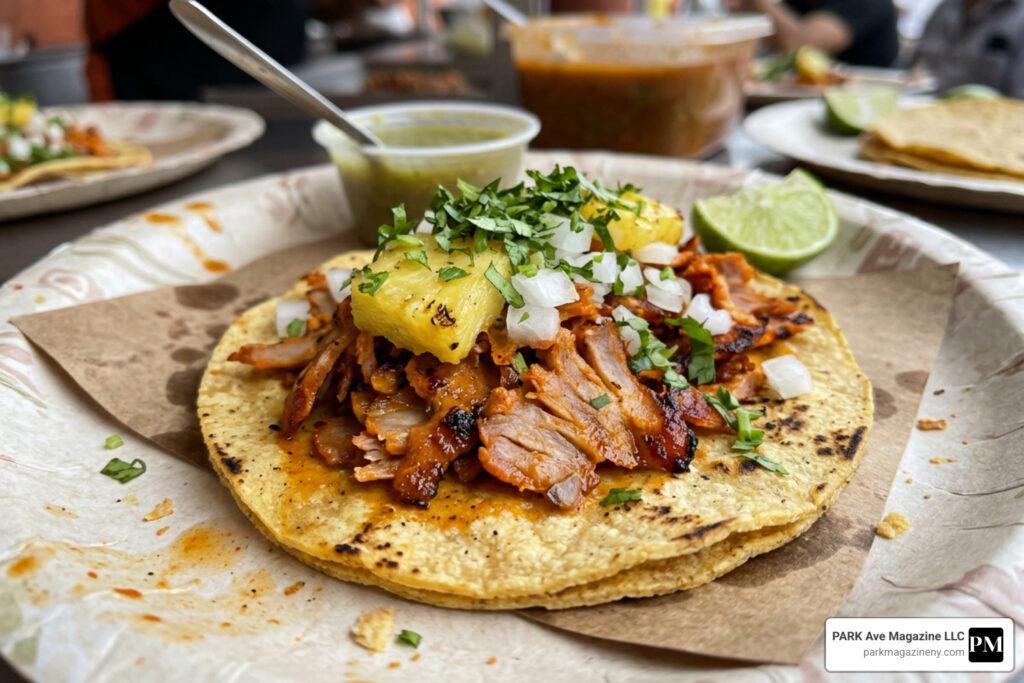
Al pastor is a Mexican dish of marinated pork, slow-cooked on a vertical spit called a trompo, then shaved into small corn tortillas and topped with pineapple, cilantro, and onion.
Here’s what you need to know at a glance:
| What it is | Spit-roasted marinated pork served in tacos |
| Where it’s from | Puebla and Mexico City, Central Mexico |
| Name meaning | “Shepherd style” or “herdsman style” in Spanish |
| Key flavors | Smoky, sweet, tangy, mildly spicy |
| Main ingredients | Pork shoulder, guajillo chilies, achiote paste, pineapple |
| Cooked on | A vertical rotisserie called a trompo |
| Classic toppings | Diced onion, cilantro, pineapple, lime, salsa |
Few dishes tell a richer story than al pastor. It’s the result of a remarkable culinary collision — Lebanese immigrants brought their shawarma tradition to Mexico in the late 19th and early 20th centuries, and local cooks transformed it into something entirely new. Lamb became pork. Pita gave way to corn tortillas. Shawarma spices merged with Mexican chilies, achiote, and pineapple.
The result? One of the most beloved street foods on the planet.
Tacos al pastor are considered an institution in Mexico, with every taquería putting its own spin on the marinade, the spice level, and the char. And increasingly, food lovers far beyond Mexico — including right here in New York City — are chasing that same experience.
This guide covers everything: the history, the marinade science, the cooking techniques, and how to recreate it at home without a vertical spit.
Al pastor terms made easy:
The History and Origin of Al Pastor
To understand al pastor, we must look back at the waves of migration that shaped modern Mexico. While many identify the dish as quintessentially Mexican, its DNA is undeniably Middle Eastern. In the late 19th and early 20th centuries, immigrants from the Ottoman Empire—specifically from what is now Lebanon—began arriving in the Mexican state of Puebla.
These immigrants brought with them the culinary tradition of shawarma, a method of roasting lamb on a vertical spit. In their new home, they adapted. Lamb was expensive and less common in the local diet, so it was eventually replaced by pork, which was plentiful and well-loved in Mexico. By the 1920s, the first restaurants serving this hybrid dish began to appear in Puebla, often run by the children of these Lebanese immigrants.
The name al pastor literally translates to “shepherd style” or “in the style of the shepherd.” This is a direct nod to the original lamb used in shawarma, as shepherds tend to sheep. Interestingly, the term “asado al pastor” existed in Mexican countryside traditions even before the Lebanese influence, referring to meat roasted over an open fire. However, the vertical rotisserie we associate with the dish today is a gift from the Middle East. You can learn more about this fascinating cultural exchange in the article Thank the Ottoman Empire for the taco al pastor.
The dish didn’t reach its peak popularity until it migrated from Puebla to Mexico City in the 1960s. It was there that the addition of pineapple became a standard practice, and the “trompo” (meaning “spinning top” because of its shape) became a fixture of the city’s nightlife. For a deeper dive into the roots of these flavors, check out The Lebanese Connection to Mexican Cuisine.
The Anatomy of an Authentic Marinade
The soul of al pastor lies in the marinade, often referred to as adobada. This vibrant, brick-red sauce is what gives the pork its signature smoky, earthy, and slightly sweet flavor. Achieving the perfect balance requires a specific set of traditional ingredients.
The base of the marinade is built on dried guajillo chilies. These chilies are prized for their deep red color and mild-to-medium heat, offering more fruitiness than fire. We typically toast these chilies briefly to wake up their oils before soaking them in hot water until they are soft and pliable.
Essential ingredients for an authentic marinade include:
- Achiote Paste: Made from annatto seeds, this provides the iconic orange-red hue and a subtle, earthy bitterness.
- Warm Spices: A blend of cumin, cloves, and sometimes cinnamon or allspice.
- Mexican Oregano: Stronger and more citrusy than its Mediterranean cousin.
- Garlic and Onion: The aromatic foundation.
- White Vinegar: This provides the necessary tang and helps tenderize the meat.
One of the most debated aspects of the marinade is the use of pineapple juice. While some purists argue that the pineapple should only be on top of the spit, many modern recipes incorporate juice directly into the blend.
Fresh vs. Canned Pineapple Juice
| Feature | Fresh Pineapple Juice | Canned Pineapple Juice |
|---|---|---|
| Enzyme Activity | High (contains Bromelain) | None (deactivated by heat) |
| Effect on Meat | Intense tenderization; can make meat mushy | Adds flavor without changing texture |
| Consistency | Varies by ripeness | Predictable and stable |
| Best Use | Short marinades (under 2 hours) | Long marinades (4 to 12 hours) |
For those looking to experiment at home, we recommend checking out this Al Pastor Marinade Recipe for a reliable starting point.
The Role of Pineapple in Al Pastor
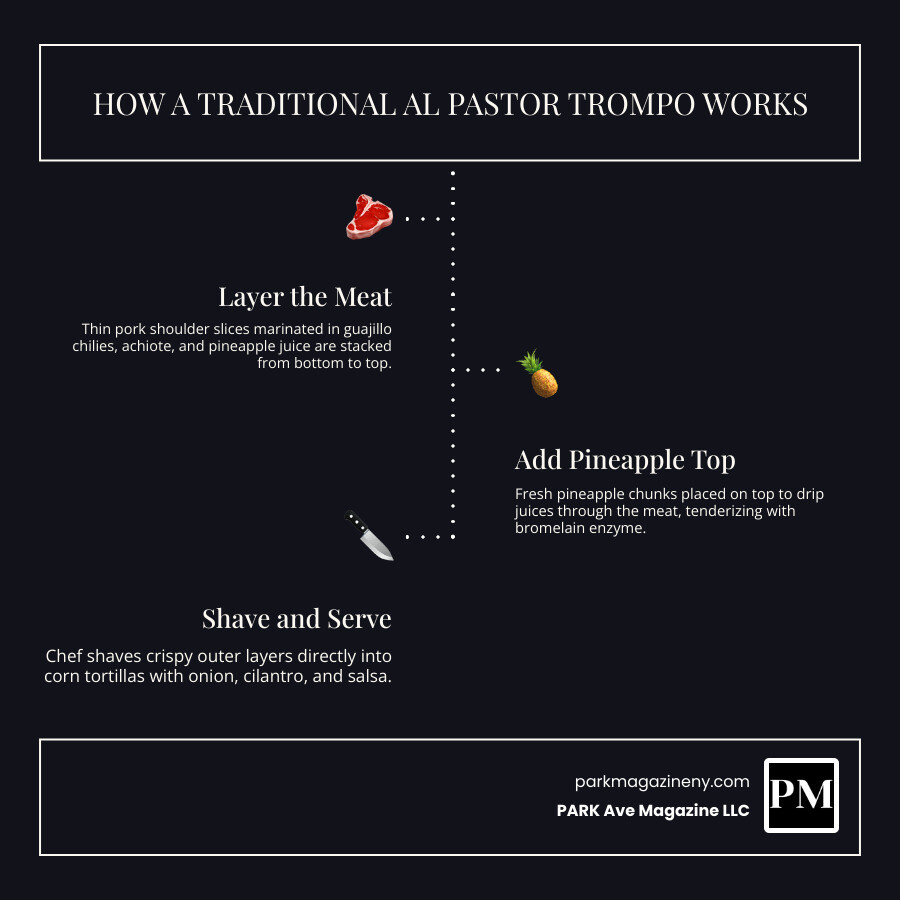
Pineapple is more than just a garnish; it’s a functional ingredient. Fresh pineapple contains an enzyme called bromelain, which breaks down protein. This is why al pastor is often so tender. However, there is a scientific catch: bromelain is deactivated by heat. When you see a whole pineapple sitting atop a trompo, the juices drip down the meat as it roasts. While this adds incredible flavor and aids in caramelization (thanks to the sugars), it doesn’t actually tenderize the meat deeply because the heat of the grill kills the enzyme before it can penetrate the pork.
To get the most out of the pineapple, we suggest using canned juice in the marinade if you plan on letting the meat sit overnight. This prevents the pork from turning into an unappealing “mush” while still providing that sweet-savory balance. When it’s time to serve, fresh, grilled pineapple is the only way to go.
From Trompo to Table: Cooking Techniques
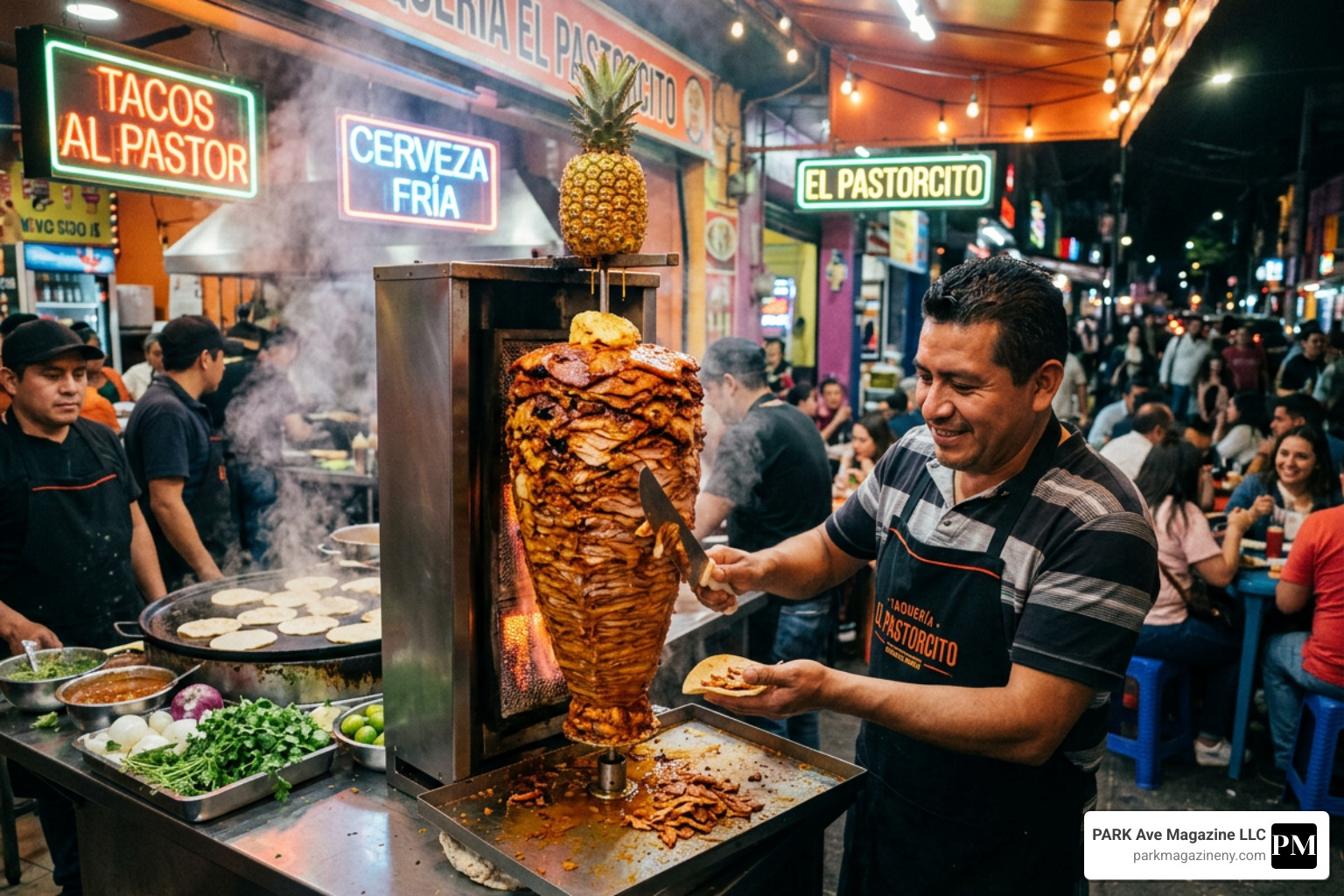
In a professional taquería, the magic happens on the trompo. The pork is sliced thin, marinated, and then stacked layer by layer onto a vertical rod. A skilled taquero (taco maker) shapes the meat into a large, top-like structure, often weighing over 50 pounds.
As the trompo rotates in front of a vertical gas flame or charcoal heat source, the outer layer of the meat develops a deep, crispy char while the interior remains succulent. The fat renders and bastes the meat as it spins. When an order comes in, the taquero uses a long, sharp knife to shave off thin ribbons of meat directly into a warm corn tortilla held in the other hand. In a flourish of showmanship, they often flick a slice of pineapple from the top of the spit, catching it mid-air in the taco.
Recreating Al Pastor at Home
While most of us don’t have a 50-pound vertical rotisserie in our Manhattan kitchens, we can still capture that magic. The key is to replicate the “slow cook followed by a quick sear” method.
The Loaf Pan Method One of the most effective home hacks is using a loaf pan. We recommend layering thin, marinated slices of pork shoulder (and maybe a few slices of bacon for extra fat) into a loaf pan, pressing them down firmly. Roast this “loaf” at a low temperature—around 275°F—for about 4 hours. Once cooked, let it chill. This allows the proteins to cross-link, making it easy to slice thin ribbons that look exactly like they were shaved off a trompo. Finally, sear those slices in a hot cast-iron skillet to get those crispy, charred edges.
The Mini-Trompo For those who want the visual experience, you can create a mini-trompo using a long metal skewer. Use a thick slice of pineapple as the base, stack your marinated meat, and top it with another pineapple chunk. This can be roasted upright in the oven or on a grill.
Essential Home Tools:
- Cast-Iron Skillet: For that final, crucial sear.
- Blender: To ensure the marinade is perfectly smooth.
- Meat Mallet: Pounding the pork shoulder thin ensures maximum surface area for the marinade.
- Sharp Carving Knife: To get those signature thin shavings.
Serving Styles and Regional Variations
While the classic taco is king, al pastor is a versatile protein that appears in several other beloved Mexican dishes.
- Tacos Árabes: The ancestor of the modern taco al pastor. These are typically served on pan árabe (a pita-like flour tortilla) and are often less spicy, focusing more on the flavor of the meat itself.
- Gringas: A crowd favorite! These consist of al pastor meat and melted cheese sandwiched between two flour tortillas and grilled until crispy.
- Alambres: A stir-fry style dish where the marinated pork is tossed with chopped peppers, onions, bacon, and topped with plenty of melted cheese, served with a stack of tortillas.
- Shawarma Mexici: Interestingly, the dish has come full circle. Some versions of al-pastor-style chicken have been exported back to the Middle East, where they are known as “Mexican Shawarma.”
In New York City, we are lucky to have access to some of the most authentic representations of these styles. Whether you are looking for a late-night street cart or a high-end sit-down experience, the city’s dining scene offers a wealth of options. For more on where to find the best bites in the city, Explore NYC’s finest culinary experiences.
Frequently Asked Questions about Al Pastor
What does the name al pastor mean?
As we’ve explored, it means “shepherd style.” It’s a tribute to the Lebanese immigrants who brought the vertical roasting technique to Mexico, originally using lamb.
What is the best cut of meat for al pastor?
Pork shoulder (also known as pork butt) is the gold standard. It has the perfect ratio of fat to lean meat, which ensures the tacos stay juicy even after being charred. Some home cooks like to add a few slices of bacon between the layers of shoulder to increase the richness.
Why is there always a pineapple on top of the meat?
Beyond the showmanship of the taquero flicking the fruit into the taco, the pineapple serves a functional purpose. The juices contain sugars that help the meat caramelize and develop a beautiful crust, and the acidity provides a bright contrast to the rich, spiced pork.
Conclusion
The story of al pastor is a testament to the beauty of cultural fusion. It is a dish that traveled across oceans, adapted to new ingredients, and eventually became a national treasure of Mexico. Whether you are enjoying a plate of tacos at a bustling corner in Queens or attempting the loaf-pan method in your own kitchen, you are participating in a rich culinary heritage that spans centuries.
At PARK Ave Magazine LLC, we believe that understanding the history behind our favorite foods makes the experience of eating them even more sophisticated. From the streets of Puebla to the heart of Manhattan, al pastor remains a symbol of culinary creativity and resilience.
To keep up with the latest in high-end urban living and gastronomy, Discover more about NYC dining and sophisticated living with us.