All About Korean Corn Dogs
All About Korean Corn Dogs
What Is a Korean Corn Dog — And Why Is Everyone Obsessed?
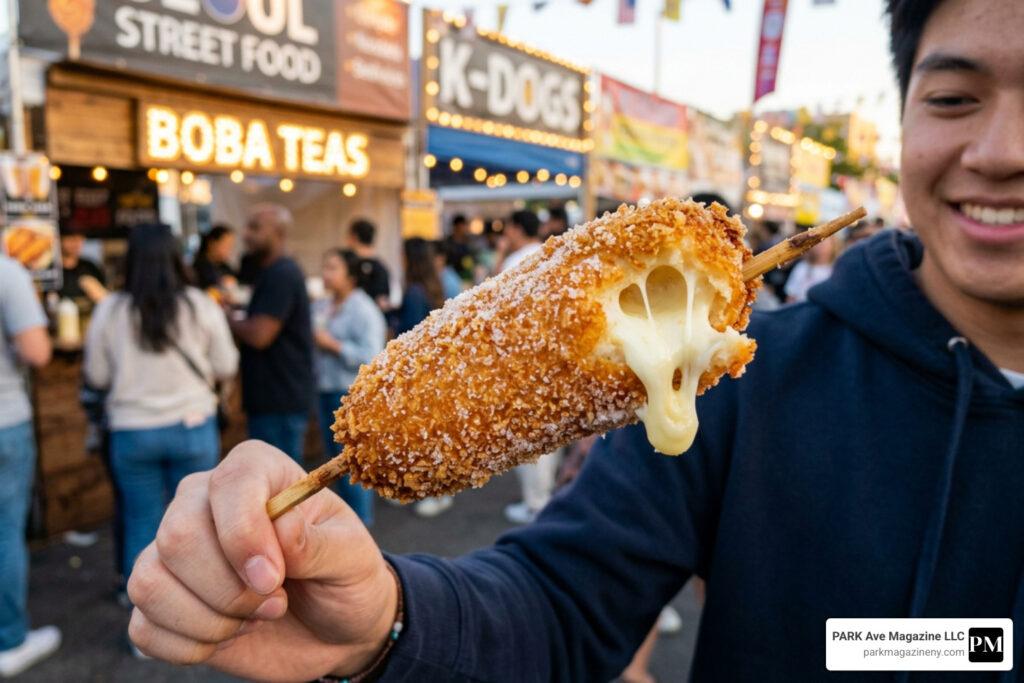
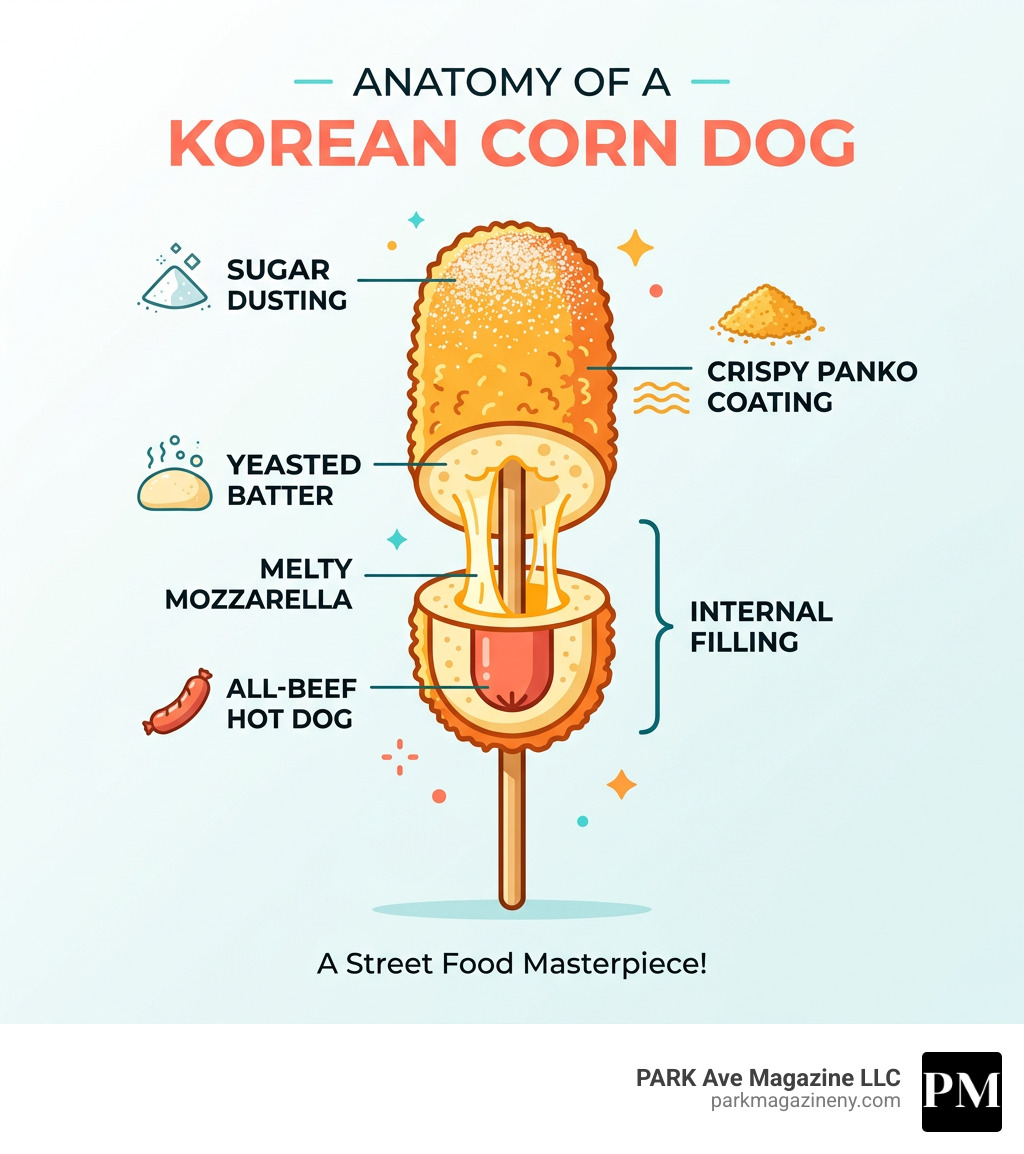
A korean corn dog is a skewered hot dog or cheese stick coated in a thick, yeasted dough, rolled in toppings like panko breadcrumbs or diced potatoes, deep-fried until golden, and finished with a dusting of sugar. Here’s a quick breakdown of what makes it special:
- Filling: Hot dog, mozzarella cheese, fish cake, or a combination
- Batter: Soft, fluffy yeasted dough (not cornmeal)
- Coating: Panko breadcrumbs, diced potatoes, ramen noodles, or crushed chips
- Toppings: Sugar, ketchup, mustard, or gochujang aioli
- Texture: Crispy outside, chewy inside, with a dramatic cheese pull
This is not the corn dog you find at a state fair. It’s richer, crunchier, and far more customizable.
Originally a staple of South Korean street food stalls since the 1980s, the Korean corn dog exploded onto the global food scene around 2021 — when TikTok videos of stretchy cheese pulls and golden, sugar-dusted sticks racked up millions of views. Franchises like Myungrang Hot Dog grew to over 650 stores in Korea within just three years of launching in 2016. In the US, new chains followed fast, bringing this Seoul street snack to cities across the country.
Whether you want to make one at home, find one near you, or just understand what all the fuss is about — this guide covers everything.
Simple guide to korean corn dog terms:
The Global Rise of the Korean Corn Dog

While it might feel like the korean corn dog appeared on our social media feeds overnight, its history is a fascinating blend of wartime influence and street-side innovation. Hot dogs first entered the Korean peninsula via American military rations during the Korean War. Over the decades, they were integrated into local cuisine, appearing in everything from ramyun to kimbap.
By the 1980s, the “hot dog” (as it is simply called in Korea, regardless of the bun) became a staple street food. However, the modern iteration we know today—heavy on the cheese and creative coatings—is a more recent phenomenon. The trend is largely credited to the brand Myungrang Hot Dog, which launched in 2016 near a market in Busan. Their success was meteoric, amassing 650 stores in Korea within just three years.
The jump to global stardom was fueled by digital culture. In 2021, the hashtag #koreancorndog hit peak usage on TikTok. Creators like @dee.045 posted taste test videos that went viral, showcasing the audible crunch of the panko coating and the infinite stretch of melted mozzarella. This “mukbang” (eating show) appeal made it the perfect snack for the Instagram era.
As we look toward 2025, the industry shows no signs of slowing down. Data from Seoul-based franchises indicates that customizable toppings remain the number one driver of sales. Today, in cities like New York and Richmond, we see lines around the block for these treats, proving that what started as a humble street snack has become a permanent fixture in the urban dining landscape.
Korean Corn Dog vs. American Corn Dog: Key Differences
To the uninitiated, a corn dog is a corn dog. But once you take a bite of the Korean version, the differences become stark. The most significant departure is in the batter. While the American classic uses a cornmeal-based batter that results in a soft, cake-like texture, the korean corn dog utilizes a yeasted dough, often enriched with glutinous rice flour for a chewy, “mochi-like” interior.
| Feature | American Corn Dog | Korean Corn Dog |
|---|---|---|
| Batter Base | Cornmeal, eggs, milk | Wheat flour, yeast, glutinous rice flour |
| Outer Texture | Smooth and soft | Extra crunchy (Panko or potatoes) |
| Filling | Primarily beef or pork sausage | Sausage, mozzarella, rice cakes, or fish cakes |
| Primary Seasoning | Salt | Sugar (dusted after frying) |
| Condiments | Ketchup and mustard | Sugar, spicy mayo, gochujang aioli, honey mustard |
The finishing touch is perhaps the most surprising: a generous coating of granulated sugar. This creates a sweet-savory balance that is hallmarks of Korean snack culture. While an American corn dog is savory through and through, the Korean version plays with contrast—salty sausage, tangy mustard, and sweet sugar all hitting the palate at once.
Popular Fillings and Creative Variations
One of the reasons we love the korean corn dog so much is its versatility. It is rarely just a hot dog on a stick. In fact, many people prefer versions that contain no meat at all.
- The Mozzarella Dog: This is the star of social media. It features a solid block of low-moisture mozzarella that melts into a dramatic “cheese pull.”
- The Half-and-Half: For those who want it all, this version features a piece of cheese on the top half of the skewer and a sausage on the bottom.
- The Gamja-Hotdog (Potato Dog): The batter is studded with cubes of par-boiled potatoes (essentially french fries) before being fried. It’s a full meal on a stick.
- The Ramen Coating: Instead of panko, the dog is rolled in crushed, dry ramen noodles, providing an aggressive, satisfying crunch.
- Modern Twists: We’ve seen variations using Hot Cheetos powder for a spicy kick, or even cereal like corn flakes for a unique texture.
For an authentic experience, look for fillings like fish cakes or chewy rice cakes (tteok), which provide a traditional Korean texture that pairs beautifully with the crispy exterior.
How to Make an Authentic Korean Corn Dog at Home
Recreating that Korean Street Cheese Corn Dog experience in your own kitchen is entirely possible, though it requires a bit of patience for the dough to rise.
Step-by-Step Guide
- The Batter: Mix warm water, instant yeast, and sugar. Once foamy, fold in all-purpose flour, glutinous rice flour, and a pinch of salt. Let this proof in a warm spot for about an hour until it doubles in size.
- The Prep: Pat your hot dogs dry. If using cheese, cut low-moisture mozzarella into thick blocks. Thread them onto thick wooden skewers. Pro tip: Dust the skewers in a light coating of flour and freeze them for 10 minutes before battering to help the dough stick.
- The Coating: Dip the cold skewer into the thick batter, rotating to ensure full coverage. Immediately roll it in panko breadcrumbs or diced potatoes.
- The Fry: Heat neutral oil (like vegetable or canola) to 350°F (175°C). Fry for 3–5 minutes, twirling constantly to ensure even browning.
- The Finish: While hot, roll the dog in granulated sugar.
Tips for Success
- Oil Temperature: Use a thermometer. If the oil is too cold, the batter will absorb grease; if it’s too hot, the outside will burn before the cheese melts.
- The “Twirl”: When you first drop the dog into the oil, keep it moving. This prevents a flat side from forming.
- Air Fryer Adaptation: While deep-frying is traditional, you can use an air fryer for pre-made frozen versions. Set it to 375°F for 8–10 minutes for a healthier alternative that still packs a crunch.
Serving, Storage, and Nutritional Facts
In the New York dining scene, presentation is everything. Traditionally, these are served with a zigzag of ketchup and American mustard. However, we recommend experimenting with a sweet gochujang aioli or honey mustard for a more complex flavor profile.
Nutritional Breakdown
While they are an absolute delight, it’s helpful to know what’s inside. On average, a homemade korean corn dog contains:
- Calories: 384 kcal
- Total Fat: 21g (8g saturated)
- Carbohydrates: 34g (3g sugars)
- Protein: 16g
Storage and Reheating
If you have leftovers, they can be stored in an airtight container in the refrigerator for 3–4 days or frozen for up to 2 months. To maintain that signature crunch, avoid the microwave. Instead, reheat them in an oven at 350°F or an air fryer for 5 minutes. This ensures the exterior stays crispy while the cheese regains its elasticity.
Frequently Asked Questions about Street Food
Why is sugar put on a korean corn dog?
The sugar provides a vital flavor contrast. Korean cuisine often balances salty, savory, and sweet elements in a single dish. The sugar cuts through the richness of the deep-fried batter and the saltiness of the sausage or cheese, creating a more dynamic eating experience.
Can you make a korean corn dog without deep frying?
Yes, though the texture will differ slightly. You can use an air fryer or even bake them in a high-heat oven. For the best results without a deep fryer, lightly spray the panko coating with oil before cooking to help it achieve a golden-brown color and crispy texture.
What is the best cheese for a perfect cheese pull?
Low-moisture, part-skim mozzarella is the gold standard. It has the perfect melting point and elasticity. Avoid fresh mozzarella (the kind stored in water), as the moisture content will cause the batter to steam and slip off the skewer during frying.
Conclusion
At PARK Ave Magazine LLC, we celebrate the intersection of urban living and culinary sophistication. The korean corn dog is a perfect example of how a simple street snack can capture the imagination of a city and become a global phenomenon. Whether you’re enjoying one at a local spot in Manhattan or Richmond, or trying your hand at a yeasted batter in your own kitchen, it represents the vibrant, ever-evolving nature of modern food culture.
Hungry for more? Explore more NYC dining guides to discover the best the city has to offer.