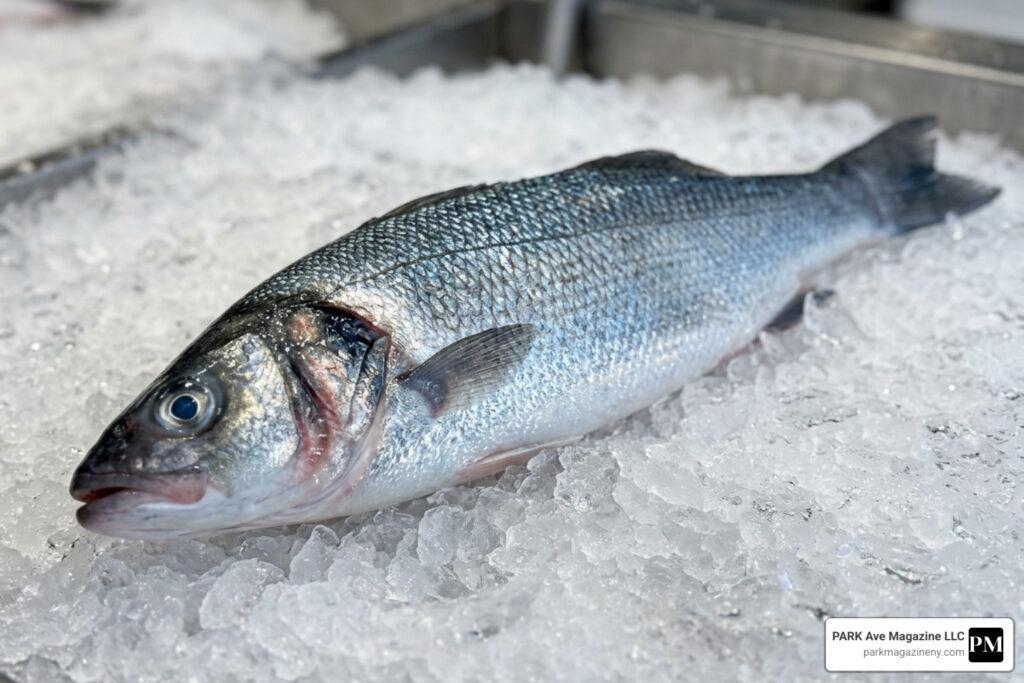
Branzino 101
Branzino 101
The Mediterranean Fish That’s Taking Over Fine Dining Tables
Branzino is a mild, flaky white fish — also called European sea bass — native to the Mediterranean Sea and prized in Italian and Greek cuisine for its delicate, slightly sweet flavor.
Quick facts about branzino:
- What it is: European sea bass (Dicentrarchus labrax), sold whole or as fillets
- Taste: Mild, clean, subtly sweet — never “fishy”
- Most popular preparation: Whole-roasted with olive oil, lemon, and fresh herbs
- Other names: Loup de mer (French), lavraki (Greek), Mediterranean sea bass
- Best substitutes: Red snapper, rainbow trout, or black sea bass
- Nutrition: ~97 calories per 100g, high in protein, omega-3s, and vitamin D
- Where to buy: Specialty fish markets, Whole Foods, or any fishmonger with a fresh fish counter
If you’ve spotted branzino on a menu at a fine NYC restaurant and wondered what makes it so special — you’re not alone. This elegant fish has quietly become a staple of upscale Mediterranean dining, yet it’s surprisingly simple to prepare at home.
Whether you’re ordering it tableside at a high-end Italian spot or sourcing a whole fish from your local market on a Saturday morning, branzino rewards you with restaurant-quality results without restaurant-level effort.
This guide covers everything: what it is, how it tastes, how to pick the freshest one, how to cook it perfectly, and why it deserves a regular place in your kitchen.
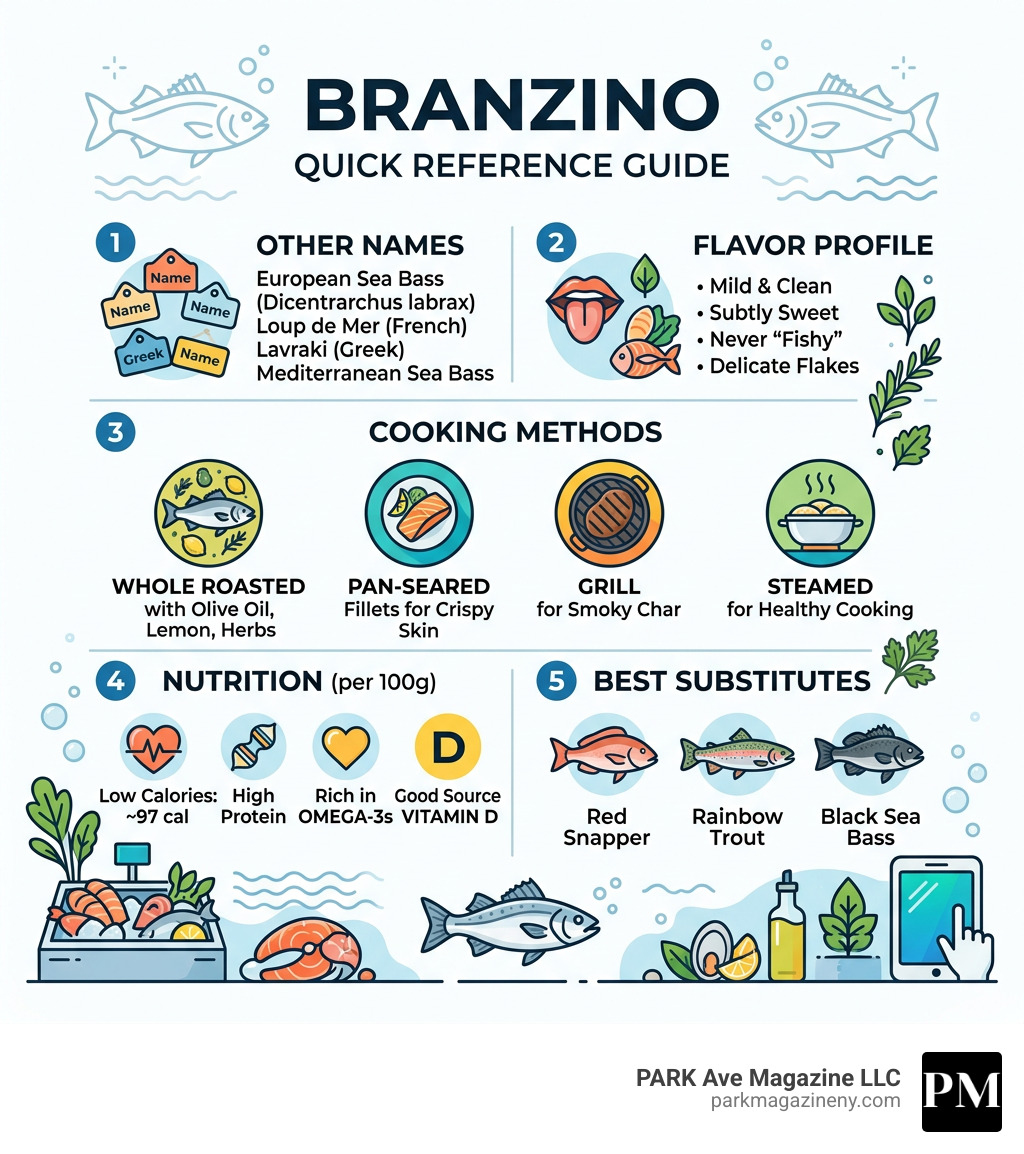
Easy branzino glossary:
What is Branzino? Origins and Global Sourcing
To understand the allure of branzino, we have to look toward the sun-drenched coasts of the Mediterranean. Known scientifically as Dicentrarchus labrax, this species is a member of the Moronidae family. While we in New York most commonly use the Italian name, you might find it labeled as “Loup de Mer” in a French bistro or “Lavraki” at a Greek taverna.
Historically, this silver-skinned beauty was a prized catch in the wild, with annual catches fluctuating between 8,500 and 11,900 tonnes during the early 2000s. However, its massive popularity led to a revolution in aquaculture. Today, Turkey stands as the world’s largest producer of European seabass, helping to meet the global demand that exceeded 120,000 tonnes of farmed production as early as 2010.
For a deeper dive into its biology, you can explore the Scientific overview of European seabass. Physically, an adult can reach up to 1 meter in length and weigh as much as 12 kg, though the “plate-sized” versions we see in Manhattan markets are typically around 1 to 1.5 pounds.
| Feature | Wild-Caught Branzino | Farmed Branzino |
|---|---|---|
| Availability | Seasonal and limited | Year-round |
| Price | Premium/High | Moderate/Accessible |
| Flavor | Deeply briny, diet-dependent | Consistently mild, subtly sweet |
| Size | Can be very large | Standardized “plate size” (1-2 lbs) |
| Sustainability | Varies by region/overfishing concerns | High (if using RAS systems) |
Sustainable Sourcing and RAS Systems
As a publication focused on sophisticated urban living, we know our readers value sustainability as much as flavor. Most branzino found in the U.S. is imported from Mediterranean net-pens, but there is a rising star in the industry: Indoor Recirculating Aquaculture Systems (RAS).
Companies like Ideal Fish, based right here in the Tri-State area (Connecticut), are changing the game by raising these fish in controlled, indoor environments. This method eliminates the risk of escapes or sea lice often associated with ocean pens. According to Monterey Bay Seafood Watch recommendations, fish raised in these indoor RAS systems are often rated as a “Best Choice” or “Good Alternative,” making them the most eco-conscious way to enjoy your seafood dinner.
The Flavor Profile: Why Chefs Love Branzino
Why has branzino become the darling of NYC’s culinary elite? It all comes down to its approachability. Unlike oily fish like mackerel or salmon, branzino offers a clean, non-fishy aroma that appeals even to those who claim they don’t like seafood.
The meat is lean, white, and remarkably flaky. When cooked properly, it possesses a delicate sweetness that doesn’t overwhelm the palate. This “blank canvas” quality allows chefs to experiment with bold Mediterranean aromatics like fennel, lemon, and high-quality olive oil without losing the essence of the fish itself.
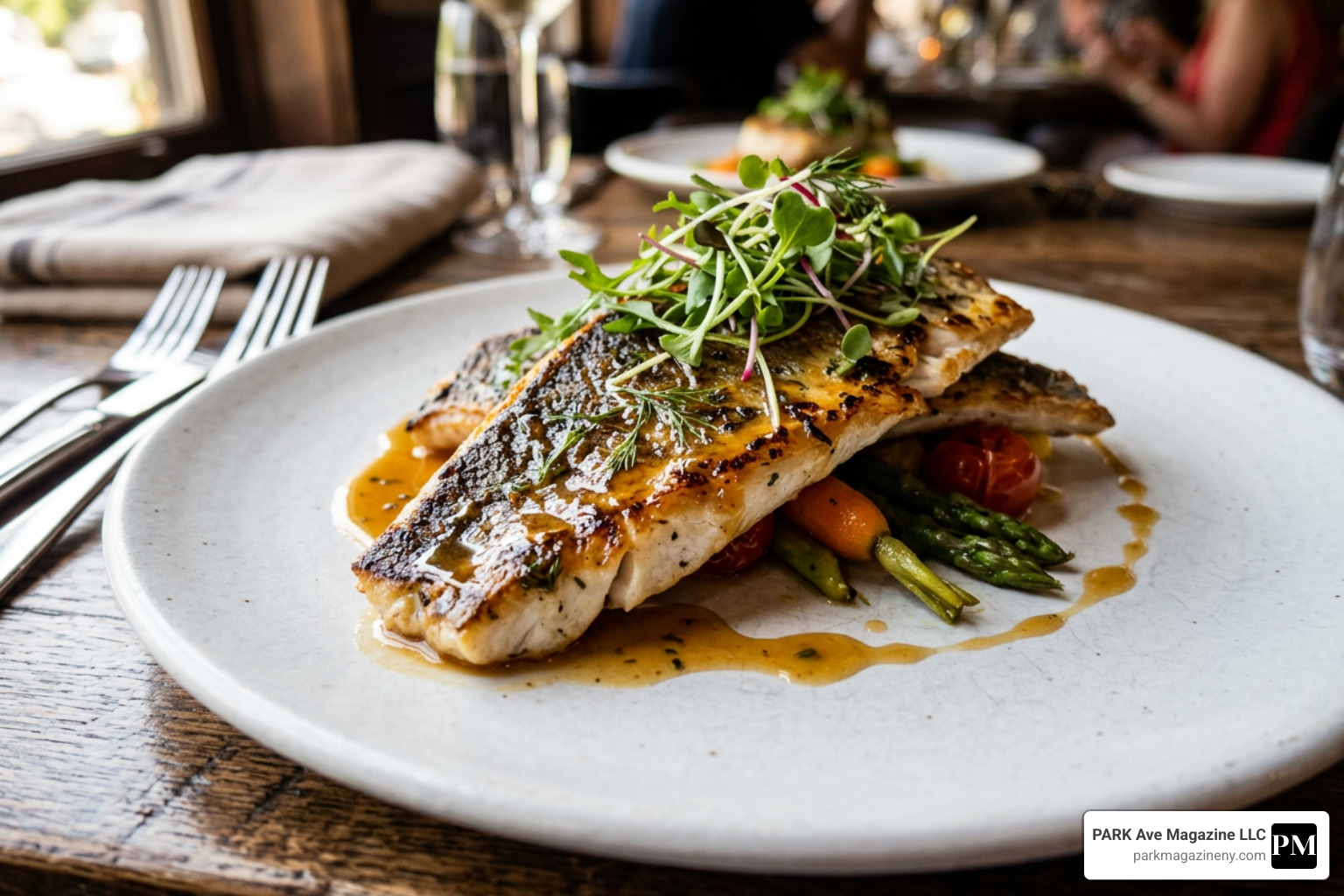
Branzino vs. Other White Fish
When navigating a menu or a fish counter, it’s helpful to know how branzino stacks up against its peers:
- Chilean Sea Bass: Despite the shared name, these are entirely different. Chilean sea bass (Patagonian toothfish) is much fattier, oilier, and has a “buttery” melt-in-your-mouth texture. Branzino is leaner and more delicate.
- Red Snapper: Snapper is slightly firmer and has a larger flake. While they can be substituted for one another, branzino is generally considered more tender.
- Atlantic Cod: Cod is much thicker and has a more neutral, watery flavor compared to the subtle sweetness of branzino.
Safety is also a factor. According to the FDA’s data on mercury levels in commercial seafood, branzino is categorized as a “Best Choice.” Because it is a smaller fish and often harvested young, it doesn’t accumulate the high levels of methyl-mercury found in long-lived predators like swordfish or shark.
How to Select and Store Fresh Fish
In a city like New York, we are lucky to have access to some of the finest fishmongers in the world. But how do you ensure the fish you’re bringing home is top-tier? Whether you’re at a high-end market in the Upper East Side or a local shop in Richmond, use your senses:
- The Eyes: They should be clear, bright, and bulging. If the eyes are cloudy or sunken, the fish is past its prime.
- The Gills: Ask the fishmonger to show you the gills. They should be a vibrant, healthy pink or reddish color, not brown or grey.
- The Scent: Fresh branzino should smell like a clean ocean breeze. If it smells “fishy” or like ammonia, walk away.
- The Scales: They should be metallic and shiny, adhering tightly to the skin.
Once you’ve made your selection, storage is key. We recommend cooking your fish the same day you buy it. If you must wait, pat it dry, wrap it tightly in parchment paper or plastic wrap, and store it in the coldest part of your refrigerator for no more than two days.
Master the Art of Cooking Branzino
The secret to branzino is simplicity. Because the fish is so naturally flavorful, you don’t need heavy sauces or complex techniques. The most common way to serve it in Mediterranean culture is whole. Cooking the fish on the bone helps retain moisture and imparts a deeper flavor to the flesh.
- Whole Roasting: This is the “gold standard.” Roasting at high heat (around 425°F) for 20-25 minutes yields a crispy skin and succulent interior.
- Grilling: Perfect for a summer evening. Using a fish basket can help prevent the delicate skin from sticking to the grates.
- Pan-Searing: Ideal for fillets. Start skin-side down in a hot pan with olive oil to achieve that coveted “shatter-crisp” texture.
The most important rule? Do not overcook. Use a meat thermometer to check the thickest part of the fish; you are looking for an internal temperature of 145°F. Once the flesh is opaque and flakes easily with a fork, it’s ready to serve.
Simple Step-by-Step Branzino Recipes
If you’re ready to try your hand at a Mediterranean masterpiece, follow this simple roasting method:
- Prep: Preheat your oven to 425°F. Have your fishmonger scale and gut the fish for you (trust us, it saves a lot of mess).
- Season: Pat the fish completely dry. Cut three diagonal slits into the skin on both sides. This helps the heat penetrate and prevents the skin from curling.
- Stuff: Fill the cavity with thin slices of lemon, smashed garlic cloves, and sprigs of fresh thyme or oregano.
- Oil: Rub the exterior generously with extra virgin olive oil and season with sea salt and cracked black pepper.
- Roast: Place on a parchment-lined baking sheet. Roast for about 20 minutes. For a professional touch, finish under the broiler for 2-3 minutes to blister the skin.
- The Sauce: While the fish rests, whisk together lemon juice, olive oil, and dried oregano (the classic Greek ladolemono). Pour it over the fish just before serving.
For those who want to emulate the masters, we highly recommend looking into Lidia Bastianich’s whole roasted fish techniques. Her “Felidia” method—which often involves roasting with potatoes and olives—has been a staple of New York fine dining for decades.
Nutritional Value and Health Benefits
Eating branzino isn’t just a culinary delight; it’s a boon for your health. As a lean protein source, it fits perfectly into the heart-healthy Mediterranean diet.
A 100g serving contains approximately 97 calories and 18.4g of protein. But the real stars are the micronutrients. Branzino is rich in:
- Omega-3 Fatty Acids: Essential for brain health and reducing inflammation.
- Vitamin D: Vital for bone health and immune function. Wild-caught varieties can provide over 50% of your RDA in a single serving.
- Selenium: A powerful antioxidant that supports thyroid health.
According to research on seafood and cardiovascular function, the fatty acids found in fish like branzino play a crucial role in decreasing blood pressure and heart rate. Furthermore, clinical trials on Omega-3 and heart health have shown that regular consumption can significantly decrease the risk of arrhythmias and recurring heart attacks.
Frequently Asked Questions about Mediterranean Bass
What are the best substitutes for branzino?
If your local market is out of branzino, don’t panic. Red snapper is the closest match in terms of flavor and presentation. Rainbow trout is another excellent choice, offering a similar size and delicate flake. For a more local New York option, black sea bass provides a comparable sweetness, though the texture is slightly firmer.
Is the skin of the fish edible?
Absolutely! In fact, the skin is where much of the healthy omega-3 content resides. When grilled or roasted at high heat, the skin becomes delightfully crispy and savory. Just ensure the fish has been properly descaled before cooking, as nobody likes a stray scale in their dinner.
How do you store leftovers?
If you find yourself with extra fish, flake the meat off the bones and store it in an airtight container in the fridge. It will stay fresh for up to three days. Cold branzino is excellent when tossed into a Mediterranean salad or folded into a light pasta with lemon and capers. We don’t recommend microwaving it, as it can become rubbery; instead, let it come to room temperature or gently warm it in a pan with a splash of water.
Conclusion
From the rocky coasts of the Mediterranean to the white tablecloths of Manhattan, branzino has earned its reputation as a premier seafood choice. It embodies the essence of sophisticated dining: high-quality ingredients, simple preparation, and incredible health benefits.
Whether you are hosting a dinner party in your New York apartment or enjoying a quiet meal in Richmond, cooking a whole branzino is a sure way to bring a touch of European elegance to your table. It’s more than just a meal; it’s a lifestyle choice that celebrates freshness and flavor.
Ready to explore more of the city’s culinary secrets? Discover more elite NYC dining guides and stay tuned to PARK Ave Magazine LLC for the latest in urban living, health, and high-end lifestyle.