Why Fashion Trends Always Come Back
Fashion is an industry that rarely develops in a linear fashion. A fashion trend that may have been old news in the past may suddenly emerge as a major trend in the future. This phenomenon is a major aspect of the fashion world. Fashion styles rarely ever go away. Instead, they seem to emerge in cycles. A style may be old news for a while before emerging as a major fashion trend in the future.
The Rhythm of Fashion Cycles
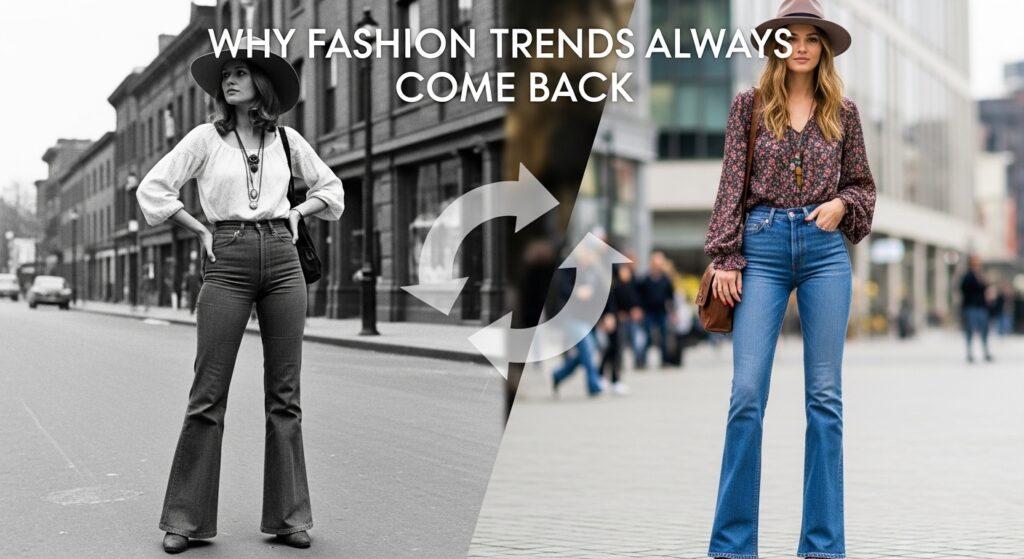
Fashion trends rarely emerge in a linear fashion. Instead, they tend to emerge in cycles. A fashion trend may be major news for a while before gradually dying off and then emerging as a major trend in the future when people start looking for alternatives.
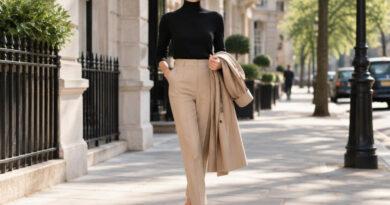
Wide leg trousers are a good example of this phenomenon. Wide leg trousers were a major feature in the fashion world in the 1990s before gradually dying off as skinny jeans became a major feature in people’s wardrobes in the following years. However, in recent years, wide-leg trousers have emerged as a major feature in the fashion world. Young people have adopted the style as the latest in fashion, while others have adopted it as a style reminiscent of the good old days.
Oversized tailoring is another good example of this phenomenon. Oversized tailoring was a major feature in the fashion world in the late twentieth century, before gradually dying off as people adopted skinny styles. However, in recent years, oversized tailoring has emerged as a major feature in the fashion world.
These cycles are not coincidental. Fashion is revisiting these ideas because these styles have persisted in visual culture. Old photographs, vintage clothing archives, and past runway shows all continue to impact how designers and stylists think about the future of clothing.
Culture Drives What We Wear
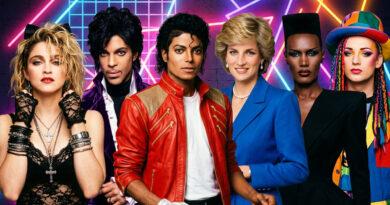
Fashion is closely related to music, film, and entertainment. A look worn by a musician while on stage, or by an actor while appearing in a popular television show, can quickly impact how people dress.
Pop culture is always one of the main influences on what the future of fashion will look like. What celebrities, influencers, and cultural icons wear is often what the masses start wearing shortly thereafter. There are many different fashion trends that have come about because of music, film, and social media, all of which have to do with the culture that these trends were created within. Fashion media such as WorldFashionNews sometimes discusses how these influences, which come from pop culture, make their way from entertainment into the real world, something that could be discussed further here.
Recently, however, this process between music, film, and fashion has happened even more quickly. A unique look worn by a musician, actor, or influencer can quickly lead to thousands of versions of that look appearing all over the internet.
When Social Media Revives the Past
One of the most intriguing aspects of fashion is how social media is helping to revive past trends. Social media is where many people discover older styles of clothing and revive them.
One such instance is the renewed interest in early 2010s fashion. Online communities have been sharing throwback photos featuring outfits that were once considered representative of mid 2010s fashion. While these posts were originally intended to promote nostalgia, they eventually came to serve as inspiration for modern styles.
Many individuals have chosen to recreate what is now considered “2016 looks.” The styling combinations that were considered representative of street styles back then have now resurfaced in modern styles. Denim jackets, casual outfits, and playful uses of high street clothing, along with statement pieces, have resurfaced in modern styles.
The internet is one of the primary factors that contribute to these revivals. When thousands of internet users start sharing throwback photos or recreating older styles, the idea quickly spreads throughout internet communities. Designers and brands often take note of these revivals, even using them as inspiration for upcoming collections.
The Rise of Playful Dressing
Another form of fashion that shows how styles have a tendency to come back is the increase in popularity of “dopamine dressing,” which is a form of styling that incorporates clothing with a focus on colors, patterns, and styles that promote a sense of energy. Recently, street styles during Copenhagen Fashion Week have highlighted this form of styling. Many individuals have chosen to incorporate colors, patterns, and styles that stand out, even if they are unconventional. These styles draw inspiration from older decades, where such styles were prominent.
Scandinavian styles have played a significant role in popularizing this form of styling. Street styles often feature outfits that draw inspiration from older styles, even using vintage pieces alongside modern clothing items.
This renewed enthusiasm for colorful style shows how fashion ideas come back into style based on a shift in cultural values.
Why Designers Keep Looking Back
For fashion designers, the past represents a tremendous source of ideas. Old clothing items, historical photographs, and museum collections offer a wide scope for designers to interpret and use in a different manner.
The revival of 1970s fashion is a good example of this trend. Flared trousers, suede jackets, and earth tones have come back in fashion after decades. However, designers have not simply mimicked this style from the past. Instead, they have incorporated this style with current fashion trends.
The minimalist style that dominated fashion in the 1990s has come back in fashion repeatedly in recent fashion shows. Simple shapes and color schemes continue to be a significant element in current fashion trends because they represent a visually appealing style.
However, designers have incorporated this style with current trends in a different manner.
The Influence of Generations
Generational influences have a significant impact on bringing back fashion trends from the past. When a younger generation grows up and becomes exposed to older fashion trends, they may not be aware of the cultural values that were prevalent in earlier times.
If a person comes across a picture from a previous decade, he or she may find that older clothing items look more appealing and not older. A style that may have been ordinary in earlier times may look more appealing in later times simply because it contrasts with current fashion trends.
Vintage clothing markets also play a role in this process. When people browse through old clothing, they often combine items from different eras. This leads to unexpected outfits that combine elements of the past with those of the present.
Eventually, this impacts the larger fashion culture as well. When people share pictures of these outfits online, they inspire others to adopt similar styles.
Fashion Is Always Reinventing Itself
While old styles are making a comeback in the fashion world, this does not mean that the fashion world is lacking in creativity. This is simply a reflection of the fact that fashion is an ever evolving field. New ideas based on old concepts are emerging in this field.
For instance, a silhouette may have been in fashion decades ago. However, it may be making a comeback in a slightly different shape. Similarly, a color palette may have been in fashion in the past. However, this time around, it may be combined with newer fabrics.
In this way, fashion is constantly combining elements of the past with those of the present. This is not to say that old styles are making a comeback in exactly the same way as they were in the past. Rather, they are making a comeback in a slightly different form as newer ideas based on concepts that have already been proven to capture people’s imagination.