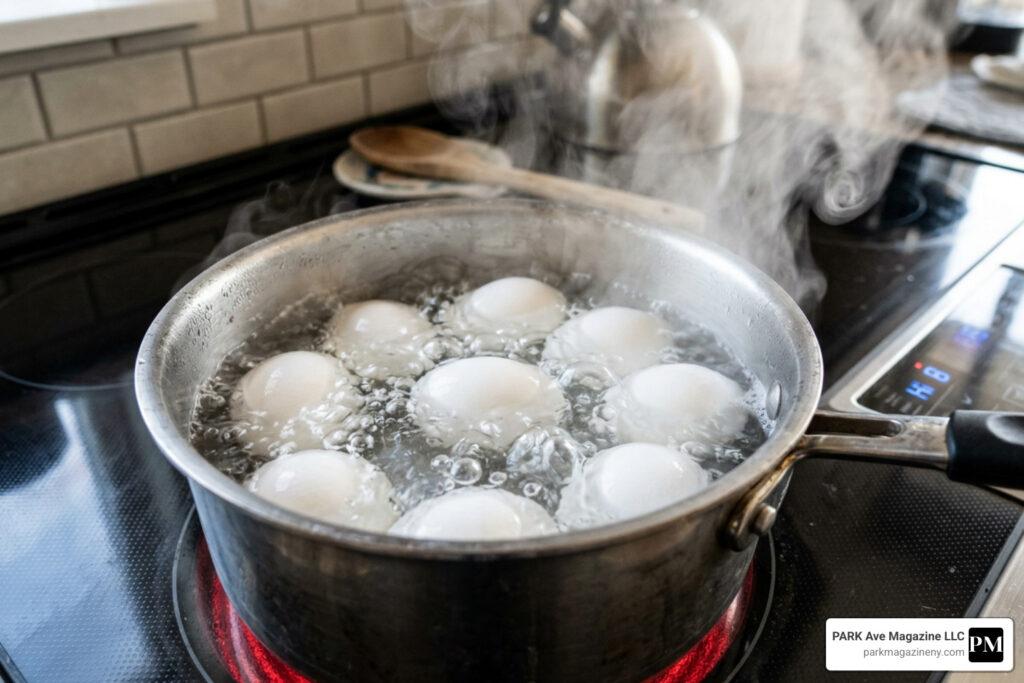
The Easiest Way to Boil Eggs Perfectly
The Simplest Answer to How Long to Boil Eggs
Knowing how long to boil eggs can make the difference between a perfect jammy yolk and a rubbery, overcooked disappointment. Here’s a quick reference:
| Doneness | Time in Boiling Water | Yolk Texture |
|---|---|---|
| Soft-boiled (dippy) | 3 minutes | Fully runny |
| Runny yolk | 6 minutes | Liquid center |
| Soft-boiled | 8 minutes | Jammy, slightly soft |
| Hard-boiled | 10-12 minutes | Fully set |
Note: Times above are for large eggs (50-55g) started in already-boiling water, straight from the fridge.
These are the numbers that work consistently. But there’s a catch — egg size, starting temperature, altitude, and cooking method all affect the result.
Getting eggs right every time isn’t just about timing. It’s about understanding a few simple rules. Whether you’re slicing a jammy egg over avocado toast or prepping a dozen for the week, the difference between perfect and overcooked is sometimes just 60 seconds.
The good news? Once you know the method, it’s remarkably easy to repeat.
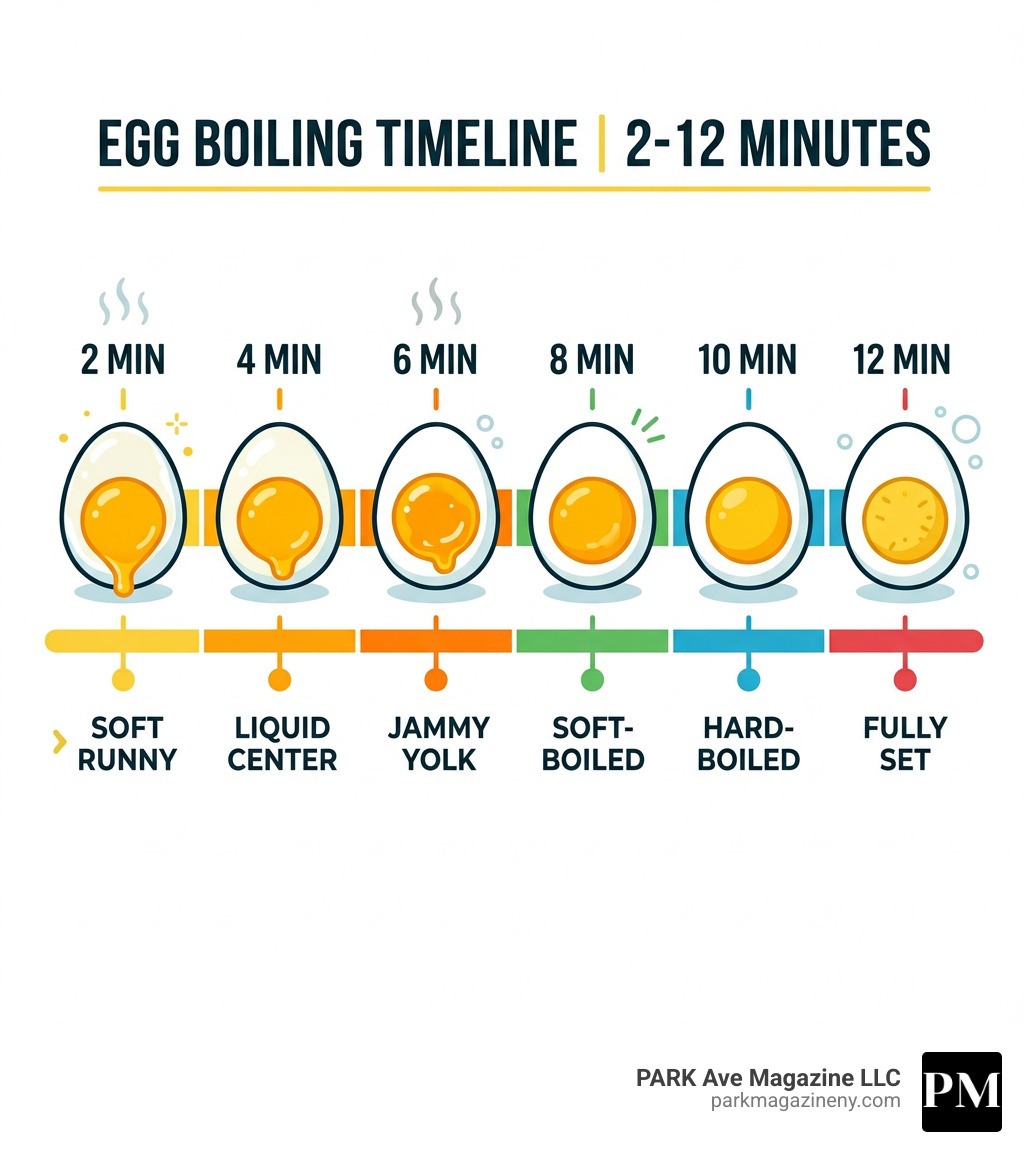
The Definitive Guide on How Long to Boil Eggs
At PARK Ave Magazine LLC, we believe that even the simplest kitchen tasks deserve a touch of culinary precision. Whether you are preparing a sophisticated Niçoise salad or a quick protein-rich snack for a busy day in New York, the humble boiled egg is a staple that demands respect.
The primary challenge most home cooks face is the inconsistency of the “cold water start” method. When you start eggs in cold water, the time it takes for that water to reach a boil varies based on your stove’s power, the size of your pot, and even the material of the cookware. By the time the water bubbles, the egg has already begun to cook, making the final timer a bit of a guessing game.
To achieve true perfection, we recommend the “boiling water start.” This method allows you to hit “start” on your timer the moment the eggs hit the water, providing a level of control that professional chefs swear by.
Timing Guide: How Long to Boil Eggs for Soft vs. Hard Centers
When we discuss how long to boil eggs, we are usually aiming for one of four specific textures. Using large, fridge-cold eggs and lowering them into already boiling water, here is what you can expect:
- 6 Minutes: This produces the classic “molten” egg. The whites are set enough to peel (though they will be very delicate), and the yolk is completely liquid. This is the gold standard for ramen or dipping “soldiers” (strips of toasted brioche).
- 8 Minutes: Our personal favorite at the magazine. This is the “jammy” egg. The yolk is no longer runny, but it remains custardy, bright orange, and incredibly creamy. It is the perfect topping for avocado toast or a vibrant spring salad.
- 10 Minutes: The yolk is mostly set but still retains a smudge of softness in the very center. The whites are firm. This is an excellent middle ground for those who dislike runny yolks but want to avoid the chalkiness of a full hard-boil.
- 12 Minutes: The definitive hard-boiled egg. The yolk is fully opaque and pale yellow throughout. This is the texture required for classic deviled eggs or a traditional egg salad sandwich.
According to USDA safety guidelines for egg temperatures, cooking eggs for 12 to 15 minutes ensures that any potential pathogens are eliminated, though culinary experts often find these longer times result in a drier texture.
Adjusting How Long to Boil Eggs for Size and Altitude
Not all eggs are created equal. The standard “large” egg in the U.S. is roughly 50-55 grams. If your local market stocks different sizes, you’ll need to adjust your internal clock:
- Medium Eggs: Subtract about 30 to 60 seconds from the times listed above.
- Extra-Large Eggs: Add 30 seconds to 1 minute.
- Jumbo Eggs: Add 1 to 2 minutes to ensure the heat reaches the center of the larger mass.
The Altitude Factor For our readers in Richmond or those visiting higher elevations, physics comes into play. As atmospheric pressure drops, so does the boiling point of water. While this isn’t a major concern in the sea-level environment of Manhattan, if you find yourself at high altitudes (above 3,000 feet), you must increase your boiling time. A general rule of thumb is to add 1 minute of cooking time for every 1,000 feet of elevation above 3,000 feet.
The Best Method for Perfect Boiled Eggs
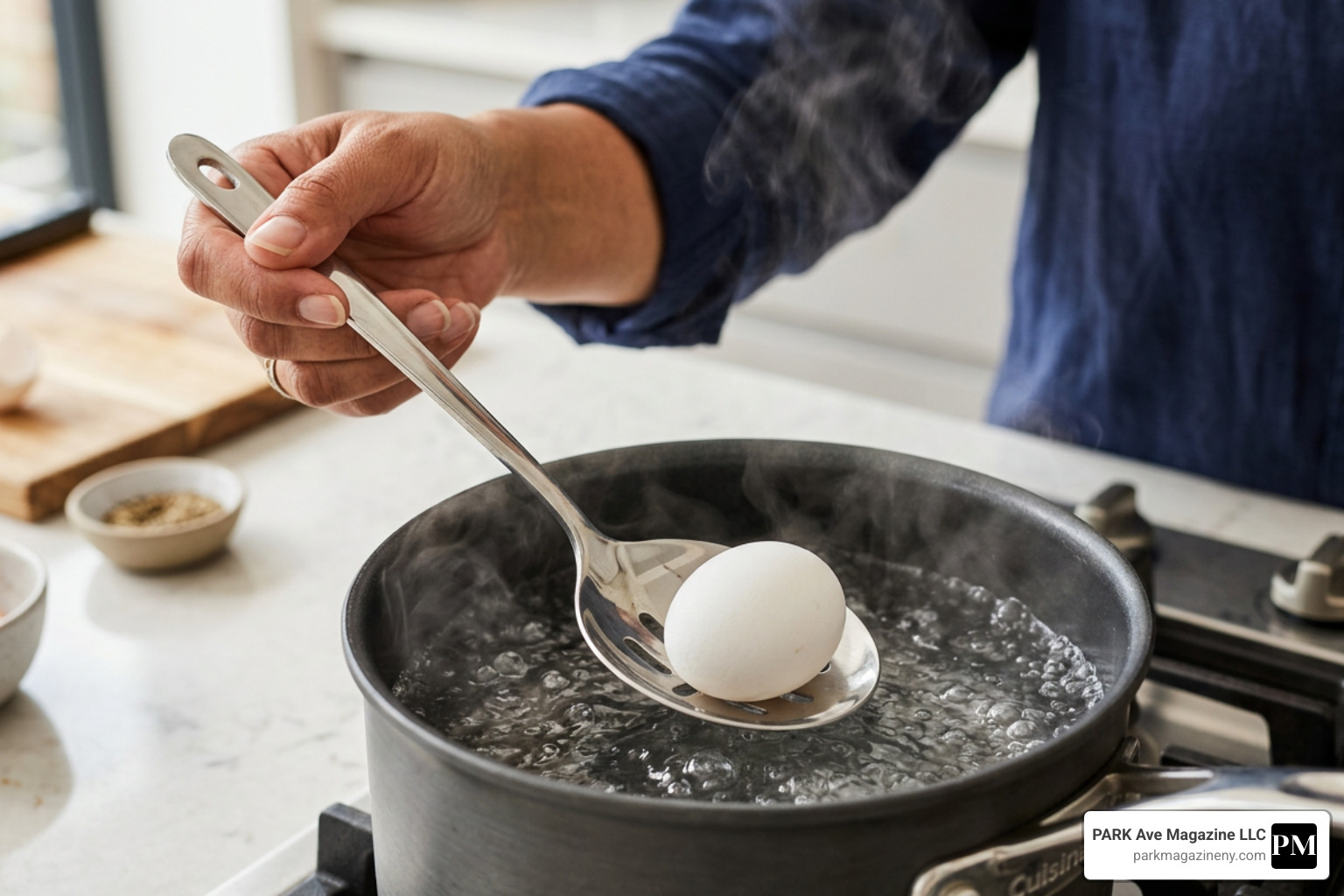
Through extensive testing and consultation with culinary experts, we’ve found that the most reliable technique for a beautiful result is the “Boil-then-Simmer” method. This approach combines the precision of a hot start with the gentleness of a simmer to prevent the eggs from knocking against each other and cracking.
For those who enjoy a deep dive into the science of cooking, the Food Lab-tested approach to boiling suggests that a 30-second initial boil followed by a lower-heat simmer produces whites that are tender rather than rubbery.
Why the Boiling Water Start Method Wins
Why do we insist on dropping cold eggs into boiling water? It sounds counterintuitive—wouldn’t the thermal shock crack the shell? While that is a risk (which we mitigate by using a slotted spoon), the benefits far outweigh the dangers:
- Easier Peeling: Science suggests that hitting the egg with high heat immediately causes the membrane to pull away from the shell. In a cold-start method, the membrane and shell bond together as they heat up slowly, leading to those frustrating “cratered” eggs where half the white comes off with the shell.
- Precision Timing: As mentioned, the timer starts the second the egg enters the water. There is no “waiting for the boil” variable.
- Texture Control: You stop the cooking process exactly when you want, leading to consistent results every Sunday meal prep.
Step-by-Step Instructions for How Long to Boil Eggs
Follow these steps for a foolproof experience:
- Boil the Water: Fill a large saucepan with enough water to cover your eggs by at least an inch. Bring it to a rolling boil.
- The Gentle Entry: Lower the heat to a simmer so the water isn’t splashing violently. Use a slotted spoon to gently lower your fridge-cold eggs into the water.
- The Initial Blast: Turn the heat back up slightly to maintain a gentle boil and set your timer.
- The Simmer: If you are following the advanced method, keep the water at a “brisk simmer” rather than a violent boil. This prevents the shells from cracking.
- The Ice Bath: While the eggs cook, prepare a bowl with cold water and plenty of ice. This is non-negotiable.
Secrets to Easy-to-Peel Eggs Every Time
There is nothing quite as satisfying as a shell that slips off in two or three large pieces, leaving a perfectly smooth, pearl-like egg behind. Achieving this isn’t just luck; it’s chemistry.
The Role of Egg Freshness
In most culinary applications, “fresh is best.” However, when it comes to how long to boil eggs and how easily they peel, older eggs actually have the advantage.
As an egg ages in your refrigerator (ideally 7 to 10 days), the pH of the egg white increases. A higher pH makes the white less likely to stick to the inner shell membrane. Additionally, the air pocket at the bottom of the egg expands over time, providing a helpful starting point for your thumb when you begin peeling. If you are using farm-fresh eggs from a local market, be prepared for a slightly more difficult peeling process, or try steaming them instead (more on that below).
The Importance of the Ice Bath
The ice bath serves two vital purposes. First, it stops the “carryover cooking.” An egg is a dense little package of protein; even after you take it out of the water, the residual heat will continue to cook the yolk. If you want a jammy center and you leave it on the counter, you’ll end up with a hard-boiled egg in five minutes.
Second, the rapid temperature drop causes the egg to contract slightly inside the shell. This physical “shaking loose” is what creates that easy-peel magic. We recommend leaving your eggs in the ice bath for at least 10 to 15 minutes. If you’re in a rush, even five minutes under cold running tap water is better than nothing.
Troubleshooting Common Egg Boiling Problems
Even the most seasoned home cooks encounter the occasional “egg-tastrophe.” Here is how to handle the most frequent issues.
Avoiding the Dreaded Green Ring
We have all seen it: that unappetizing grey-green film surrounding a hard-boiled yolk. While completely safe to eat, it’s a sign of overcooking. This discoloration is caused by a chemical reaction between the sulfur in the whites and the iron in the yolks.
To avoid this, ensure you aren’t exceeding the 12-minute mark for large eggs and—more importantly—shock them in ice water immediately. The green ring is often the result of the egg sitting in its own heat for too long after being removed from the pot.
Preventing Cracked Shells During Cooking
If your eggs look like they’ve been through a war zone by the time they’re done, try these tips:
- Don’t Crowd the Pan: Eggs should sit in a single layer. If they are stacked, they will bounce into each other.
- Temperature Transition: While we recommend fridge-cold eggs for timing consistency, taking them out of the fridge 10 minutes before boiling can reduce the “thermal shock” that causes cracking.
- The Vinegar Trick: Adding a splash of vinegar to the water won’t prevent a crack, but it will help the egg white coagulate faster if a crack does occur, sealing the hole before a “white cloud” fills your pot.
Alternative Cooking Methods for Perfect Eggs
While boiling is the classic approach, modern kitchen gadgets offer some intriguing alternatives:
- Steaming: Many chefs prefer steaming eggs in a basket over an inch of boiling water. It is gentler than boiling and often results in the easiest-to-peel eggs, even when they are fresh. Steam for 6 minutes for soft and 12 minutes for hard.
- Pressure Cooking (The 5-5-5 Method): If you have an Instant Pot, this is a fan favorite. Cook on high pressure for 5 minutes, let the pressure release naturally for 5 minutes, and then submerge in an ice bath for 5 minutes.
- Oven-Baking: You can “boil” eggs in a muffin tin at 350°F for about 30 minutes. However, research suggests this can lead to rubbery whites and brown spots on the shells.
For more culinary tips and the latest in Manhattan’s high-end food scene, be sure to check out our More NYC dining inspiration section.
Frequently Asked Questions about Boiling Eggs
How long do hard-boiled eggs last in the fridge?
Hard-boiled eggs are the ultimate meal-prep protein. Unpeeled, they will stay fresh in your refrigerator for up to 7 days. We recommend keeping them in their original carton or an airtight container to prevent them from absorbing odors from other foods (like that pungent truffle cheese). If you have already peeled them, try to consume them within 24 hours for the best texture, though they can last up to 5 days if kept in a bowl of cold water (changed daily).
Is it safe to eat eggs with a slightly runny yolk?
For most healthy adults, a soft-boiled egg is perfectly safe and a culinary delight. However, the USDA notes that to fully eliminate the risk of Salmonella, eggs should be cooked until both the white and yolk are firm. For those with compromised immune systems, the elderly, or pregnant women, fully hard-boiled eggs or pasteurized eggs are the safest choice.
Why do some eggs have a flat or cratered end?
This is caused by the air cell located at the wide end of the egg. As the egg cooks, the air expands. If the egg is very fresh, the air cell is small. If the egg is older, the air cell is larger, resulting in a more pronounced “flat” spot. It doesn’t affect the taste, though it can make your deviled eggs look a little lopsided!
Conclusion
Mastering the art of the boiled egg is a rite of passage for any home cook. By focusing on how long to boil eggs and utilizing the ice bath technique, you can ensure a perfect result every single time. Whether you prefer a three-minute “dippy” egg or a solid twelve-minute hard-boiled yolk, precision is your best friend in the kitchen.
At PARK Ave Magazine LLC, we celebrate the intersection of luxury and everyday living. We hope this guide helps you elevate your breakfast game to new heights of sophistication. For more insights into the New York lifestyle, from art collecting to the city’s finest eateries, Explore more lifestyle and dining guides on our website.