Everything You Need to Know About Casey Anthony
The Casey Anthony Case: One of America’s Most Controversial Trials
Casey Anthony became one of the most talked-about figures in American legal history after her 2-year-old daughter, Caylee, disappeared in the summer of 2008.
Here is a quick summary of the key facts:
- Who: Casey Anthony, a young mother from Orlando, Florida
- What: Accused of murdering her daughter, Caylee Anthony
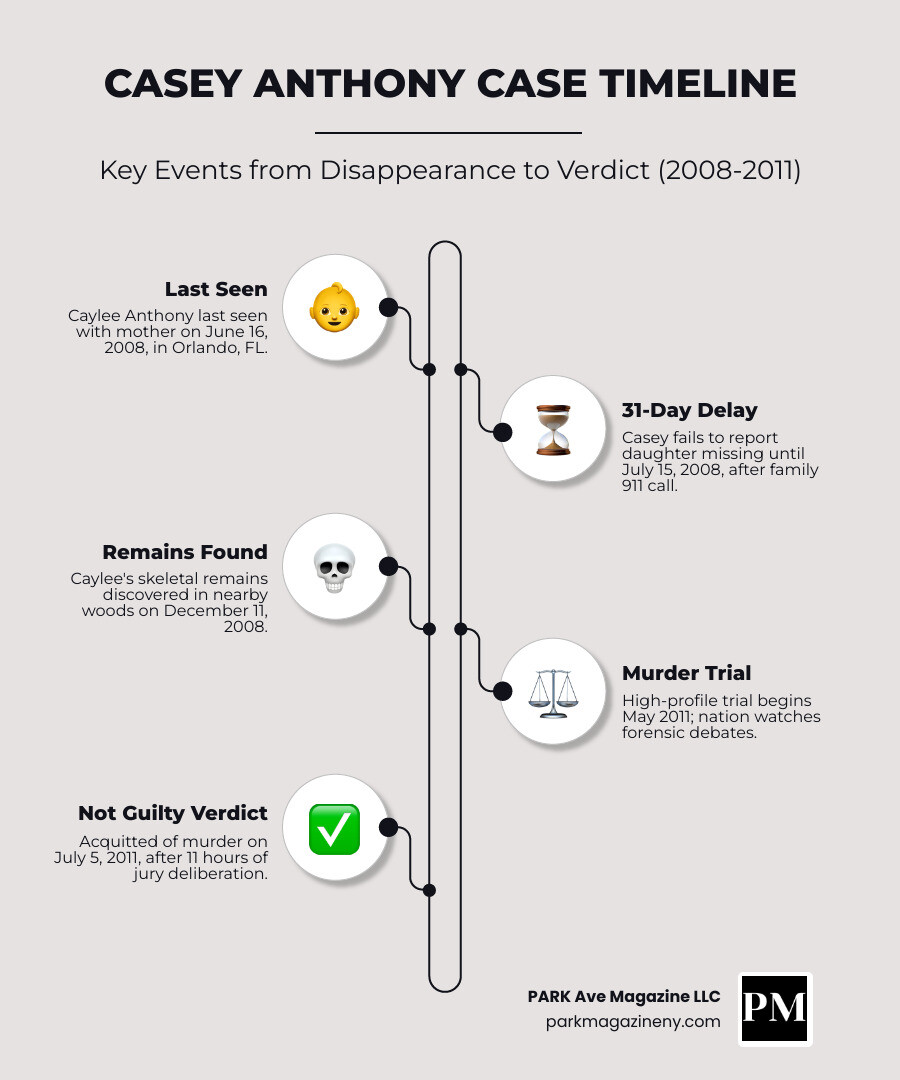
- When: Caylee was last seen June 16, 2008; reported missing 31 days later on July 15, 2008
- Where: Orlando, Florida; remains found in nearby woods in December 2008
- Verdict: Acquitted of murder on July 5, 2011; convicted of four counts of lying to police
- Outcome: Released July 17, 2011, after more than 1,000 days of time served
The case gripped the nation. An estimated 40 million Americans tuned in to the trial proceedings, and nearly 100 million people worldwide watched the verdict live. Time magazine called it the “social media trial of the century.”
The verdict shocked the public. Many believed Casey was guilty. Yet the jury acquitted her after roughly 11 hours of deliberation, citing a lack of direct evidence. The case raised deep questions about forensic science, media influence, and how justice works in America.
It remains deeply polarizing to this day.
Casey anthony vocab explained:
The Disappearance of Caylee Anthony and Initial Deceptions
The tragedy began in Orlando, Florida, in the summer of 2008. While most of the country was preoccupied with the upcoming presidential election, a domestic drama was unfolding in the Anthony household that would soon eclipse the nightly news. Caylee Marie Anthony, a vibrant two-year-old, was last seen alive on June 16, 2008. However, she wasn’t reported missing until July 15, 2008—a staggering 31-day delay.
When Casey’s mother, Cindy Anthony, finally called 911, the calls were frantic and chilling. Cindy reported that she hadn’t seen her granddaughter in a month and that Casey Anthony’s car smelled like “a dead body had been in the trunk.” This smell would become a central pillar of the prosecution’s future case.
During those 31 days, Casey didn’t appear to be a grieving mother. Instead, she was seen partying, participating in “hot body” contests at local clubs, and even getting a tattoo that read “Bella Vita”—Italian for “Beautiful Life.” When police began questioning her, Casey spun a web of lies so complex it seemed almost cinematic.
The Web of Lies: Initial Claims
According to the Crime Museum Case File, Casey’s initial stories were riddled with fabrications:
- Zanny the Nanny: Casey claimed she had left Caylee with a babysitter named Zenaida Fernandez-Gonzalez (whom she called “Zanny”) at an apartment complex. Investigators later found the apartment was vacant and the “Zanny” Casey described didn’t exist.
- Universal Studios: Casey led detectives to the Universal Studios offices, claiming she worked there as an event planner. She walked them through the hallways with confidence until she finally admitted she hadn’t worked there in years.
- The Kidnapping: She claimed she was conducting her own “private investigation” and was too scared to call the police because she didn’t want to jeopardize Caylee’s safety.
These deceptions led to her initial arrest for child neglect and lying to investigators. The search for Caylee continued until December 11, 2008, when a meter reader named Roy Kronk discovered skeletal remains in a wooded area near the Anthony home. The remains were confirmed to be Caylee’s, and the case shifted from a missing person search to a capital murder investigation.
The Trial of Casey Anthony: A Forensic and Legal Breakdown
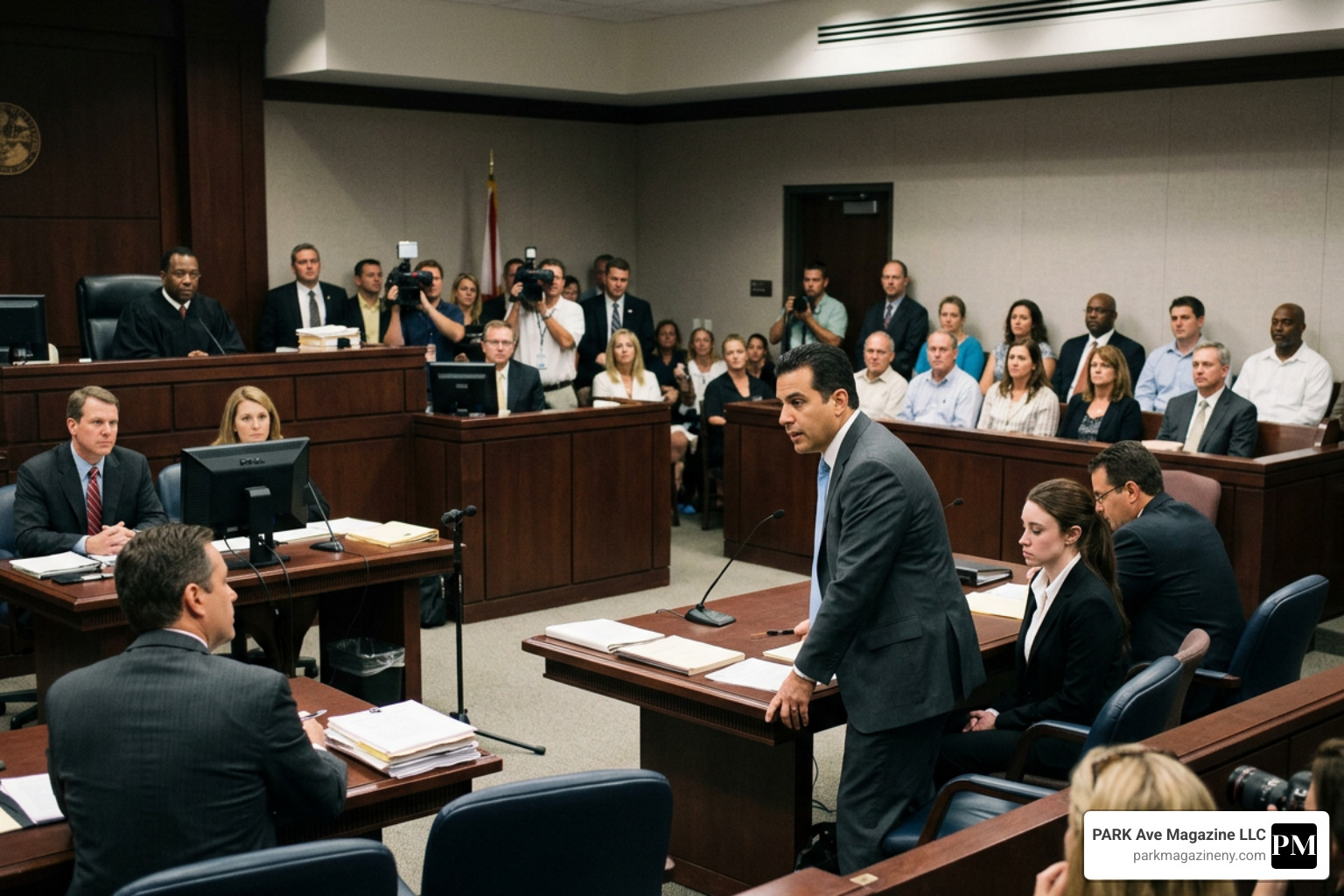
The trial began in May 2011, presided over by Judge Belvin Perry Jr. It was a masterclass in legal theater. The prosecution, led by Linda Drane Burdick and Jeff Ashton, painted Casey Anthony as a selfish young woman who murdered her daughter to regain her “party girl” lifestyle. They argued she used chloroform to render Caylee unconscious before suffocating her with duct tape.
However, the defense, led by the then-little-known attorney Jose Baez, delivered a “bombshell” opening statement that changed the entire trajectory of the case. Baez claimed that Caylee had not been murdered at all, but had accidentally drowned in the family’s swimming pool on June 16. He alleged that Casey’s father, George Anthony, found the body and helped cover up the death to protect Casey.
Furthermore, the defense made shocking allegations of long-term sexual abuse against George Anthony, suggesting that Casey’s habitual lying was a coping mechanism developed from years of trauma. George Anthony vehemently denied both the cover-up and the abuse allegations on the stand.
Prosecution Theory vs. Defense Theory
| Feature | Prosecution Theory | Defense Theory |
|---|---|---|
| Cause of Death | Premeditated murder via chloroform and suffocation. | Accidental drowning in the family swimming pool. |
| Motive | Desire for freedom from parental responsibility. | Panic and a lifetime of “coping through lying.” |
| The “Cover-Up” | Casey acted alone to hide the body in the woods. | George Anthony found the child and orchestrated the disposal. |
| Forensic Focus | Trunk odor, chloroform searches, and duct tape. | Lack of DNA, inconclusive autopsy, and family trauma. |
Forensic Evidence and the Casey Anthony Car Trunk Dispute
The lack of a clear cause of death—due to the skeletal state of the remains—forced the state to rely heavily on “forensic milestones.” This led to significant disputes over the admissibility of certain sciences.
As detailed in this Forensic analysis, the following evidence was hotly contested:
- The Trunk Odor: Dr. Arpad Vass, a pioneer in decompositional odor analysis, testified that the air in Casey’s trunk contained chemical compounds consistent with a decomposing human body. He famously stated the smell was “uniquely” that of human death. The defense countered that the smell was simply rotting garbage.
- Chloroform Searches: Investigators found that someone had searched for “chloroform” on the family computer. Initial reports suggested it was searched 84 times; however, a software error was later discovered, and the actual number was just one search.
- Hair Evidence: A single strand of hair found in the trunk showed a “death band,” a darkening at the root often seen in decomposing bodies. While mitochondrial DNA linked the hair to the Anthony family line, it could not specifically prove it belonged to Caylee.
- Duct Tape and Heart Stickers: The prosecution showed an animation of duct tape over Caylee’s skull, arguing it was the murder weapon. They also claimed to see the residue of a heart-shaped sticker on the tape, similar to stickers found in Casey’s room. The defense called this “fantasy forensics.”
Verdict, Sentencing, and the Impact of Caylee’s Law
On July 5, 2011, the jury returned its verdict. To the shock of millions watching live, Casey Anthony was found not guilty of first-degree murder, aggravated manslaughter, and aggravated child abuse. She was, however, found guilty on four misdemeanor counts of providing false information to law enforcement.
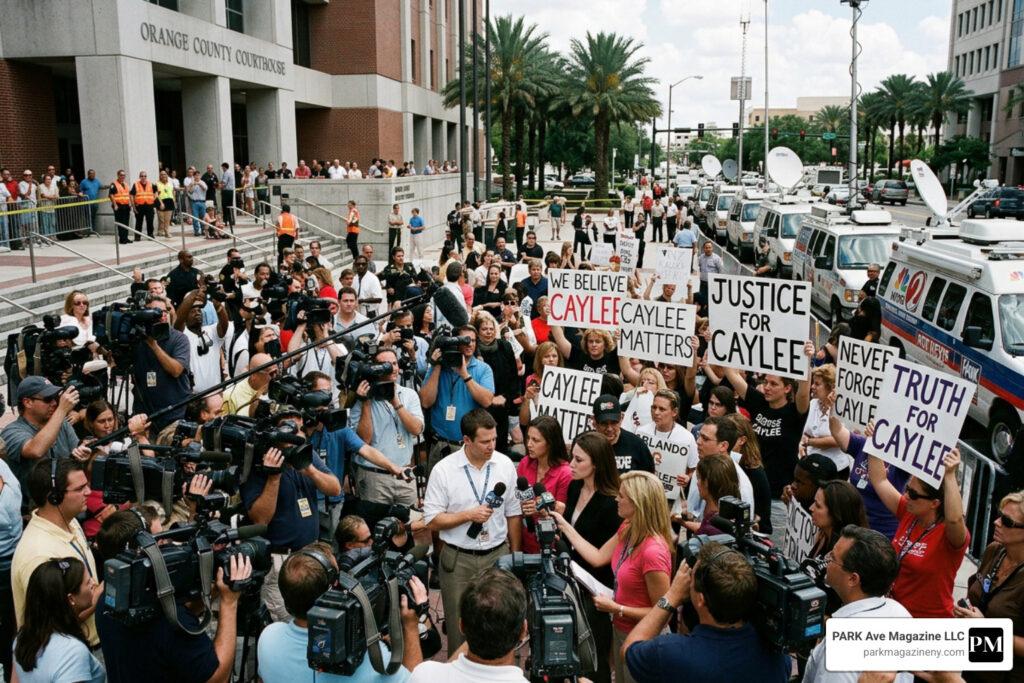
The public reaction was explosive. Protesters gathered outside the courthouse, and social media platforms like Twitter (now X) saw record-breaking traffic. Media figures like Nancy Grace, who had dubbed Casey the “Tot Mom,” were vocal in their outrage, with Grace famously declaring that “the devil is dancing.”
Sentencing and Release
Judge Belvin Perry sentenced Casey to the maximum of one year for each count of lying. However, because she had already spent over 1,000 days in jail awaiting trial, she was credited with time served. She was released from the Orange County Jail on July 17, 2011, just 12 days after the verdict.
Despite her release, the legal battles weren’t over. She was later ordered to pay approximately $217,000 to the State of Florida to cover the costs of the investigation and prosecution. You can find more details on these figures in the CNN Trial Fast Facts.
The Legacy of Caylee’s Law
The outrage over the 31-day delay in reporting Caylee missing led to a nationwide movement for “Caylee’s Law.” This legislation makes it a felony for a parent or legal guardian to fail to report a missing child in a timely manner (usually within 24 hours). Florida was among the first to pass a version of this law, and many other states followed suit, ensuring that no other child’s disappearance would go unreported for a month without legal consequence.
The Aftermath: Where Are the Key Figures Today?
The lives of everyone involved in the “trial of the century” were changed forever. Here is where the key players are now:
- George and Cindy Anthony: Casey’s parents remain in their Orlando home. Their relationship with Casey is effectively non-existent. In 2024, they appeared in a televised special where they took polygraph tests regarding their knowledge of the case. George continues to deny any involvement in a cover-up.
- Jose Baez: The defense attorney became a legal superstar. He went on to represent other high-profile clients, including Aaron Hernandez and Harvey Weinstein. He also teaches at Harvard Law School and runs a successful firm with offices in Miami and Orlando.
- Judge Belvin Perry Jr.: Now retired from the bench, Perry joined a private law firm and has served as a legal analyst for various news outlets. He has publicly stated that he believes the evidence could have supported a murder conviction but respects the jury’s decision.
- Jeff Ashton: The prosecutor wrote a best-selling book about the case and was later elected State Attorney for the Ninth Judicial Circuit in Florida. He has since returned to private practice.
- Linda Drane Burdick: The lead prosecutor continues to serve as an Assistant State Attorney in Florida, maintaining a respected career in the legal community.
Where is Casey Anthony Now?
For years, Casey Anthony lived a quiet, secluded life in South Florida. She resided with Patrick McKenna, a private investigator who served as the lead investigator on her defense team (and who also worked on the O.J. Simpson case). According to a 2017 Associated Press Interview, Casey worked for McKenna doing social media research and investigative work.
In that interview, she remained defiant, stating, “I don’t give a s*** about what anyone thinks about me, I never will.” She maintained that she still doesn’t know exactly what happened to Caylee in her final moments.
In recent years, Casey has re-emerged in the public eye. In 2022, she participated in a Peacock docuseries titled Casey Anthony: Where the Truth Lies, where she doubled down on her allegations against her father. Most recently, in March 2025, she joined TikTok and launched a Substack, rebranding herself as a “legal advocate.” She claims she wants to help others navigate the justice system, though her parents’ former lawyers have criticized the move as a “money grab.”
Frequently Asked Questions about the Casey Anthony Case
How long was Caylee Anthony missing before being reported?
Caylee was last seen on June 16, 2008. She was not reported missing to the authorities until July 15, 2008—a total of 31 days. During this time, Casey told her parents that Caylee was with a nanny.
What was the main reason for the not guilty verdict?
While the public was convinced of her guilt, the jury cited a lack of direct evidence. There was no DNA linking Casey to the crime scene in the woods, no confirmed cause of death from the medical examiner, and the forensic evidence regarding the car trunk was deemed “junk science” by the defense. This created “reasonable doubt” in the minds of the jurors.
What is Caylee’s Law and which states have it?
Caylee’s Law refers to various state statutes passed after the trial that make it a felony for a caregiver to fail to report a missing child within a specific timeframe. Florida, New Jersey, and several other states have passed versions of this law to prevent similar delays in the future.
Conclusion
The story of Casey Anthony and the loss of little Caylee remains a permanent fixture in the American true crime canon. It serves as a stark reminder of the power of the media, the complexities of forensic science, and the emotional weight of a “not guilty” verdict that much of the world refused to accept.
At PARK Ave Magazine LLC, we often explore the intersection of culture, justice, and the human condition. Whether we are discussing the latest in fine artistry and lifestyle or diving deep into the cases that define our era, we strive to bring a level of sophistication and clarity to our readers in NYC and beyond. The Casey Anthony case may be “closed” in the eyes of the law, but in the court of public opinion, the debate is far from over.