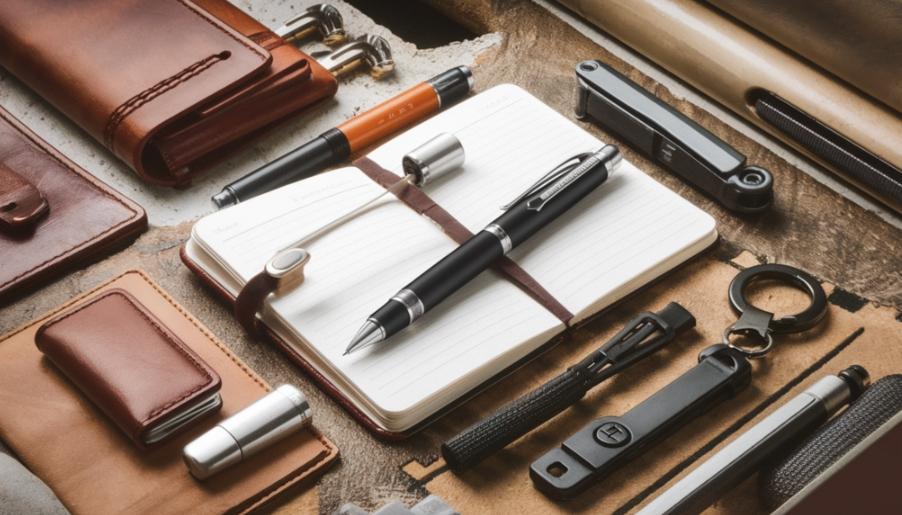
The Case for Carrying a Mechanical Pencil: Why Precision Matters in Travel Journaling
Travel journaling demands tools that won’t fail mid-sketch or bleed through thin notebook pages. While fountain pens and gel rollers have their devotees, mechanical pencils offer something different: consistent line weight, erasability, and the kind of precision that matters when you’re trying to capture architectural details in a cramped train compartment or map out hiking routes by headlamp.
The appeal isn’t purely functional. There’s a tactile satisfaction to a well-made mechanical pencil—the click of lead advancement, the balanced weight in hand during long writing sessions. For travelers who document their experiences through drawing and writing, these details accumulate into something that affects the quality of the work itself.
How Mechanical Pencils Are Actually Made
The modern mechanical pencil emerged in the late 18th century as a solution to the wastefulness of wooden pencils, which required constant sharpening and eventually became too short to use comfortably. Early patents focused on mechanisms that could advance graphite without breaking it—a challenge that took decades to solve reliably.
Today’s manufacturing process reflects that evolution. According to industrial design research, production involves several distinct phases:
- Design and Prototyping: Engineers balance competing demands—durability versus weight, grip comfort versus material cost, lead advancement smoothness versus mechanism complexity.
- Material Selection: Brass, aluminum, and engineering plastics each offer different trade-offs. Higher-end models often use knurled metal grips that provide tactile feedback without adding significant weight.
- Precision Manufacturing: The lead advancement mechanism requires tolerances measured in hundredths of a millimeter. CNC machining and injection molding produce components that must work reliably through thousands of clicks.
- Quality Assurance: Drop tests, lead breakage rates, and grip durability all factor into whether a design makes it to market.
This attention to mechanical detail explains why a quality pencil can last years of daily use while cheaper versions fail within months.
What Makes Mechanical Pencils Work for Travel Documentation
The advantages become obvious once you’re actually using one in the field. Traditional wooden pencils dull quickly and require a sharpener—one more thing to carry and potentially lose. Pens can’t be erased and often smear or leak at altitude or in heat.
Mechanical pencils sidestep these problems:
- Consistent Line Quality: The lead diameter stays constant, which matters for technical sketching or small handwriting in compact notebooks.
- No Sharpening Required: A simple click extends fresh lead. This seems minor until you’re sketching on a windy overlook with no flat surface.
- Lead Variety: Different hardnesses (HB, 2B, 4B) allow for varied line darkness and texture. Softer leads work better for shading; harder leads suit precise linework.
- Pocket-Safe: Unlike wooden pencils, which can snap, or pens, which can leak, a capped mechanical pencil travels safely in any pocket or bag compartment.
Research on writing instruments in extreme conditions has shown that pencils remain functional across temperature ranges and altitudes where many pens fail—relevant for anyone journaling in varied climates.
Selecting a Pencil That Will Actually Last
Not all mechanical pencils handle travel equally well. The $2 plastic versions sold in office supply stores use mechanisms that jam easily and bodies that crack under pressure. For regular use in backpacks and pockets, certain features matter more than others:
- Metal Construction: Aluminum or brass bodies withstand the compression and impacts of travel. They also provide better weight balance for extended writing sessions.
- Lead Size Selection: 0.5mm offers the best compromise between line fineness and breakage resistance. 0.7mm is more durable but less precise; 0.3mm breaks easily under normal writing pressure.
- Retractable Tip: Prevents the lead sleeve from bending in pockets or bags—a common failure point in fixed-sleeve designs.
- Knurled or Textured Grip: Smooth metal becomes slippery during long use. Knurling or rubber grip sections prevent hand fatigue.
For regular use in backpacks and pockets, certain features matter more than others. Everyman mechanical pencils, alongside Rotring and Pentel’s metal-bodied lines, are built around exactly these travel-specific priorities rather than the cost-cutting construction typical of office supply alternatives.
Engineering Pencils and the Precision Standard
Drafting and engineering pencils represent a subset designed for technical drawing, where line consistency isn’t just preferable—it’s required. These pencils typically feature:
- Fixed Lead Sleeves: The 4mm metal sleeve allows rulers to sit flush against the lead point, enabling precise technical drawing.
- Lead Hardness Indicators: Windows or rotating barrels display the current lead grade, useful when switching between different hardnesses for varied line weights.
- Low Center of Gravity: Weight concentrated near the tip provides better control for detailed work.
- Cushioned Lead Advancement: Spring-loaded mechanisms reduce lead breakage by absorbing excess pressure.
While these features target professional drafting, they translate well to travel sketching. The same precision that helps an architect draw clean floor plans helps a traveler capture the proportions of a cathedral facade or the layout of a street market.
Design as a Factor in Daily Carry
Functionality matters most, but aesthetics influence whether you’ll actually carry something every day. Mechanical pencils range from utilitarian plastic to machined metal that develops a patina over time. Some considerations:
- Finish Durability: Anodized aluminum resists scratches better than painted surfaces. Brass develops an aged appearance that some prefer to pristine finishes.
- Clip Design: A sturdy clip prevents loss but shouldn’t be so tight it damages pockets or notebook covers.
- Size and Weight: Pocket pencils (under 5 inches capped) disappear in a pocket but may feel cramped during extended use. Full-size pencils (5.5+ inches) write more comfortably but require bag storage.
- Customization Options: Some manufacturers offer engraving or interchangeable components, allowing personalization without sacrificing function.
Practical Techniques for Travel Journaling
Having the right tool matters less if you’re not using it effectively. A few approaches that work well with mechanical pencils:
- Vary Lead Hardness: Carry both HB (for writing) and 2B (for sketching and shading). The difference in line quality is substantial.
- Use Grid or Dot Notebooks: The subtle guides help with proportion and perspective without dominating the page like lined paper.
- Sketch First, Write Later: Quick visual notes capture spatial relationships that prose can’t. Add written context afterward.
- Date and Locate Entries: Future you will appreciate knowing where and when each entry was made, especially when memories blur together.
- Embrace Imperfection: Travel sketches aren’t portfolio pieces. Speed and capturing the moment matter more than technical perfection.
Regular documentation builds both skill and a record that photographs alone can’t provide. The act of drawing forces observation in a way that snapping a photo doesn’t.
Maintenance and Longevity
Quality mechanical pencils last decades with minimal maintenance. A few practices extend their working life:
- Clean the Mechanism Annually: Graphite dust accumulates inside the barrel and can cause jamming. Disassemble and wipe components with a dry cloth.
- Use Quality Lead: Cheap lead contains more clay and breaks more easily. Brands like Pentel Ain and Uni NanoDia produce consistently strong lead.
- Store with Lead Retracted: Prevents the tip from bending and keeps lead from breaking inside the mechanism.
- Replace Erasers Promptly: Hardened erasers smear rather than remove graphite. Most pencils use standard eraser sizes available separately.
Unlike disposable pens, a well-maintained mechanical pencil becomes more familiar and comfortable with use—the grip wears to match your hand, the mechanism smooths out, the finish develops character.
Why This Matters
Digital tools have obvious advantages—searchability, cloud backup, multimedia integration. But they also introduce friction. Pulling out a phone signals distraction; opening a notebook signals intention. The physical act of writing and drawing creates different neural pathways than typing, affecting both memory formation and creative thinking.
For travel specifically, analog tools eliminate battery anxiety, screen glare in bright sunlight, and the temptation to check notifications. A mechanical pencil and notebook work everywhere, require no charging, and never need software updates.
The choice isn’t binary—most travelers use both digital and analog methods. But for those moments when you want to slow down and actually process an experience rather than just document it, few tools match the simplicity and reliability of a quality mechanical pencil.